Almost every home has one. The room or space that slowly becomes the place where everything without a home gets deposited. Holiday decorations in unlabeled boxes stacked to the ceiling. Sporting equipment from three different seasons piled in a corner. Old furniture nobody wants to get rid of but nobody uses. Random bins that you are genuinely not sure what is inside without opening every single one. Tools mixed with craft supplies mixed with childhood keepsakes mixed with things you honestly forgot you even owned.
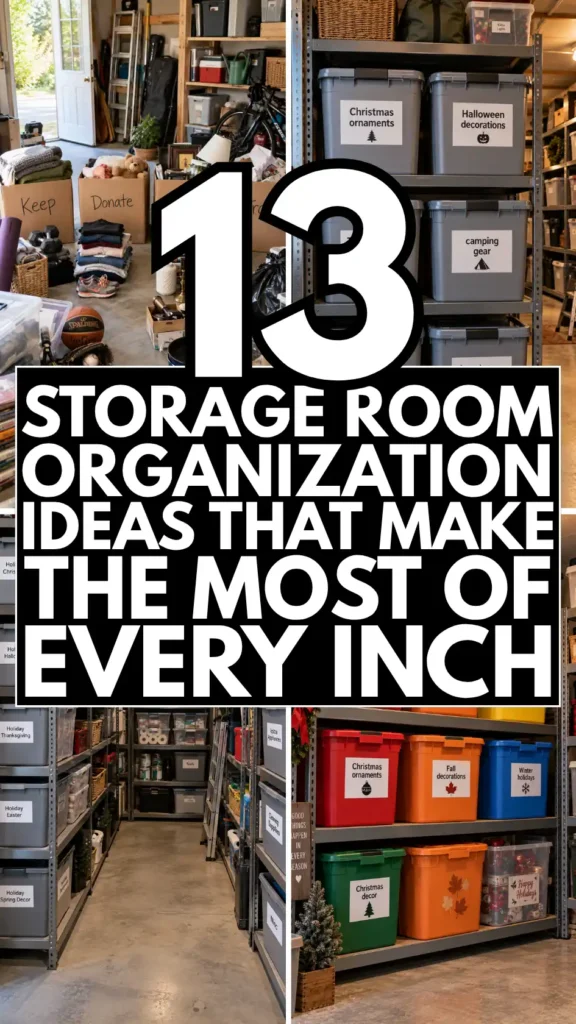
The storage room is usually the last space in a home to get organized attention because it feels so overwhelming that it is easier to just close the door and deal with it later. But later keeps getting pushed back until the room becomes so full and so chaotic that you stop even being able to find things when you actually need them. Holiday decorations stay packed away because getting to them requires moving twelve other things. Sports equipment gets bought twice because what you already own is buried and inaccessible. Items that could be donated sit in the storage room for years because there is no system for identifying and moving them out.
The good news is that a storage room transformation is one of the most satisfying home organization projects you can take on. Unlike a closet or a drawer, a storage room has real volume to work with, which means that with the right shelving, bins, labels, and layout strategy, the same space that felt impossibly full can become genuinely functional and surprisingly spacious.
Storage room organization has been trending on Pinterest because people are realizing that this overlooked room has enormous potential. A well-organized storage room does not just look better. It actively supports your life by making every item in it findable, accessible, and properly protected.
Whether your storage space is a dedicated room, a basement corner, a utility closet, or an under-stair area, these ideas will help you build a system that finally makes that space work for you instead of against you.
1. Start With a Complete Purge Before Adding Any Organization Products

The single most important first step in any storage room organization project is not buying bins or shelving. It is going through absolutely everything in the room and making honest decisions before you organize a single item. Pull everything out of the storage room if you can. Sort everything into four categories. Keep because it is used and needed. Donate because it is in good condition but no longer serves your household. Sell if it has real value and you are willing to put in the effort. Trash because it is broken, expired, or genuinely not useful to anyone. Most people are genuinely surprised by how much of what is in their storage room falls into the donate and trash categories. Purging first means you are only organizing things that actually deserve space in your home.
2. Install Heavy Duty Wall Shelving Along Every Available Wall
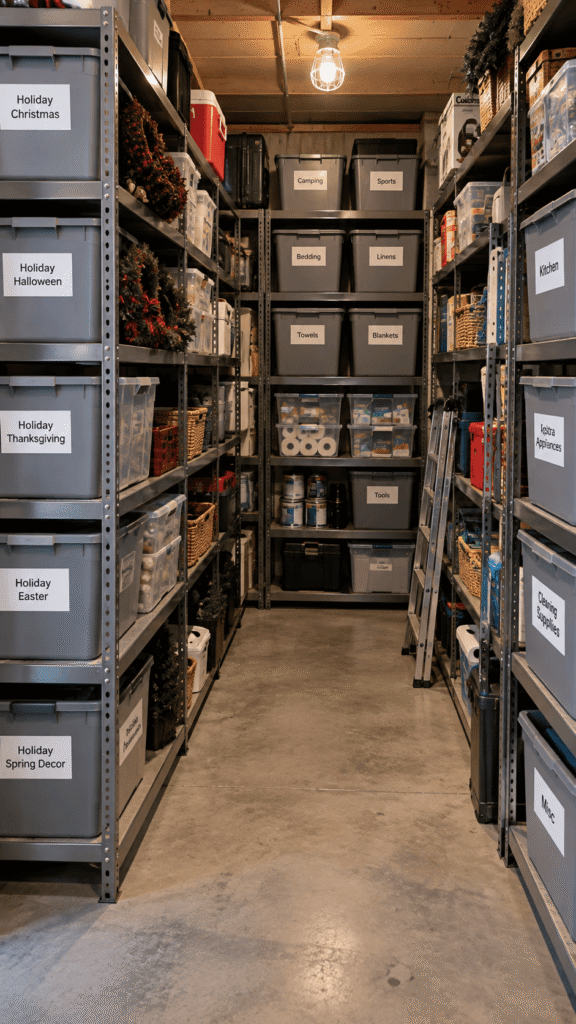
Once the purge is done, the most impactful structural addition to any storage room is heavy-duty wall shelving that runs along as many walls as possible. Getting items up off the floor and onto shelves is the single most effective way to increase usable storage capacity and make everything accessible. Choose heavy-duty metal bracket shelves or freestanding metal shelving units rated for the weight of what you will store. Space shelves at heights that make sense for the sizes of bins and items you are storing. Taller gaps for large bins and bulky items. Shorter gaps for smaller boxes and containers. Wall shelving along every available wall transforms a storage room floor plan from a maze of floor piles into an organized and navigable space with clear walkways and everything at a visible and reachable height.
3. Use Large Clearly Labeled Bins for Every Storage Category
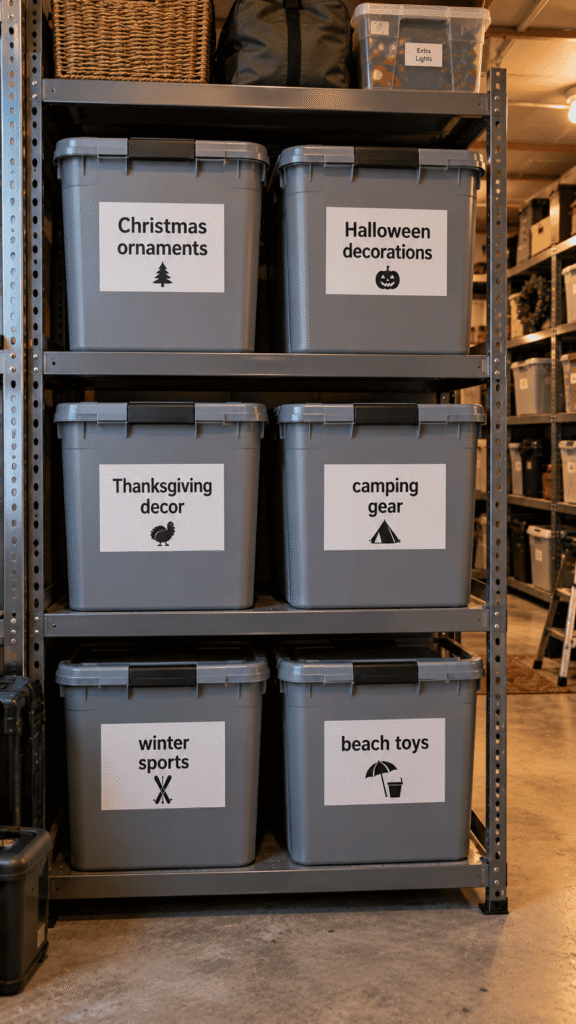
Large storage bins are the workhorses of any well-organized storage room. They protect contents from dust and pests, stack efficiently, and keep similar items together in one contained unit. The key to making bins work is a consistent and thorough labeling system. Every single bin needs a clear label that specifically describes what is inside. Not just holiday but Christmas ornaments or Halloween costumes. Not just kids stuff but kids art supplies ages four to seven. The more specific your labels, the faster you can find exactly what you need without opening multiple bins. Use a label maker for clean uniform labels or write boldly on adhesive labels with a permanent marker. If bin contents are mixed, add a simple inventory list on paper inside the bin lid.
4. Divide the Room into Clearly Defined Zones for Each Category
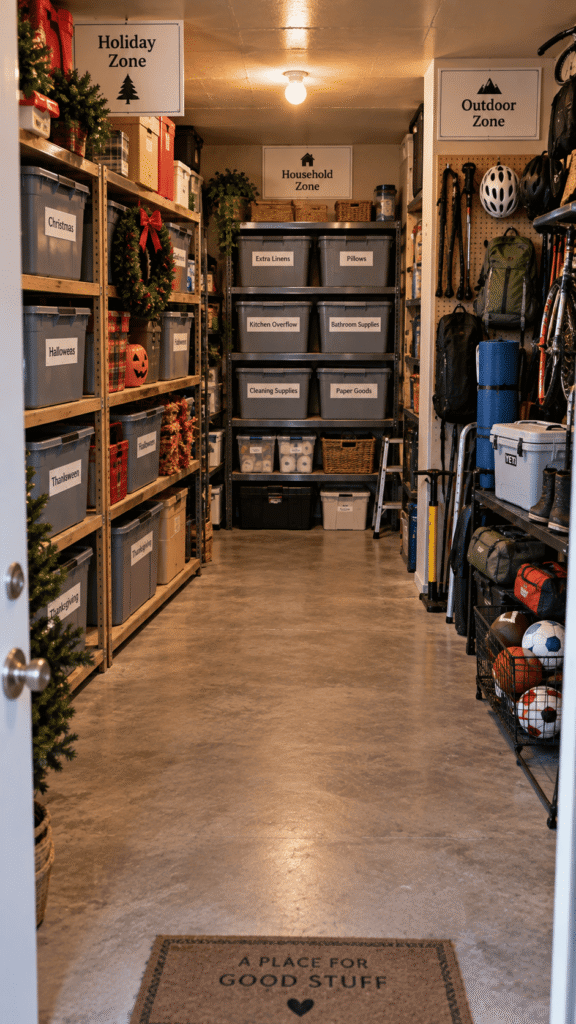
One of the most important layout decisions for a storage room is creating clearly defined zones where each category of stored items always lives. Instead of spreading similar items across different parts of the room, assign one wall or one shelving section to each major category. Holiday decorations zone. Sporting and outdoor gear zone. Kids items and toys zone. Tools and hardware zone. Household overflow zone. Sentimental and keepsake zone. When every category has a defined zone, finding any item means going to the right zone and looking within that contained area rather than searching the entire room. Label the front edge of each zone’s shelving section so the zones are visually clear to everyone who uses the storage room.
5. Use Ceiling-Mounted Racks for Bulky Lightweight Seasonal Items
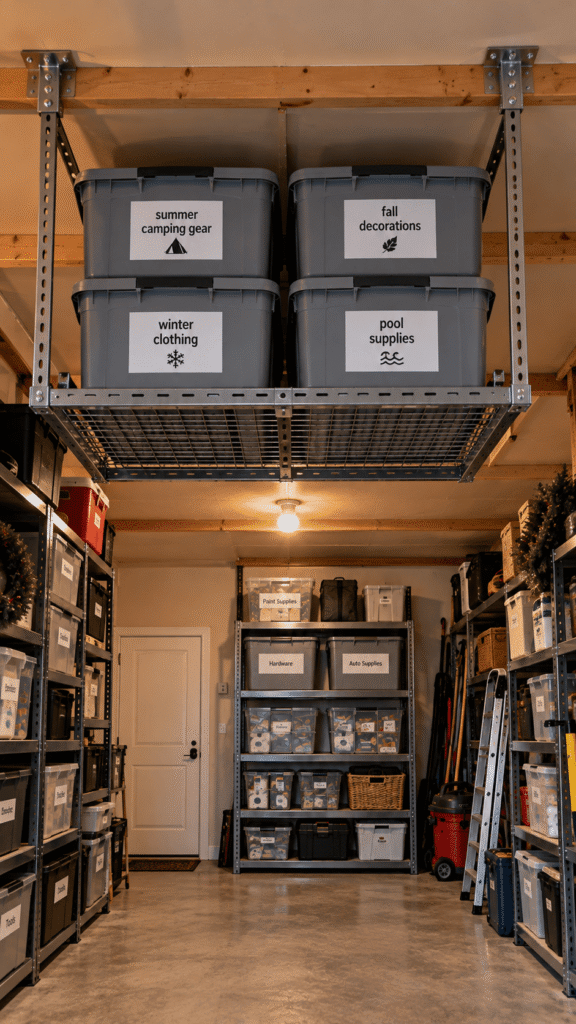
The ceiling of a storage room is prime storage real estate that most people never think to use. Ceiling-mounted storage racks that bolt directly into the ceiling joists can hold a significant amount of bulky but lightweight items that you only need access to occasionally. Holiday decoration boxes, camping gear, seasonal sports equipment, large plastic bins of off-season clothing, and other large lightweight items all store perfectly on ceiling racks. This keeps these bulky items completely out of the way of your main floor and wall storage while still being accessible with a step ladder when needed. Make sure everything stored on ceiling racks is in clearly labeled bins so you know exactly what is up there without having to take everything down.
6. Add a Pegboard Wall for Tools Hardware and Small Equipment
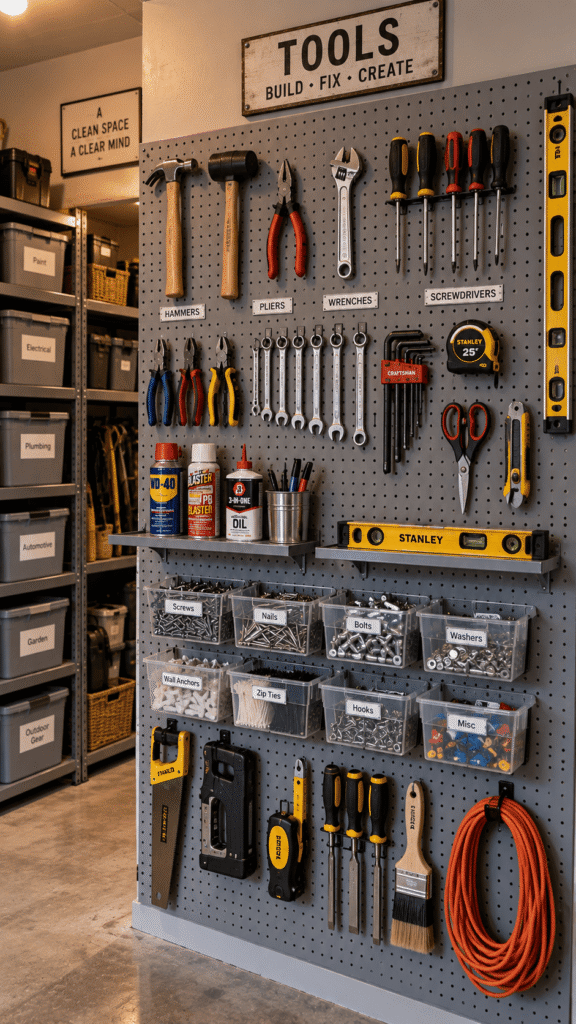
A pegboard mounted on a storage room wall is one of the most efficient and flexible storage solutions for tools, hardware, and small equipment. Mount a large pegboard panel on an open wall section and add a variety of hooks, bins, and shelves in sizes that match what you need to hang. Hand tools hang on individual hooks. Small bins hold screws, nails, and hardware sorted by type. Shelves hold spray cans, small power tool accessories, and boxed hardware. Because pegboards allow complete rearrangement at any time, the system can adapt as your storage needs change. Outline each tool with a marker so you can see at a glance if something has been used and not returned to its spot.
7. Store Holiday Decorations in Color-Coded Bins by Holiday
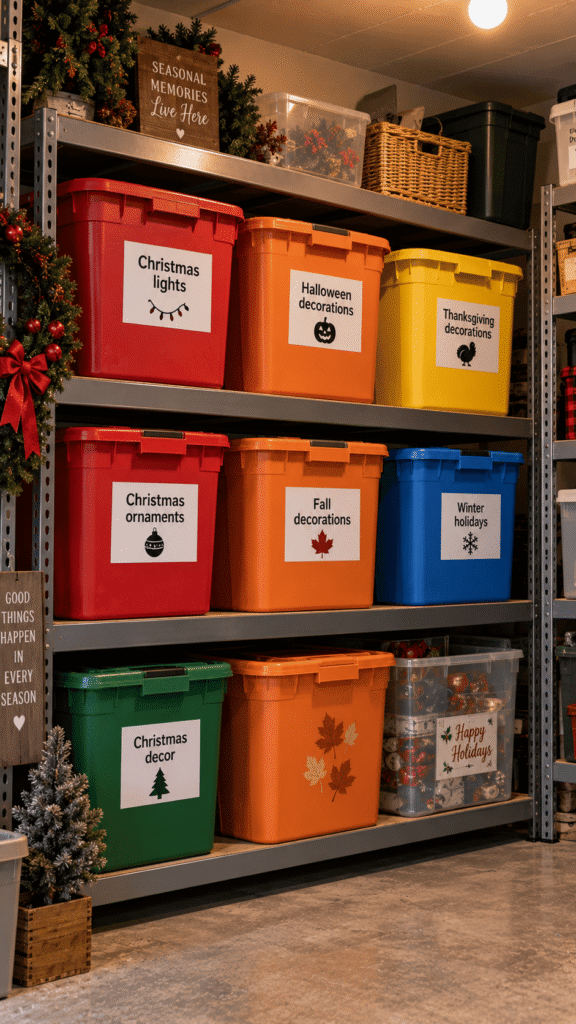
Holiday decorations are almost always one of the largest and most chaotic storage categories in any storage room. Boxes from different holidays mixed together. Ornaments in one random box and lights in another without any clear system. Decorations that take twenty minutes to find every year even though you know they are somewhere in the room. Color-coding holiday storage bins by holiday is a simple visual system that makes finding the right decorations instantly fast. Use red and green bins for Christmas. Orange bins for Halloween. Yellow and orange for Thanksgiving. Blue and silver for Hanukkah. The bin color alone tells you what is inside before you even read the label, which makes seasonal decoration setup and takedown so much faster and less frustrating.
8. Create a Dedicated Sporting Equipment Zone with Hooks and Bins
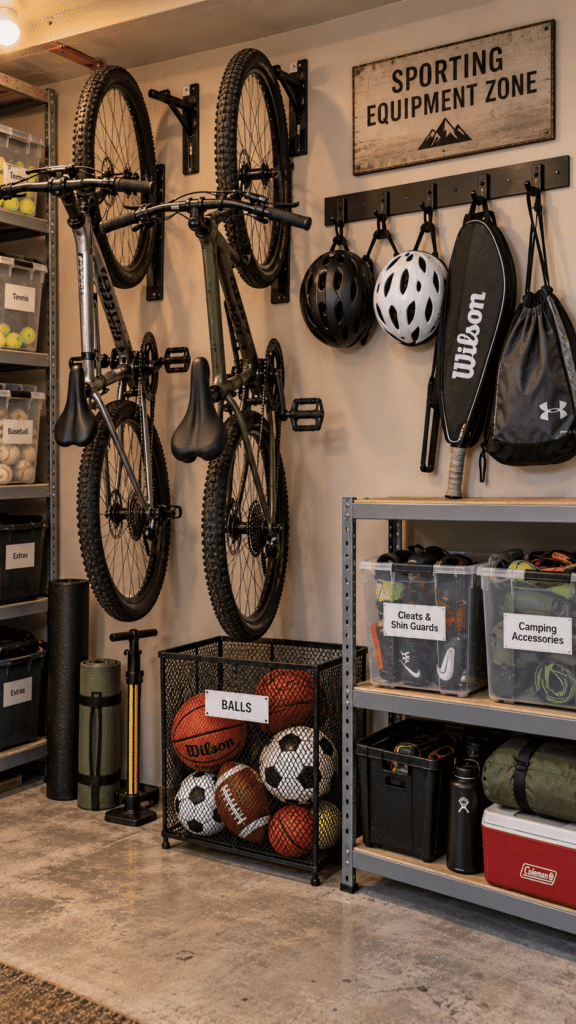
Sports and outdoor equipment is one of the most space-intensive storage categories in any home. Bikes, scooters, helmets, balls, bats, rackets, skis, golf bags, camping gear, and a dozen other items all need a home that keeps them organized and accessible without creating a chaotic heap in the corner. A dedicated sporting equipment zone with wall-mounted hooks for hanging items and large open bins for balls and smaller gear solves this. Hang bikes vertically on wall hooks to save floor space. Add hooks for helmets, bags, and rackets. Use a large mesh bin or an open-topped laundry basket for balls so they stay contained but are easy to grab. Label each section of the zone clearly so equipment always goes back in the right spot.
9. Use Clear Vacuum Storage Bags for Bulky Soft Items Like Blankets and Pillows
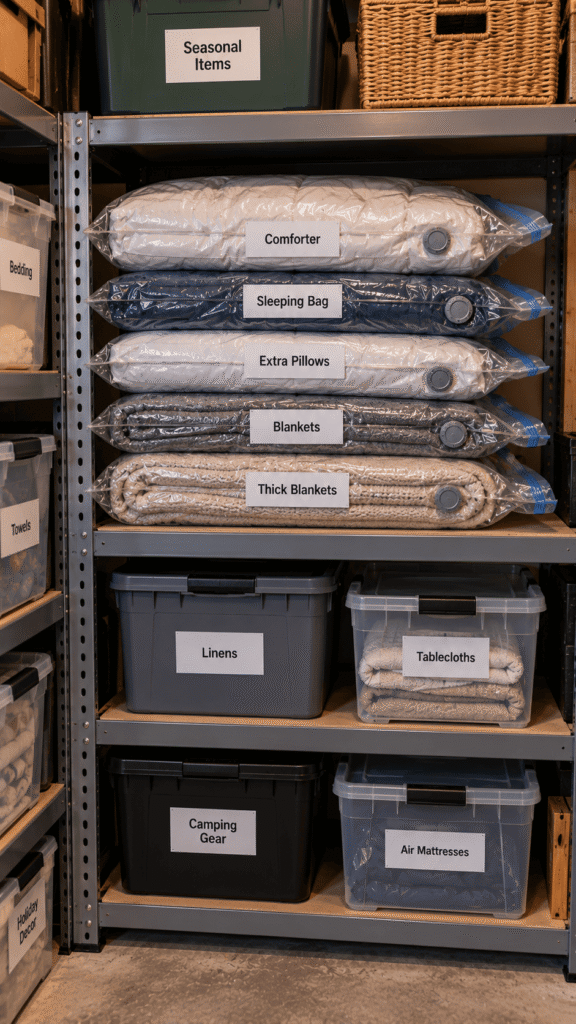
Extra blankets, pillows, sleeping bags, and other bulky soft items take up a disproportionate amount of storage room space when stored in their natural fluffy state. Clear vacuum storage bags compress these items down to a fraction of their original size while keeping them completely protected from dust, moisture, and pests. Place each item in a vacuum bag, seal it, and use a vacuum cleaner to suck out the air. A king-sized comforter compresses to roughly the thickness of a folder. A sleeping bag shrinks down to a manageable flat rectangle. Stack the compressed bags on a shelf and label each one clearly. When you need the item, simply open the seal and the soft contents expand back to full size within a short time.
10. Build a Dedicated Keepsake and Sentimental Items Zone
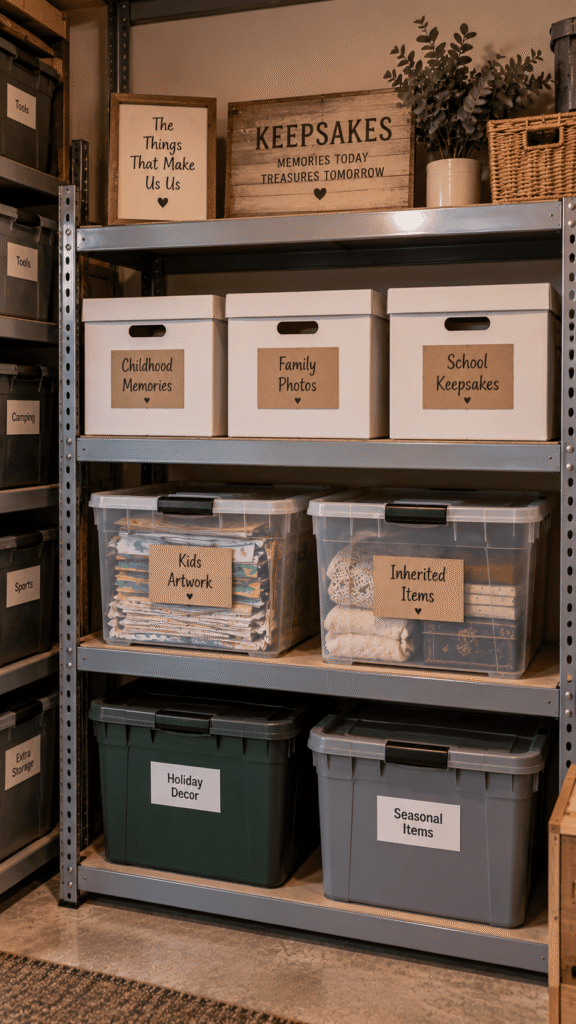
Every home has sentimental items that are worth keeping but do not belong in the main living space. Baby clothes from childhood. Old photo albums. Kids artwork portfolios. Yearbooks and school memorabilia. Inherited items from family members. These things deserve a proper home in the storage room rather than being scattered in random boxes mixed with unrelated items. Create a dedicated keepsake zone on one shelving section and use clearly labeled archival-quality bins or acid-free boxes to protect these items properly. Label each container specifically and include a brief contents list on the outside. Knowing that all sentimental items are in one designated and protected section of the storage room makes them easy to find when you want to revisit them and gives you peace of mind that they are properly stored.
11. Add Proper Lighting to Make the Storage Room Actually Usable
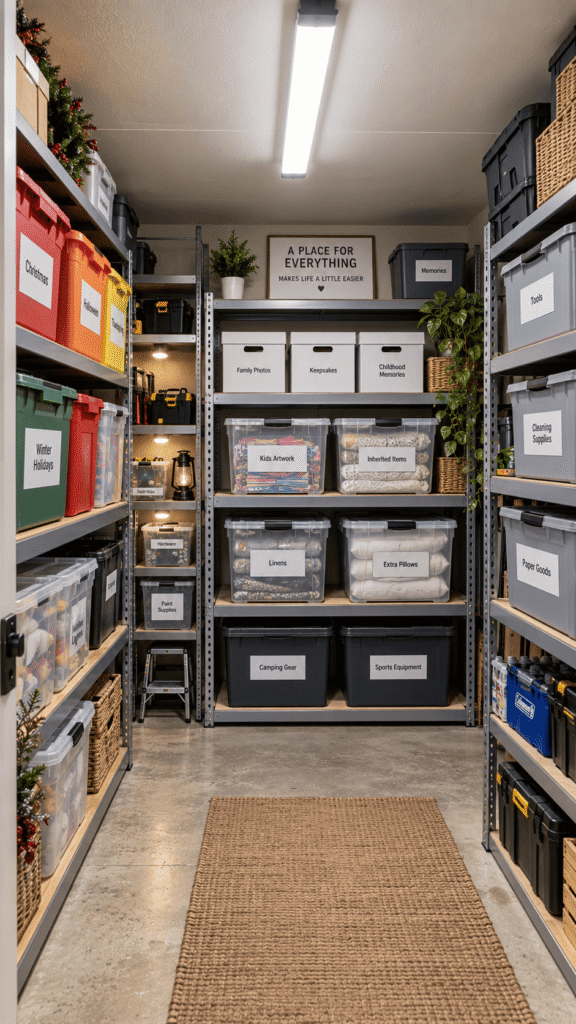
One of the most overlooked reasons storage rooms feel frustrating to use is poor lighting. A single dim overhead bulb that leaves corners in shadow makes it genuinely difficult to read labels, find items, and see what you are working with. Improving the lighting in a storage room makes an immediate and significant difference in how usable and how pleasant the space feels to work in. Add LED shop lights on the ceiling for bright even illumination across the whole room. Add battery-operated stick-on LED lights inside dark cabinets or in corner shelving areas that the overhead light does not reach well. Good lighting is especially important in a storage room because it directly affects how quickly you can find what you need and how willing you are to actually spend time organizing and maintaining the space.
12. Set Up a Donation Station to Make Decluttering Ongoing and Effortless
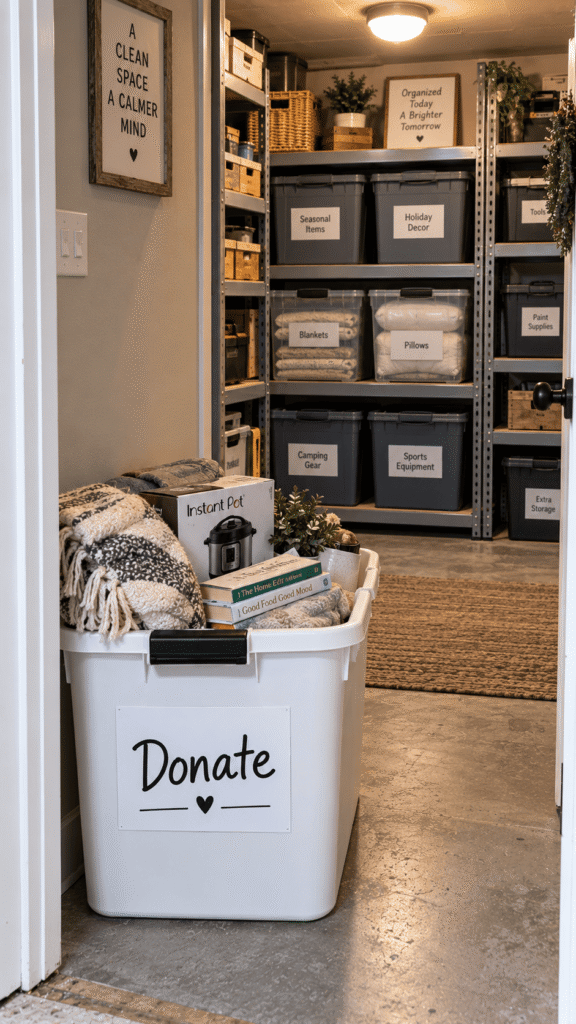
One of the most effective habits you can build around storage room organization is keeping a permanent donation station right inside the storage room so that decluttering becomes an ongoing and effortless process rather than a twice-a-year overwhelming project. Place a large clearly labeled bin or basket in an easily accessible spot near the storage room entrance and designate it permanently as the donation bin. Whenever anyone in the household comes across something they no longer need or use, it goes directly into the donation bin instead of back onto a shelf. When the bin is full, it goes directly to a donation center. This ongoing habit prevents the storage room from filling back up with items that nobody really needs anymore.
13. Do a Twice-Yearly Storage Room Reset to Keep the System Working Long Term
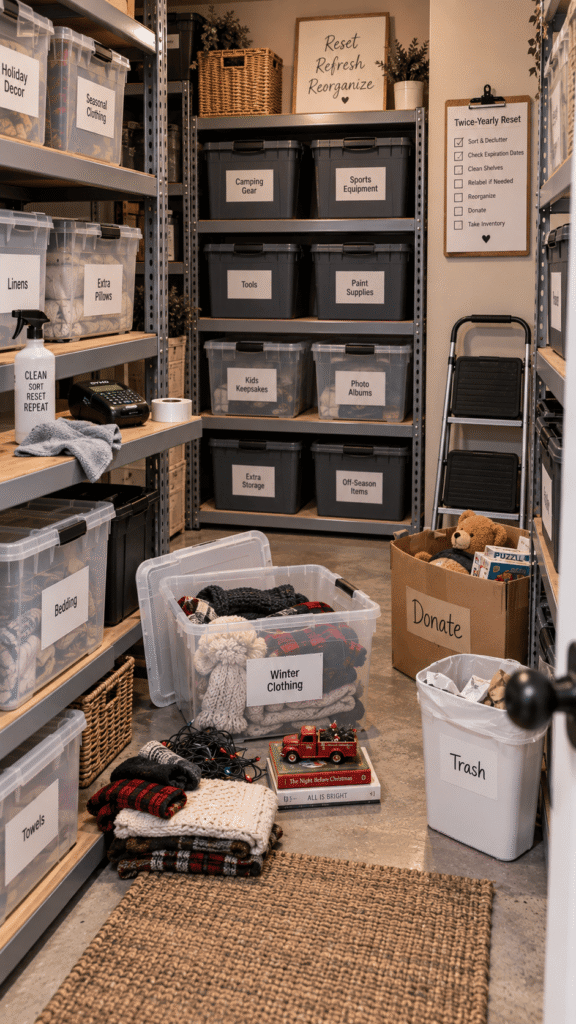
The most important storage room organization habit is a dedicated reset twice a year, ideally timed with seasonal changes in spring and fall. During the reset, walk through every zone in the storage room systematically. Check that items are in their correct zones and bins. Look for bins that have become catch-alls for random items and re-sort them back into proper categories. Check expiration dates on any stored consumables. Identify anything that could be donated or discarded that has been sitting unused. Wipe down shelves that have accumulated dust. Refill or update labels that have become unclear or inaccurate. A twice-yearly reset takes a few hours but it is the habit that keeps a beautifully organized storage room from slowly reverting to chaos over time.
Transforming a chaotic storage room into a genuinely organized and functional space is one of the most satisfying home organization projects you can take on. When every item has a zone, every bin has a clear label, the shelves are properly loaded, the lighting is good, and there is a donation station keeping things from accumulating, the storage room stops being the space you dread and becomes a space that actively makes your life easier every time you need something from it.
You do not have to do the entire storage room in one weekend. Start with the purge because that is always the most impactful first step. Then add shelving. Then sort into zones and bins. Build the system one layer at a time and it will be sustainable and genuinely useful for years.
Save this post for when you are ready to finally tackle that storage room and give it the organized system it has always needed. The effort you put in once pays you back every single time you can find exactly what you are looking for in under a minute.