Small closets are one of the most common frustrations in homes everywhere. Whether you are dealing with a narrow reach-in closet, a shallow bedroom closet, a tiny hallway closet, or a small apartment wardrobe, the struggle is always the same. Not enough hanging space. Not enough shelf space. Shoes taking over the floor. Things falling off shelves because everything is so crammed together. And that sinking feeling every single morning when you open the door and cannot find anything.
The thing about small closets is that most of the space inside them is actually being wasted. The area above the shelf goes unused. The back of the door is ignored. The floor space under hanging clothes is taken up by a pile of shoes thrown in randomly. The vertical wall space on the sides is completely empty. When you learn to use every single inch of a small closet strategically, the amount of storage you can get out of even the tiniest space is genuinely surprising.
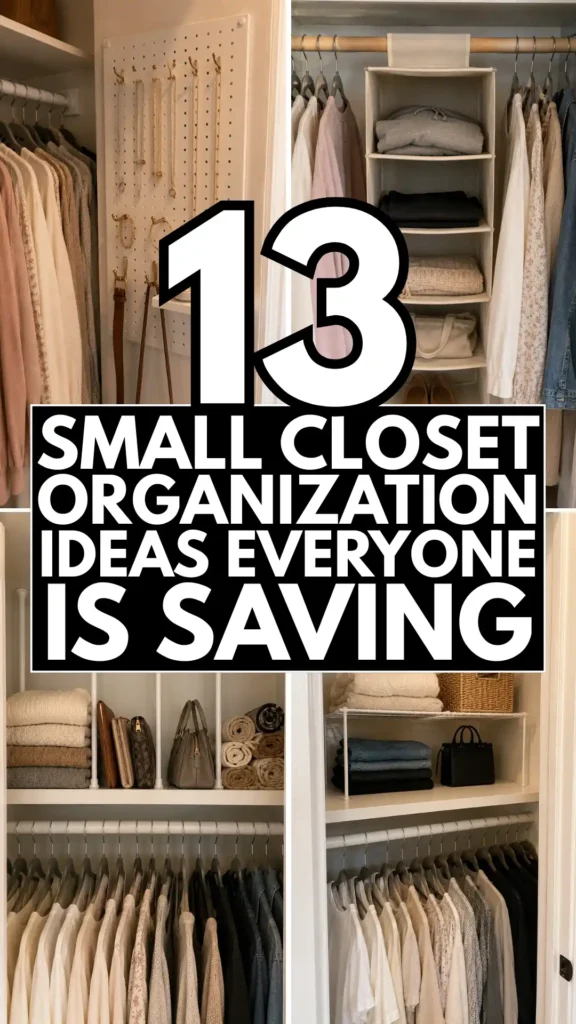
The good news is that you do not need to hire a contractor or buy an expensive custom closet system to make a small closet work better. Most of the best small closet organization solutions are very affordable and many of them require zero tools to install. Things like slim velvet hangers, over-the-door organizers, shelf risers, hanging organizers, stackable bins, and tension rods can dramatically change how much a small closet can hold and how easy it is to find everything inside.
Small closet organization has been a major trend on Pinterest because so many people are living in apartments, older homes, and smaller spaces where storage is genuinely limited. These ideas are practical, realistic, and designed specifically for people working with tight square footage and limited closet space.
Whether your small closet is a bedroom closet, a coat closet, a linen closet, or a studio apartment wardrobe, these ideas will help you get the most out of every single inch you have available.
1. Switch to Slim Velvet Hangers to Instantly Double Your Hanging Space
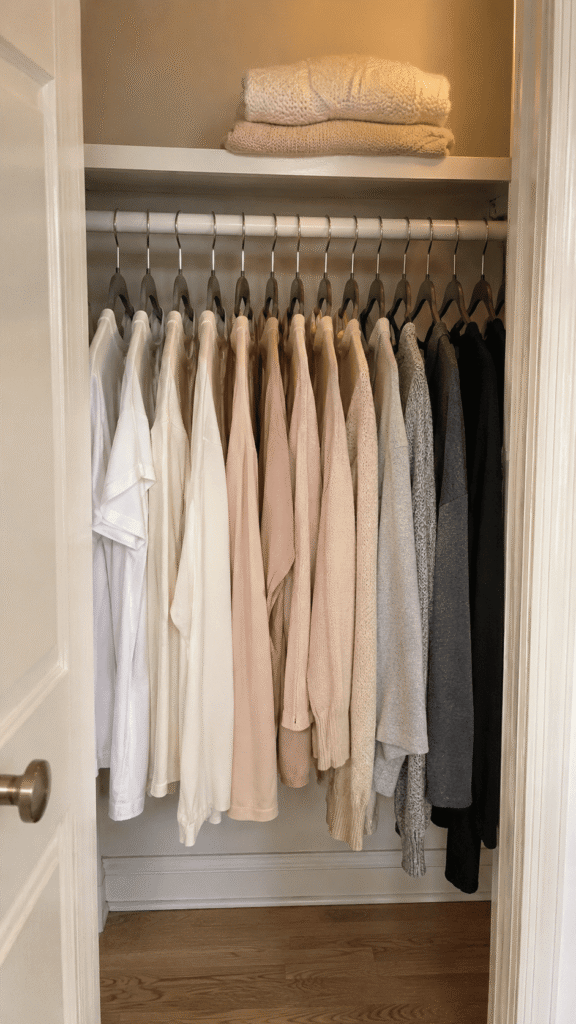
If you do nothing else on this list, do this one. Thick plastic hangers are one of the biggest reasons small closets feel so cramped. They take up an enormous amount of rod space and make it impossible to fit everything without cramming clothes together so tightly that nothing hangs properly. Slim velvet hangers are about five times thinner than standard plastic hangers, which means you can fit nearly double the number of items on the same rod. The velvet surface also grips fabric so clothes stop sliding off onto the floor. Buy a set of 50 or 100 and replace every single hanger in one go. The difference in how much space you suddenly have is remarkable.
2. Add a Second Hanging Rod Below Your Existing One for Shorter Items
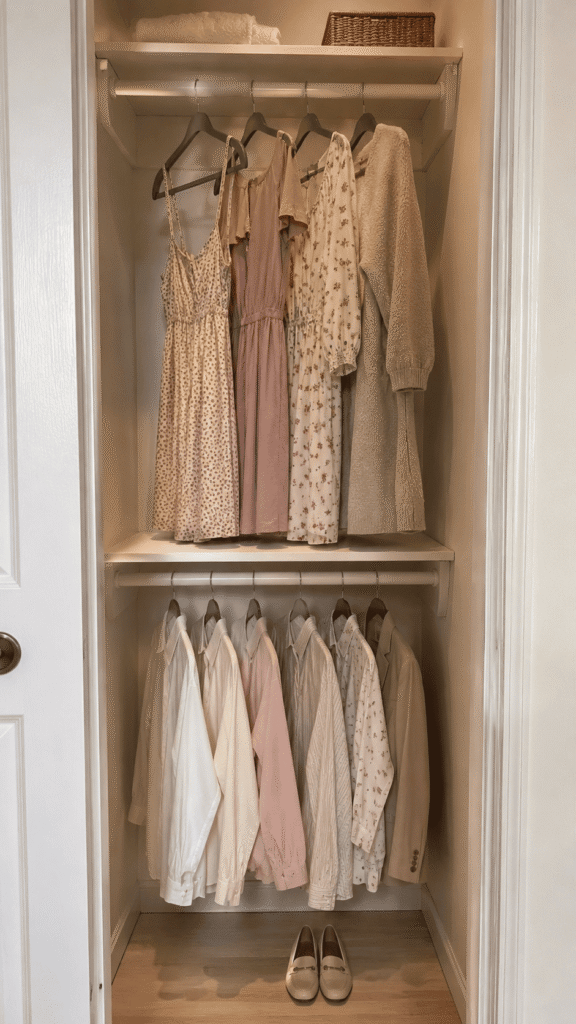
A double hang rod is one of the smartest solutions for a small closet with limited shelf space. Your original rod stays exactly where it is. You simply add a second rod hanging below it using an inexpensive closet doubler accessory that hooks right onto the existing rod. The upper rod handles your longer items like dresses, maxi skirts, and coats. The lower rod holds all your shorter items like shirts, blazers, cropped jackets, and folded pants draped over a hanger. This setup turns one rod into two without any drilling or permanent changes. It is one of the most effective ways to maximize hanging space in a small closet without changing a single thing about the closet structure itself.
3. Use Every Inch of the Back of the Closet Door
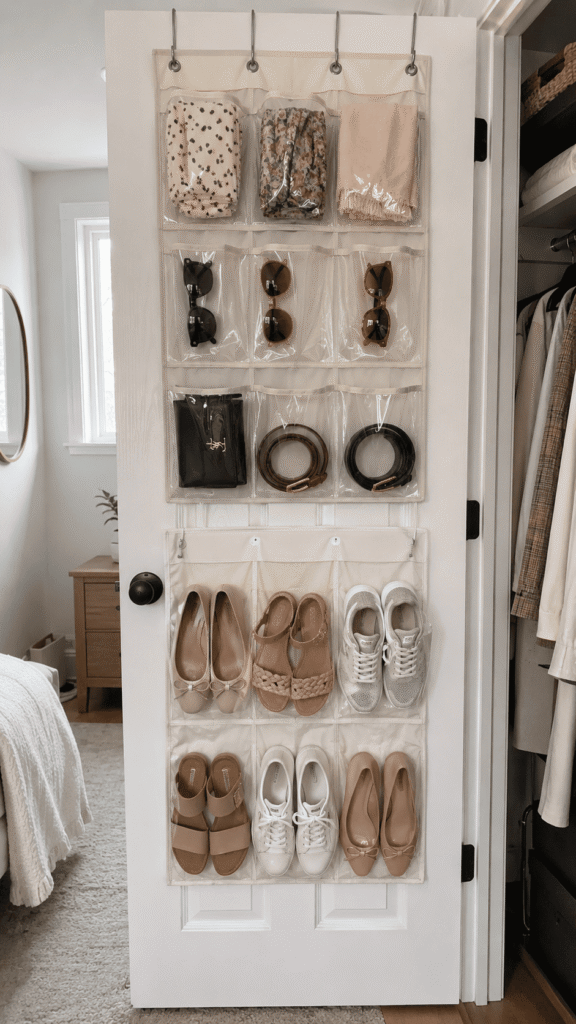
The back of your closet door is free storage space that most people in small homes never think to use. An over-the-door organizer can hold an incredible number of items that would otherwise be taking up valuable shelf or floor space inside the closet. Use a clear pocket organizer for accessories, scarves, belts, and small bags. Use a shoe pocket organizer to move shoes off the floor and onto the door. Add a few simple hooks on the back of the door for hanging items like bags, robes, or extra hangers. In a small closet, using the door effectively can free up a surprising amount of space on the shelves and floor inside.
4. Install a Shelf Riser to Create Two Levels of Folded Storage
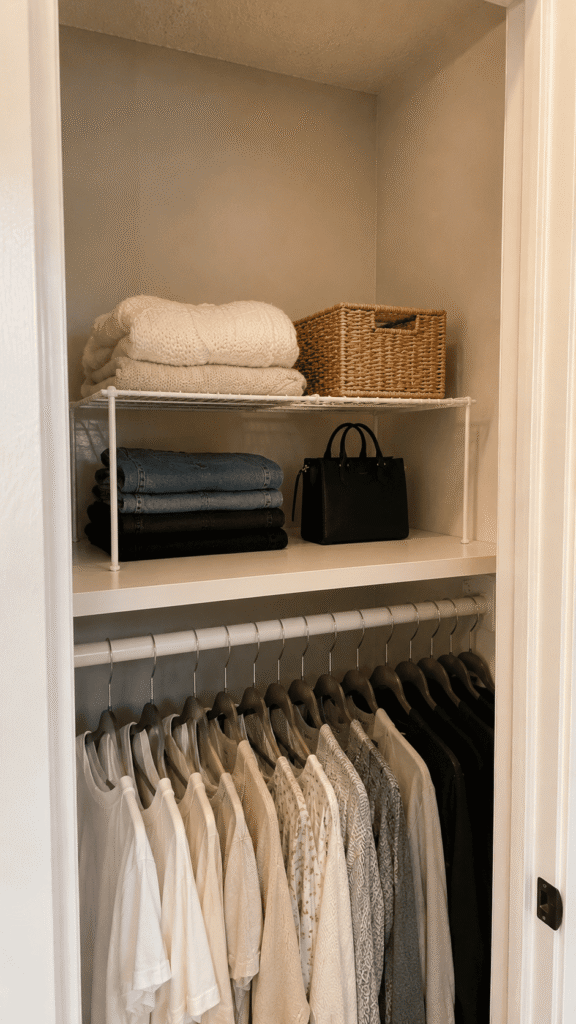
Most small closets have just one shelf and that shelf gets overwhelmed fast. A shelf riser is a simple accessory that sits right on top of your existing shelf and creates a second elevated level of storage above it without any installation or tools required. Use the lower shelf level for items you reach for every day like folded jeans, everyday sweaters, or small bags. Use the upper riser level for things you need less often like seasonal items, spare bedding, or shoe boxes. This simple addition can effectively double the storage capacity of your single closet shelf for very little money. Look for risers in white wire or natural wood to keep the look clean.
5. Use Stackable Clear Bins on High Shelves for Items You Store but Rarely Use
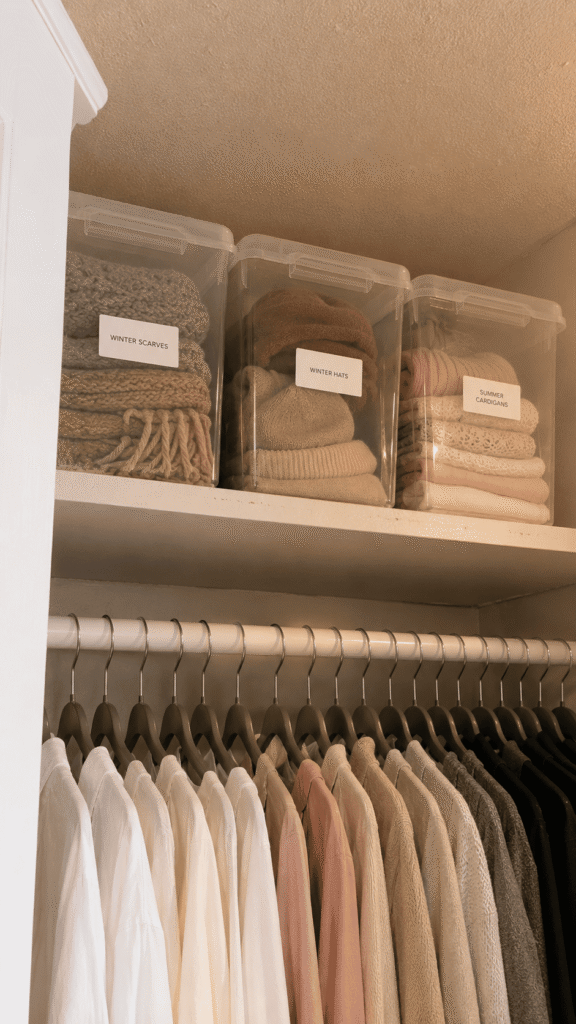
The highest shelf in a small closet is often completely wasted because it is hard to see what is up there and even harder to reach. Clear stackable bins solve both problems. Stack two or three clear bins on your highest shelf to hold seasonal items, spare accessories, travel bags, or anything else you need to store but do not reach for often. Because the bins are clear, you can see what is inside each one from below without having to pull everything down. Add a simple label on the front of each bin so you know exactly what is in it at a glance. This turns an awkward high shelf into genuinely useful organized storage.
6. Hang a Fabric Shelf Organizer from Your Closet Rod for Extra Shelf Space
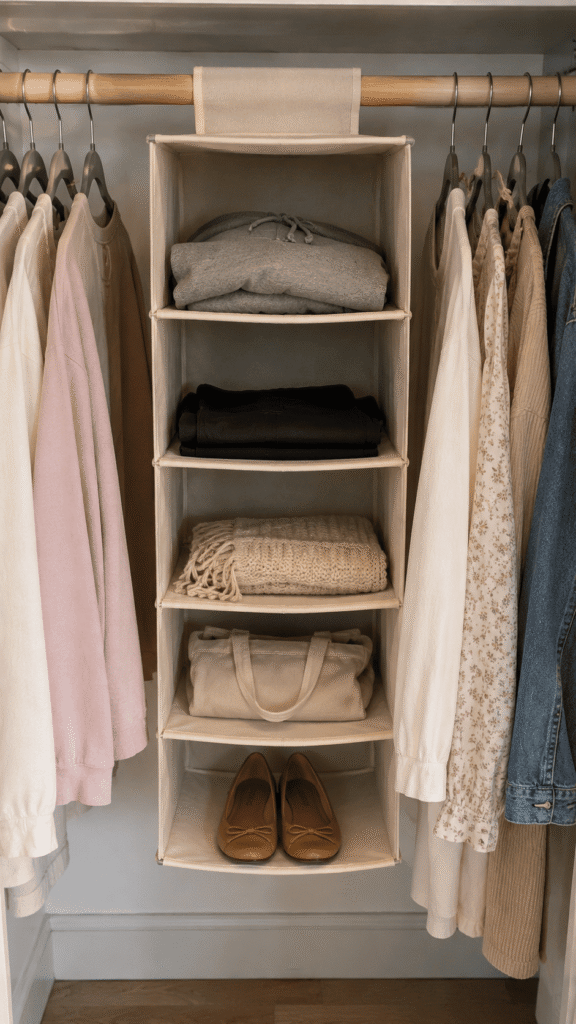
A hanging fabric shelf organizer is one of the most underrated small closet tools available. It hangs directly from your closet rod and drops down vertically, creating five or six individual shelves that float in the air between your hanging clothes. Each shelf can hold a folded item, a small bag, a pair of shoes, or a rolled scarf. It takes up almost no rod space and adds a significant amount of organized storage in the vertical space that would otherwise just be empty air between your hanging clothes and the floor. Choose one in a neutral canvas color or a natural linen fabric so it blends nicely with your closet interior.
7. Store Shoes in a Hanging Shoe Organizer to Free Up Closet Floor Space
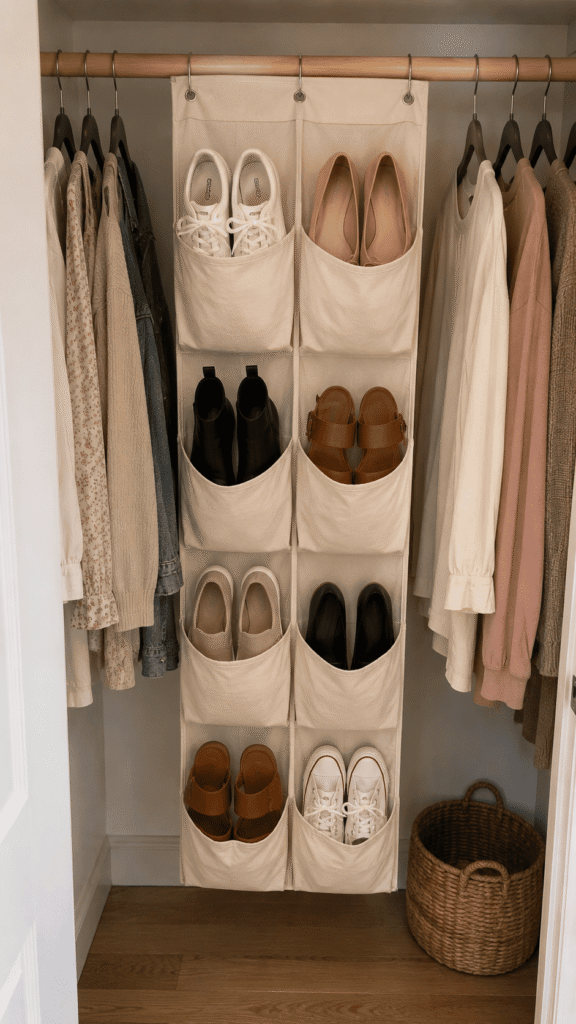
In a small closet the floor is precious real estate and a pile of shoes takes up more of it than almost anything else. A hanging shoe organizer that attaches to your closet rod or hangs on the back of the door moves all your shoes off the floor and up into vertical space. Most hanging shoe organizers hold between six and twelve pairs depending on the style. Canvas organizers with individual pockets for each pair are especially good for keeping shoes dust-free and easy to see. Once your shoes are off the floor, you suddenly have that entire floor area available for a small drawer unit, a laundry hamper, or extra storage bins.
8. Use Tension Rods Vertically to Create Dividers on Shelves
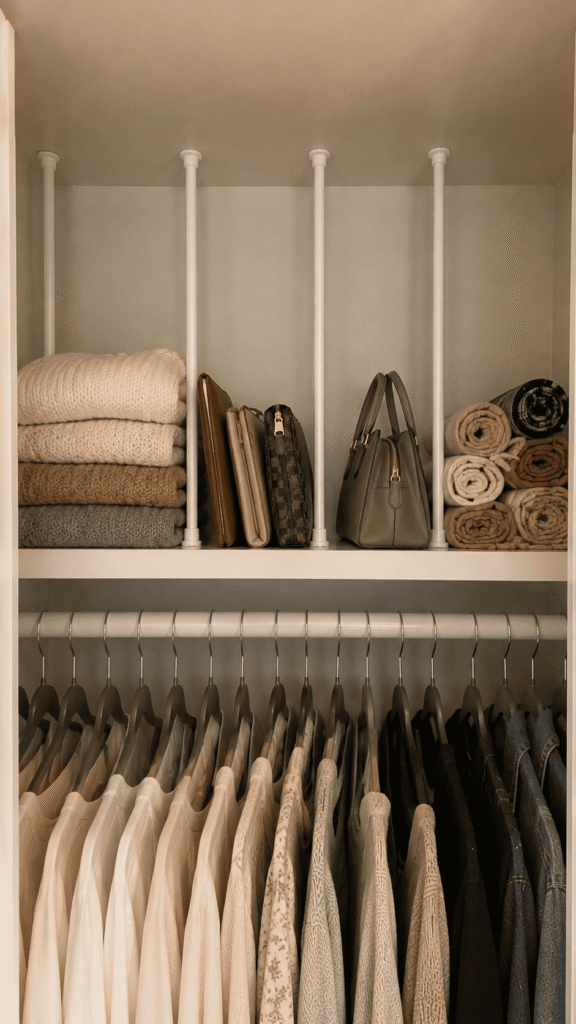
Tension rods are usually thought of as horizontal tools for hanging curtains or organizing under sinks, but they work brilliantly inside closets as vertical dividers on shelves. Place a tension rod vertically between your shelf and the shelf above it, or between the shelf and the closet ceiling, to create individual sections along a long shelf. These sections keep stacked items from toppling into each other. Clutches stand upright between dividers. Folded sweaters stay in neat columns instead of leaning and collapsing. Handbags stand up without falling sideways. It is a zero-cost trick if you already have tension rods at home, and tension rods are extremely inexpensive to buy if you do not.
9. Add a Small Pegboard Panel for Accessories and Jewelry
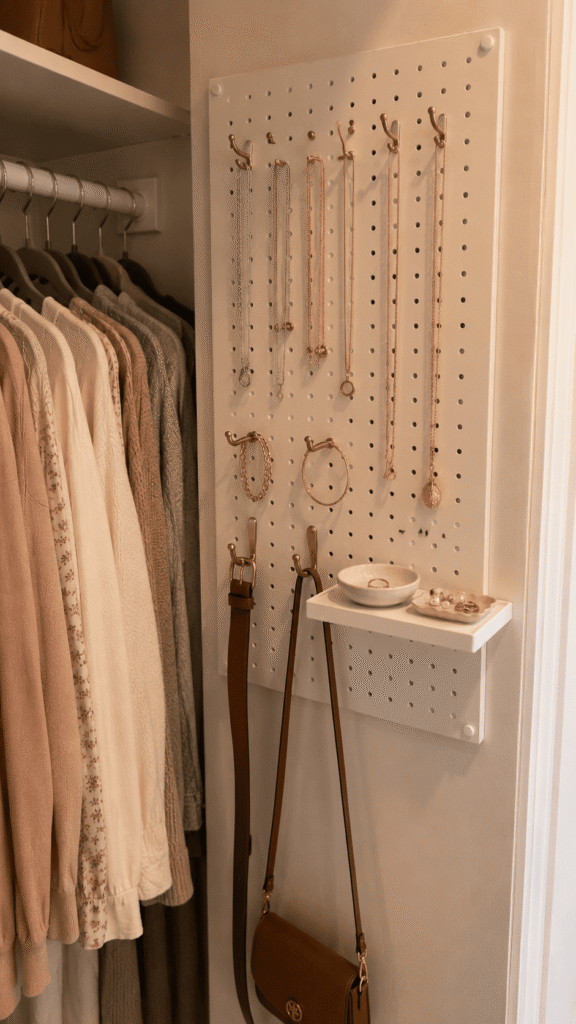
In a small closet where shelf and rod space are both limited, a pegboard panel on the side wall or back wall adds a whole new dimension of storage without taking up any shelf space at all. Mount a small pegboard and add a mix of small hooks for necklaces and bracelets, larger hooks for belts and bags, and small shelves for a ring dish or a small tray. Because everything hangs on the wall, your shelves and floor stay clear. Pegboards are also completely customizable so you can rearrange the hooks whenever your storage needs change. Paint the pegboard white or a soft neutral to blend with your closet walls and keep the look clean.
10. Roll and Store Bulky Items Like Jeans and Sweaters to Save Space
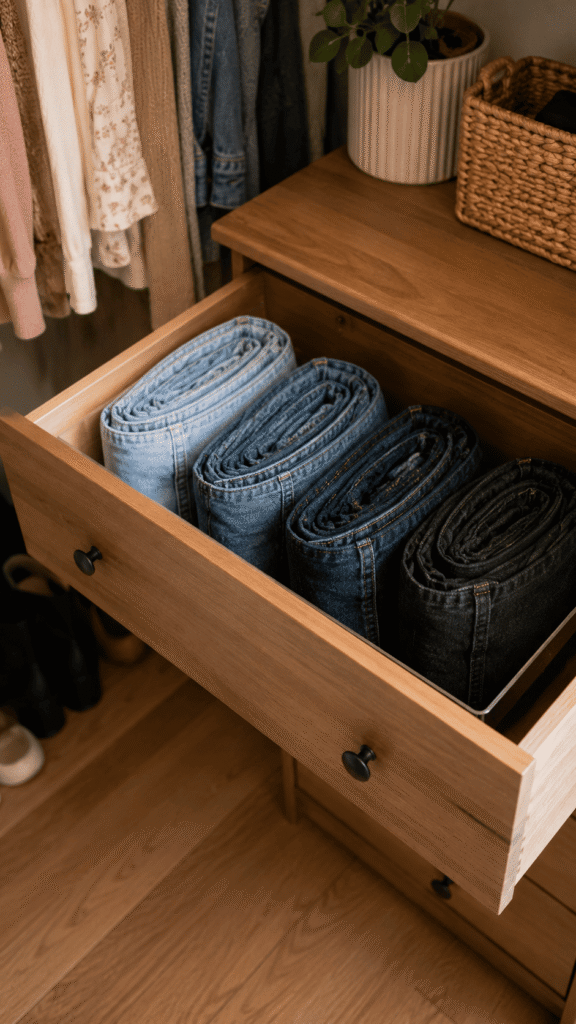
Folding bulky items like jeans, chunky knit sweaters, and hoodies flat takes up a disproportionate amount of shelf and drawer space in a small closet. Rolling them instead is a simple change that reduces bulk significantly. Roll jeans tightly into compact cylinders and stand them upright in a drawer or bin like a row of cans. Roll sweaters loosely and stack them on a shelf with the roll facing outward so you can see each one. Not only does rolling take up less space than flat folding, it also reduces the creases and wrinkles that come from having too many things stacked and pressed together. It is a small habit change that makes a noticeable difference.
11. Use Slim Profile Bins and Baskets Sized Exactly for Your Shelf Depth
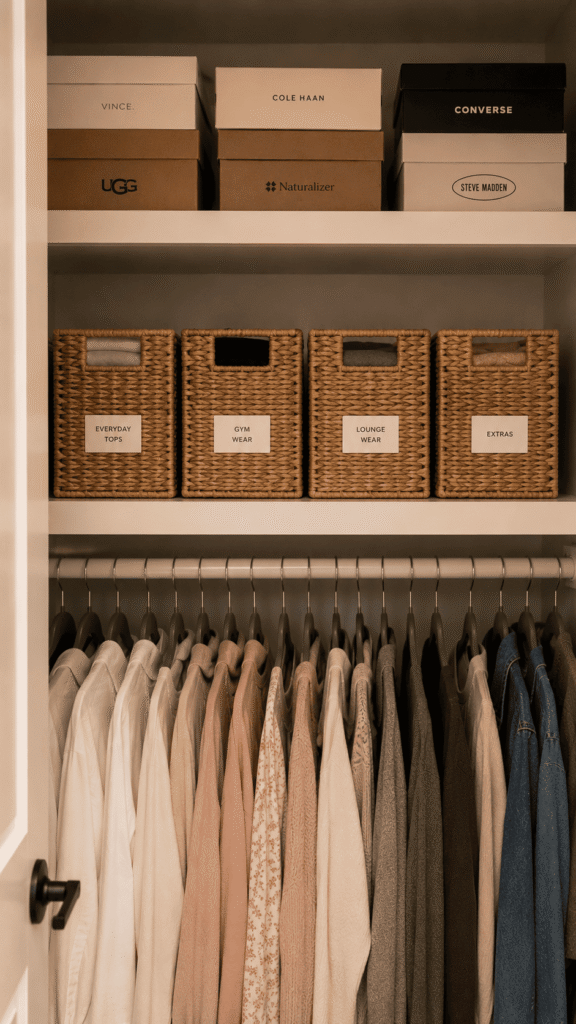
One mistake people make when organizing small closets is buying storage bins that are too deep for the shelf. The bin hangs off the front edge, looks messy, and is hard to pull in and out. Measuring your shelf depth before buying any bins or baskets is really important in a small closet. Look for slim profile bins that sit fully on the shelf without overhang. Narrow baskets, small rectangular bins, and compact fabric boxes all work well in shallow closet shelves. When bins fit the shelf perfectly, the whole closet looks more intentional and put together. Label the front of each bin so you can find what you need without pulling everything out to look inside.
12. Create a Capsule Wardrobe to Reduce the Amount of Clothing in the Closet
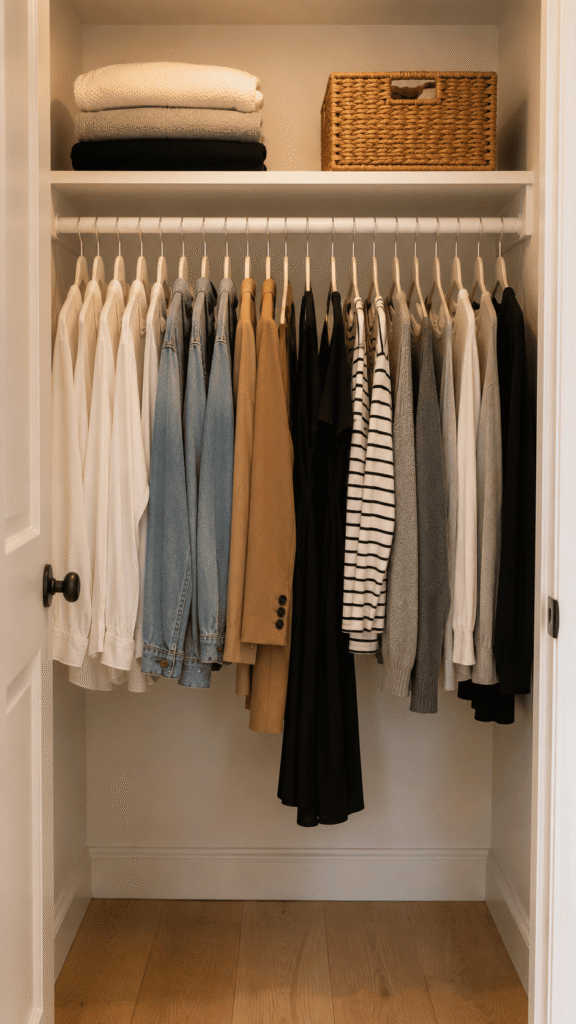
Sometimes the most effective small closet organization strategy is not about adding more storage but about reducing how much is in the closet in the first place. A capsule wardrobe is a small, intentional collection of clothes that all work together, usually between 20 and 40 pieces that you genuinely love and wear regularly. Going through your current wardrobe and removing anything you have not worn in a year, anything that does not fit properly, and anything you are keeping out of guilt rather than love frees up an enormous amount of closet space. What remains is a smaller, more curated wardrobe where everything is visible, accessible, and actually gets worn on a regular basis.
13. Label Everything in Your Small Closet to Keep the System Working Long Term
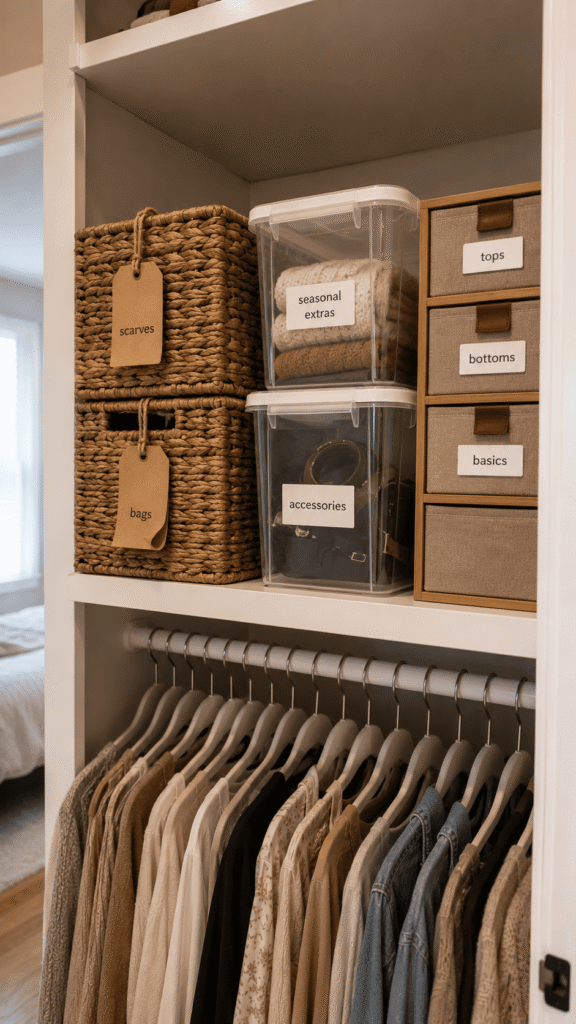
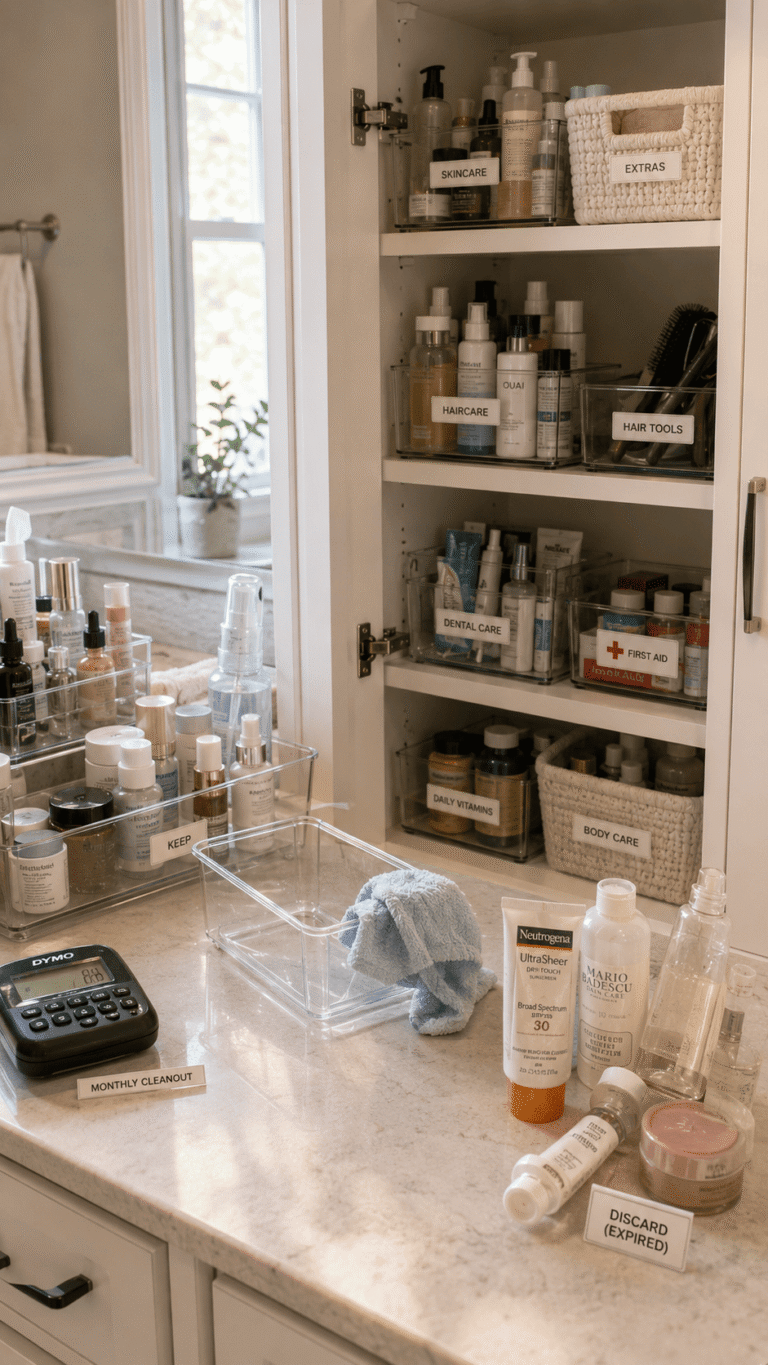
This last idea might seem too simple but it is honestly one of the most important parts of keeping any small closet organized long term. When everything is labeled, you always know where things belong and putting things back in the right spot takes no thought at all. Label your bins, your baskets, your shelf sections, and your drawer dividers. Use a simple label maker for a clean uniform look or write on kraft paper tags with a marker for something more natural and handmade. Labels matter even more in a small closet because there is no extra space to absorb things being put back in the wrong spot. A labeled system stays organized with almost no effort because the system tells you exactly where everything goes.
A small closet does not have to feel like a constant battle. With the right combination of smart tools and simple habits, even the tiniest closet can hold a surprising amount while still staying organized and easy to use every single day.
The key is to use every inch strategically. Use the door. Use the vertical wall space. Use the space below your hanging clothes. Use slim hangers to maximize rod space. And keep only what you actually wear and love so the closet never gets overwhelmed again.
You do not need to try all 13 ideas at once. Start with the changes that address your biggest closet frustrations right now and build from there. Even just switching to slim velvet hangers and adding an over-the-door organizer can make an immediate and noticeable difference in a small closet.
Save this post for when you are ready to tackle your closet and give it the organized, functional setup it deserves. Small space living is so much easier when your storage is working as hard as possible for you.