Teaching is one of those jobs where staying organized is not just helpful, it is absolutely necessary. Between lesson plans, grading papers, classroom supplies, student folders, art materials, reading books, and about a hundred other things that seem to multiply overnight, a teacher’s workspace can go from tidy to completely overwhelming really fast.
Most teachers know the feeling of spending ten minutes looking for a specific worksheet, not being able to find the dry erase markers right when you need them, or having a desk so buried in papers that you have stopped even trying to keep up with it. It is not a lack of effort. It is just that teaching involves so many moving parts that without a good system in place, things pile up quickly.
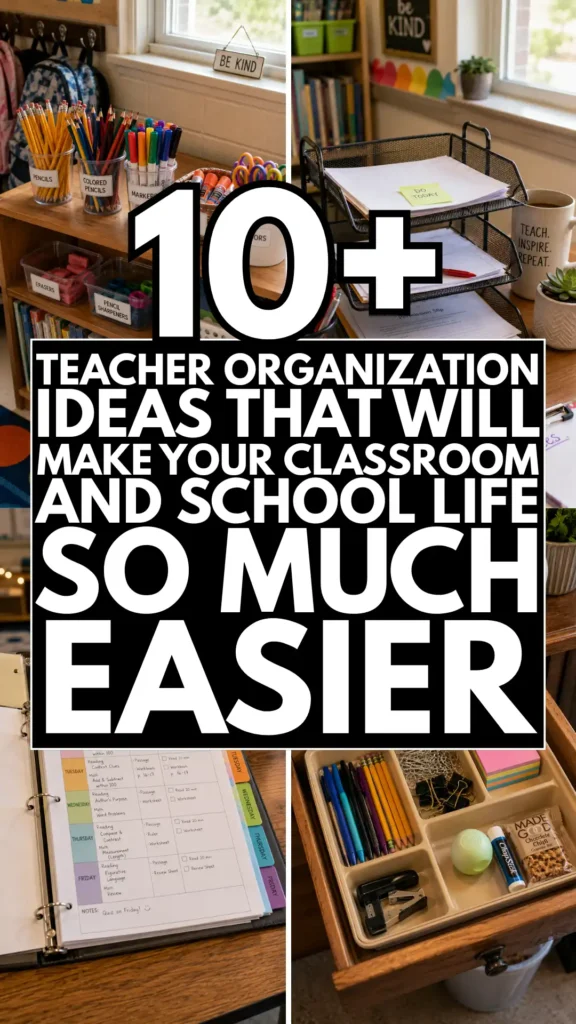
The good news is that teacher organization does not have to mean spending a lot of your own money or completely overhauling your classroom over a weekend. Small, smart changes make a really big difference. Adding a few labeled bins, setting up a simple paper management system, using a rolling cart for supplies, or creating dedicated student material stations can change how your whole classroom feels and functions.
Teacher organization ideas have been all over Pinterest and teacher blogs lately because educators everywhere are looking for systems that actually work in real classrooms with real kids. These are not perfect magazine setups. These are practical, realistic ideas that work Monday through Friday when things get busy and chaotic.
Whether you are setting up your very first classroom, trying to bring some order back to a space that has gotten out of control, or just looking for a few fresh ideas to improve your current system, there is something here for you.
1. Use a Rolling Cart to Keep Your Most-Used Supplies Mobile and Accessible
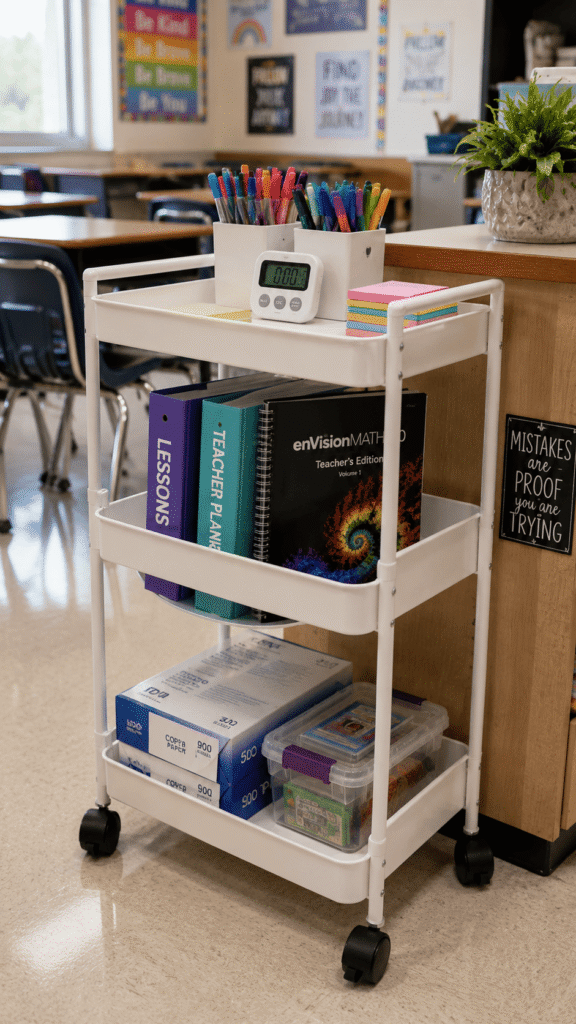
A rolling cart is one of the most popular teacher organization tools for a very good reason. It keeps everything you reach for most often in one portable spot that you can wheel anywhere in your classroom. Use the top shelf for things you need during lessons like markers, pens, sticky notes, and a timer. The middle shelf can hold your teacher editions or current lesson plan binders. The bottom shelf works well for extra paper, scissors, or a small first aid kit. Choose a cart with a bright color or a neutral tone depending on your classroom style. It is practical, easy to move, and keeps your desk from becoming a dumping ground.
2. Set Up a Labeled Bin System for Every Subject or Class Period
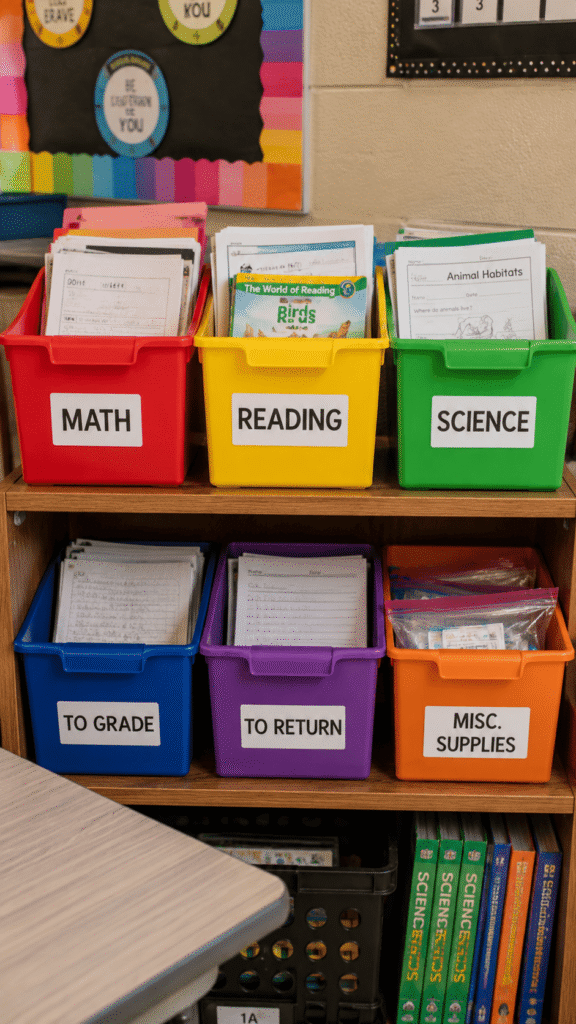
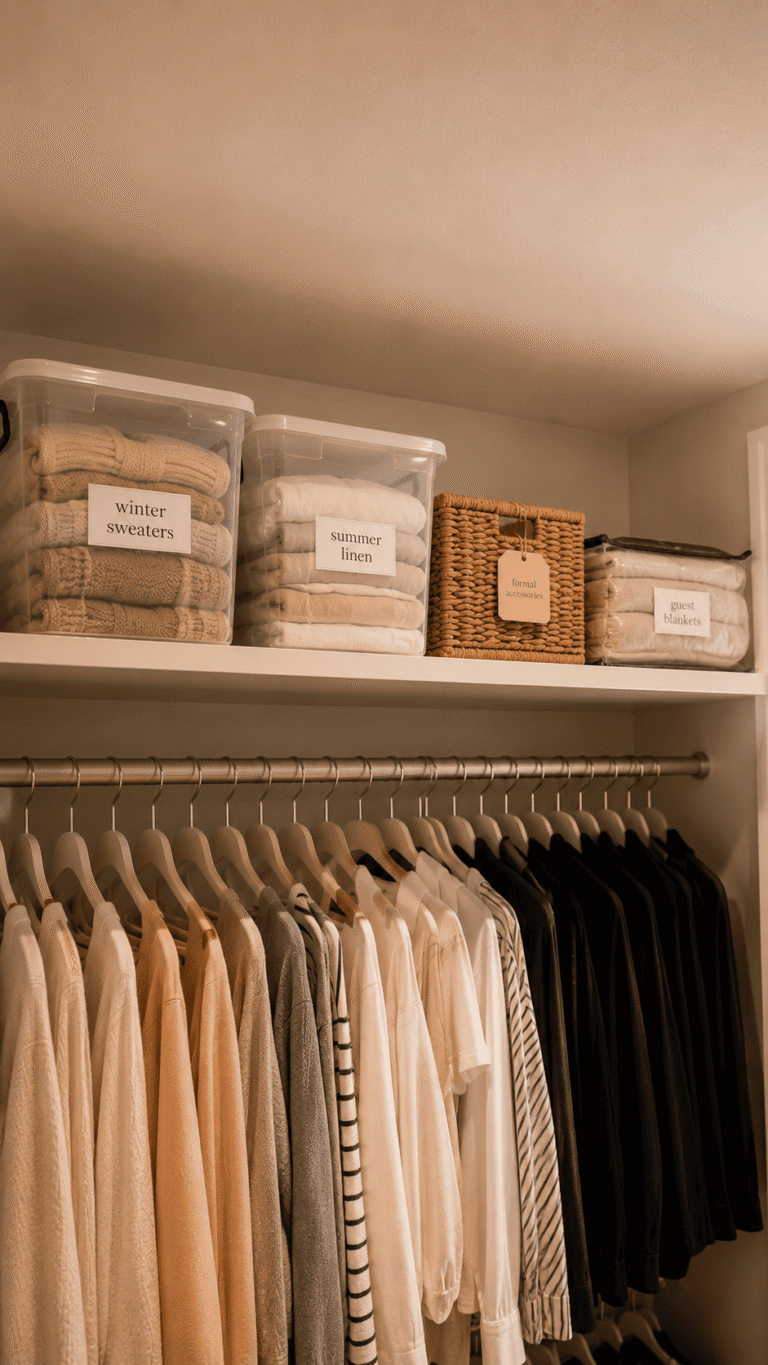
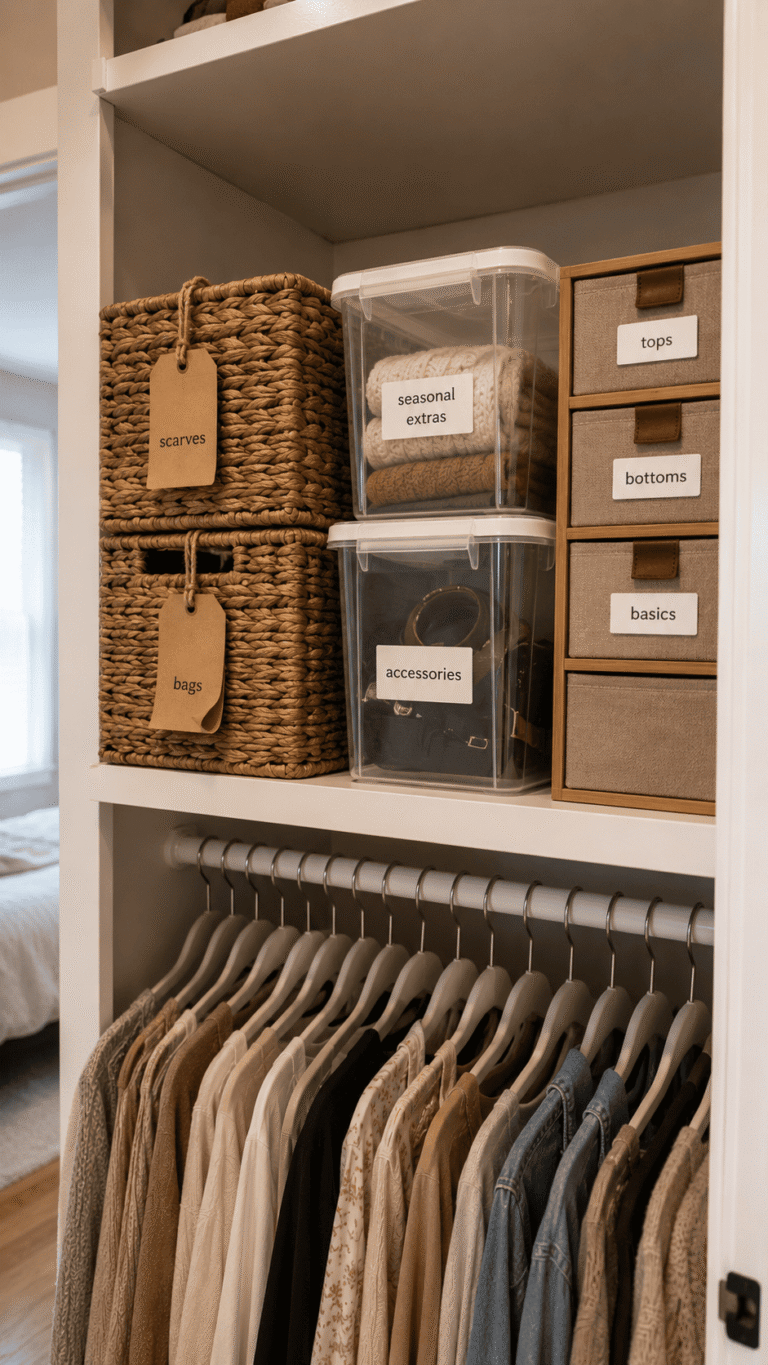
Labeled bins are one of the simplest and most effective classroom organization tools a teacher can use. Get a set of stackable plastic bins or colorful magazine file boxes and assign one to each subject, class period, or category of papers you deal with regularly. Label the front of each bin clearly. One bin for math worksheets, one for reading materials, one for papers to grade, one for graded work to return. When everything has its own bin, papers stop piling up in random stacks on your desk. Color-coding the bins by subject makes the system even faster to use because you can grab the right one without even reading the label.
3. Create a Student Supply Station So Kids Can Help Themselves
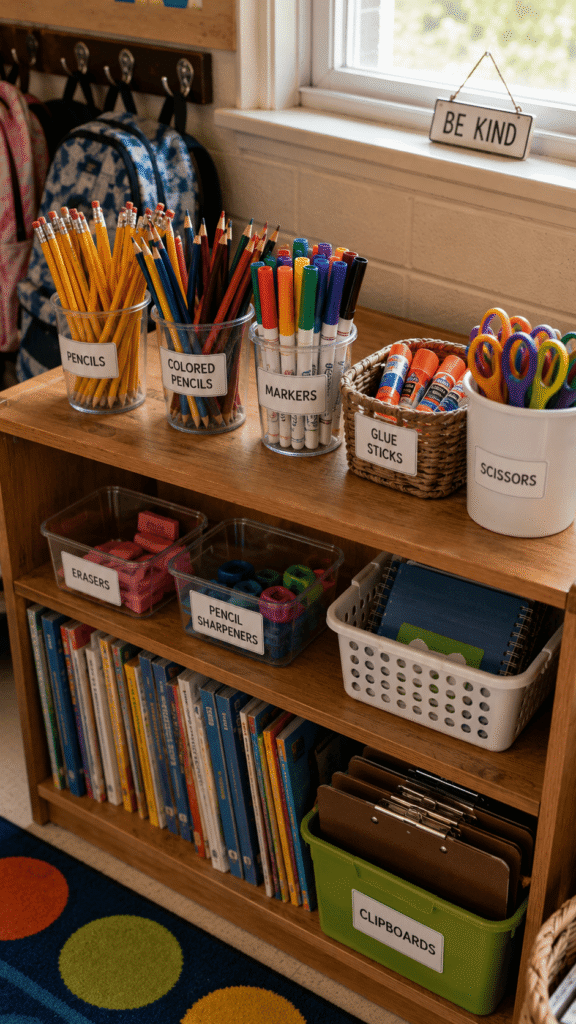
One of the best ways to reduce interruptions during class is to set up a dedicated student supply station where kids can get what they need without asking. Use a small table, a shelf unit, or a rolling cart in an easy-to-reach corner of the room. Stock it with pencils in a cup, a cup of colored pencils, scissors in a holder, a glue stick basket, and a small box of erasers. Add simple labels to each container so students know exactly where to return things. When kids can manage their own supplies, you get fewer interruptions and the whole class runs more smoothly throughout the day.
4. Use a Desktop Paper Organizer to Manage the Daily Paper Flow
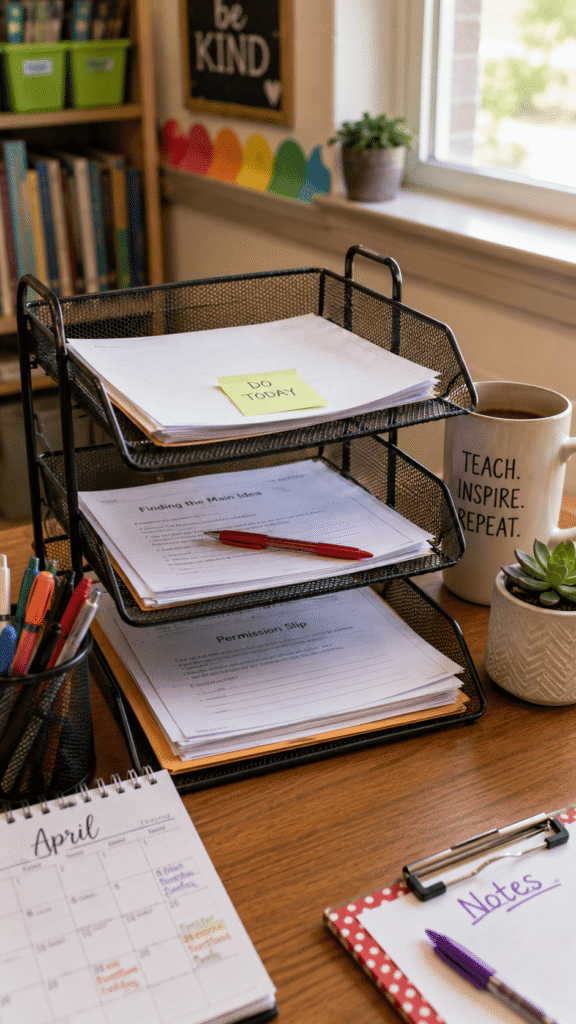
Papers are the number one clutter problem for almost every teacher. Handouts, permission slips, worksheets, notes from the office, things to copy, things already copied. It never ends. A simple multi-tier desktop paper organizer on your teacher desk can bring real order to all of it. Set up each tier with a clear purpose. Top tier for things that need to be done today. Middle tier for things in progress. Bottom tier for things to file or send home. Once you get into the habit of using it, papers stop stacking up in random piles all over your desk. It takes about a week to build the habit and makes a noticeable difference very quickly.
5. Organize Your Classroom Books with Labeled Baskets on a Low Shelf
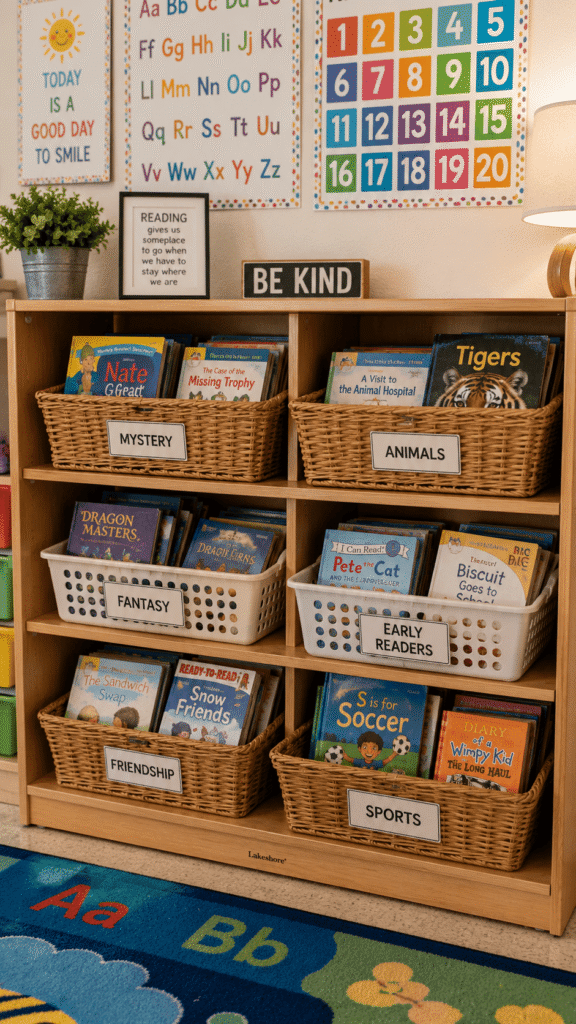
Classroom libraries are wonderful but they can become a complete mess fast when books are just shoved back onto shelves in random spots. Organizing your books into labeled baskets by genre, reading level, topic, or series makes finding the right book so much faster for both you and your students. Use plastic bins, woven baskets, or magazine file boxes and add a printed or handwritten label to the front of each one. Students can browse independently without pulling out and misplacing twenty books to find one. It also makes restocking the library at the end of the day much faster because everyone knows exactly where each basket goes.
6. Set Up Individual Student Folders or Mailboxes for Returning Work
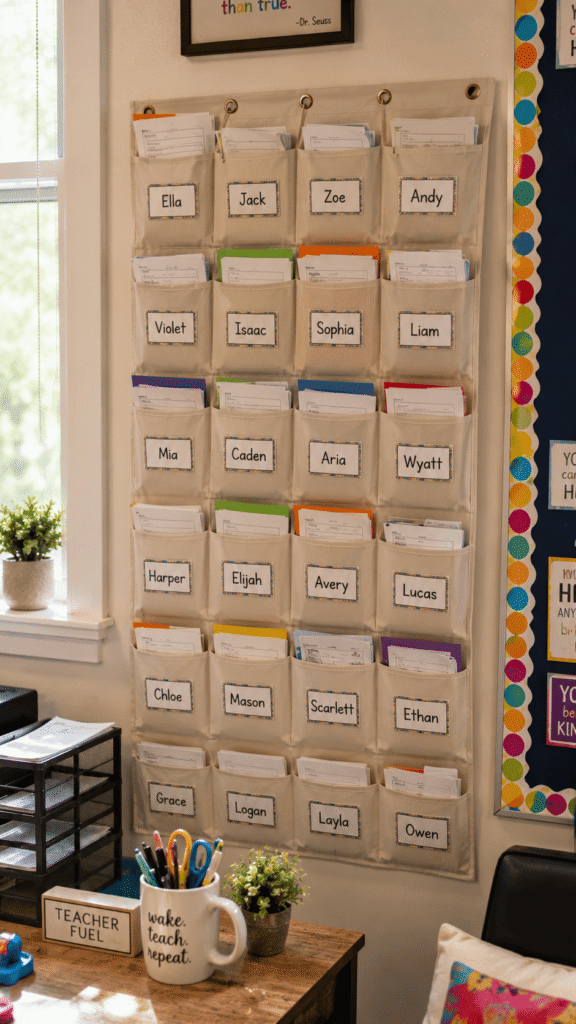
Returning graded work and sending things home with students is one of those tasks that becomes chaos without a system. Setting up individual student folders or a small mailbox-style organizer with a slot for each student solves this instantly. You can use a multi-pocket wall organizer, a set of hanging file folders in a crate, or small individual folders stored in a bin. Label each spot with a student’s name. When work is graded, it goes straight into the student’s slot. Students check their folder at the same time each day and know exactly where to look. It saves time, reduces lost papers, and gives students a sense of ownership.
7. Use a Weekly Planning Binder to Keep Lessons and Tasks Organized
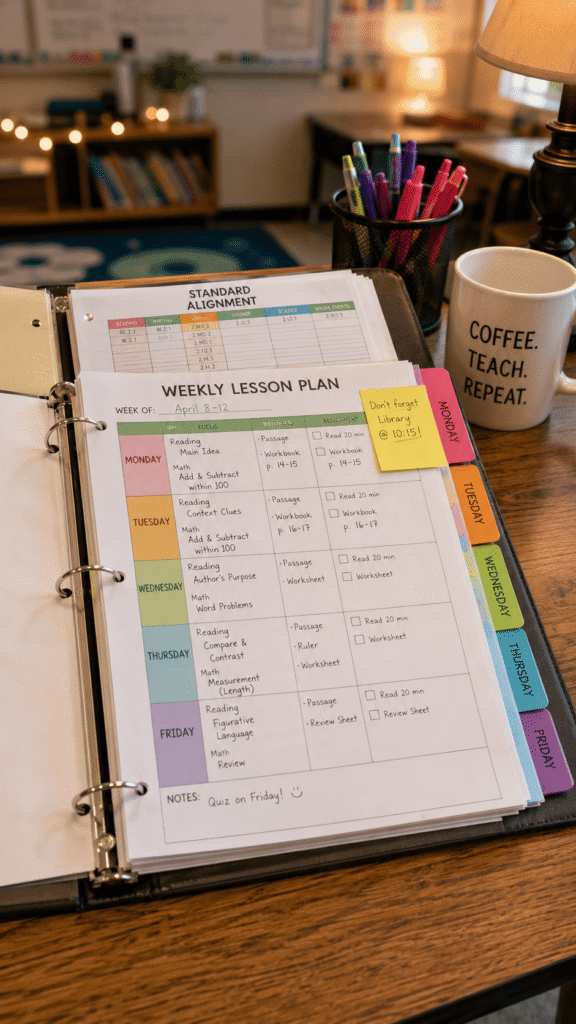
A well-organized planning binder is something every teacher benefits from having. Get a large three-ring binder and set it up with dividers for each day of the week. Behind each divider, keep your lesson plans, any worksheets you plan to use that day, and a simple to-do list. Add a front pocket for things that need immediate attention. Use clear sheet protectors for documents you reference often so they don’t get worn out. A binder planner keeps everything for the whole week in one place so you are never scrambling to find what comes next. Decorate the cover with your name or a fun label to make it feel personal and motivating.
8. Store Art and Craft Supplies in a Clear Drawer Unit
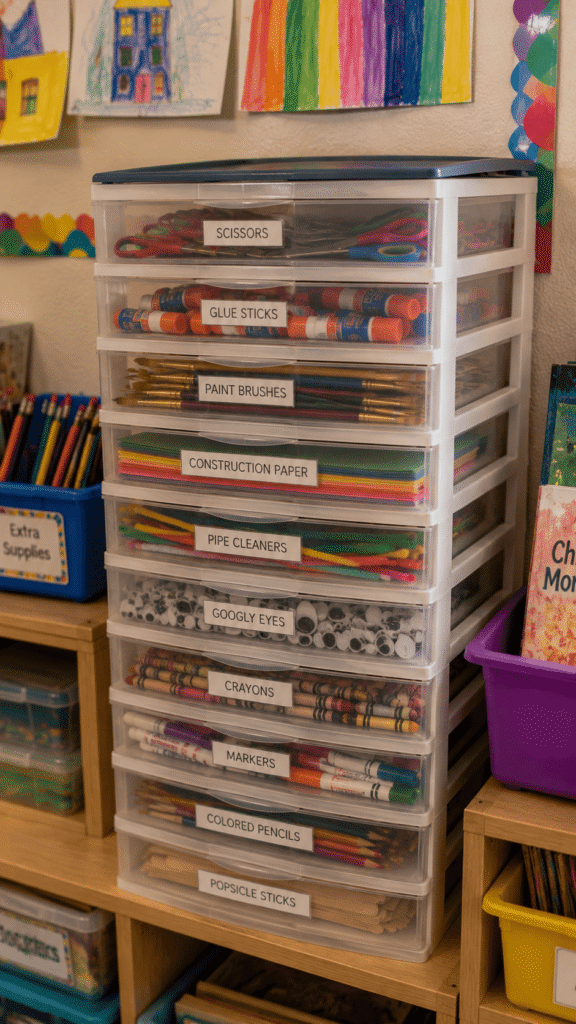
Art and craft supplies are notorious for creating mess in a classroom. Glitter, pipe cleaners, paint, construction paper, googly eyes, and a hundred other small items can take over an entire shelf if there is no system for them. A clear plastic drawer unit with multiple small drawers is perfect for keeping all of this under control. Assign one drawer to each type of supply. One drawer for scissors, one for glue and tape, one for paint supplies, one for small decorative items. Label the front of each drawer. Because the drawers are clear, you and your students can see exactly what is in each one without opening every single drawer to find what you need.
9. Create a Morning Routine Checklist Display for a Smoother Start to the Day
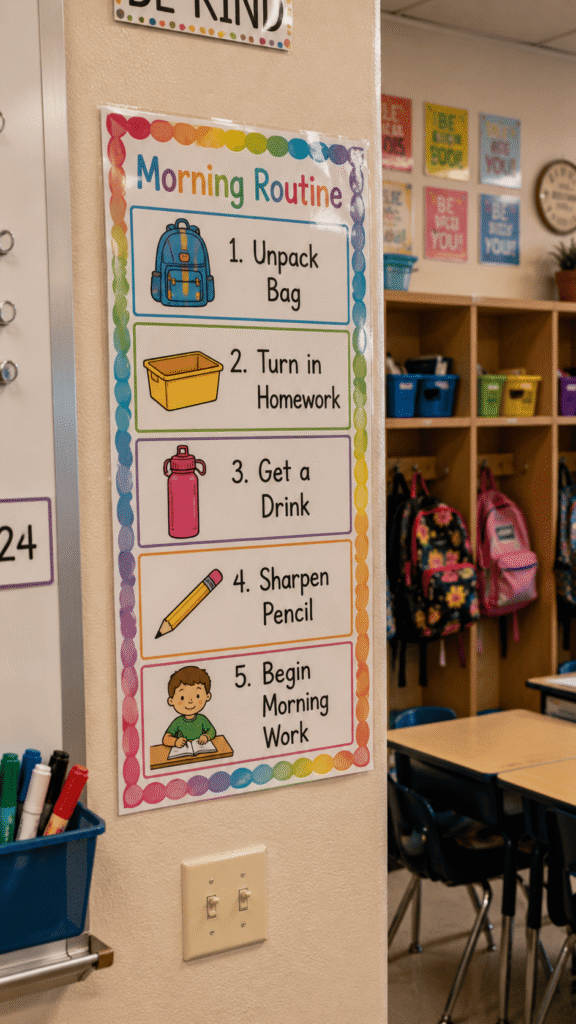
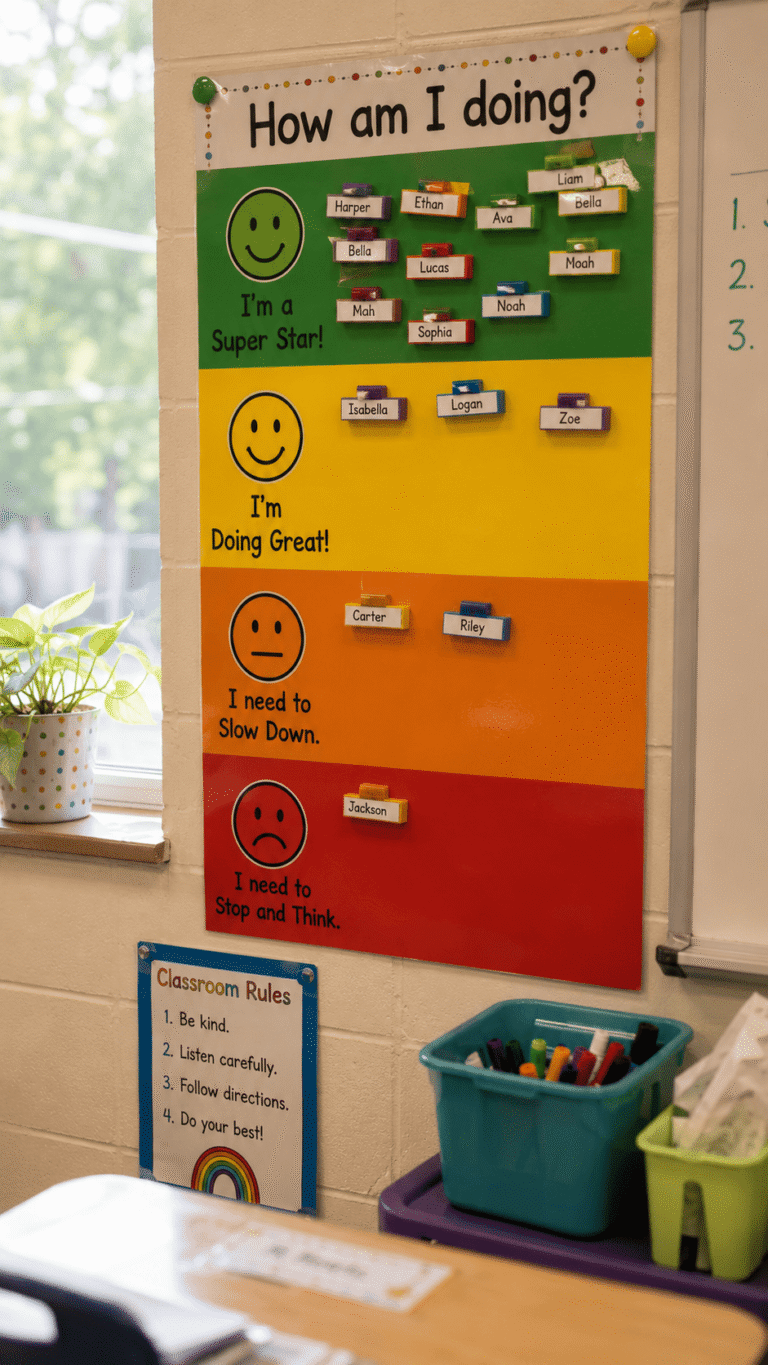
One organization idea that helps both teachers and students is a clear visual morning routine checklist posted somewhere easy to see in the classroom. This can be a simple poster, a whiteboard section, or a printed checklist inside a frame. List every step of the morning routine in order. Unpack your bag. Turn in homework. Sharpen your pencil. Get started on the morning activity. When students know exactly what to do the moment they walk in, the morning runs so much more smoothly. It reduces the number of questions you have to answer before the day even officially starts and gets everyone settled faster.
10. Keep Your Teacher Desk Drawer Organized with a Divided Tray
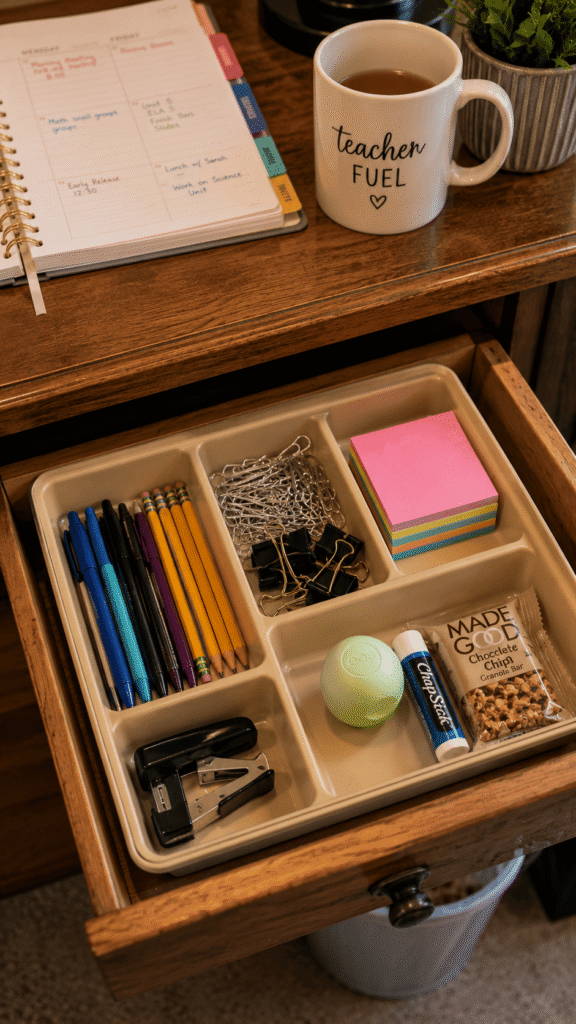
Teacher desk drawers have a way of becoming a black hole where pens, paper clips, sticky notes, and mystery items go to disappear forever. A simple divided drawer tray or a set of small drawer organizer boxes fixes this completely. Assign each section a specific type of item. One section for pens and pencils, one for paper clips and binder clips, one for sticky notes, one for scissors and a stapler remover, one for small personal items like lip balm and a snack. Once everything has a designated spot in the drawer, it stays organized with almost no effort because you always know exactly where to put things back.