A small kitchen pantry is one of those spaces that can go from organized to completely chaotic in what feels like just a few grocery trips. Cans stacked on top of cans. Boxes of pasta and cereal crammed in sideways. Spice jars rolling around in the back. Bags of chips and snacks taking up three times the space they should. And somewhere behind all of that, an ingredient you bought two weeks ago that you now cannot find and will probably buy again at the store because you assume you ran out.
If this sounds like your pantry situation, you are absolutely not alone. Small pantries are genuinely challenging to organize because there is a real tension between how much food a family needs to store and how little space there is to store it in. Most small pantries have just a few fixed shelves and not a lot of flexibility built into the design, which means you have to be really strategic about how you use every single inch.
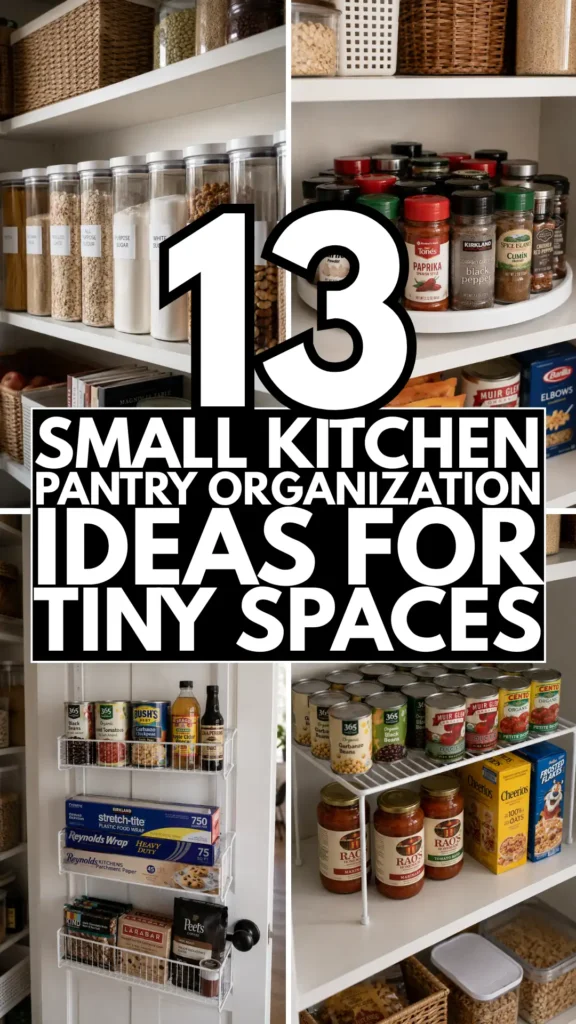
The good news is that a small pantry can actually be organized incredibly well with the right tools and the right approach. Clear containers, shelf risers, turntables, over-the-door organizers, pull-out bins, and a few smart labeling habits can transform even the most cramped pantry into a space where you can find everything quickly, nothing gets wasted, and grocery restocking becomes genuinely simple.
Small pantry organization has been one of the most popular topics on Pinterest for years because people love seeing how much potential is hiding inside a tiny pantry space when it is used strategically. The before and after transformations are honestly remarkable even when the pantry itself has not changed in size at all.
Whether your small pantry is a narrow reach-in closet, a single cabinet, a small cupboard, or a tight little room off the kitchen, these ideas will help you get the absolute most out of every shelf, every door, and every corner you have available.
Here are 13 small kitchen pantry organization ideas that are practical, budget-friendly, and genuinely easy to set up in a real home kitchen.
1. Decant Dry Goods into Clear Airtight Containers for a Uniform Look and Longer Freshness
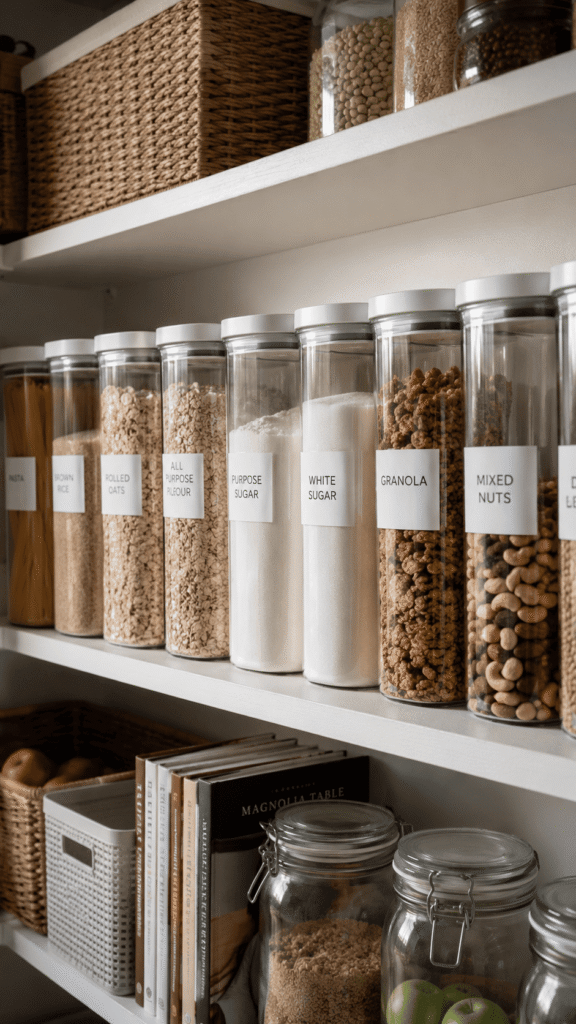
One of the most impactful changes you can make in a small pantry is transferring dry goods out of their bulky original packaging and into matching clear airtight containers. Pasta, rice, oats, flour, sugar, cereal, nuts, and dried beans all take up significantly less space when stored in uniform containers instead of the oddly shaped bags and boxes they come in. Clear containers let you see exactly how much of each item you have at a glance without opening anything. They also keep dry goods fresher for longer than loosely sealed bags and boxes. Add a simple label to the front of each container with the item name and you have a pantry shelf that looks clean, uniform, and so much easier to navigate.
2. Add a Shelf Riser to Double the Storage Capacity of a Single Shelf
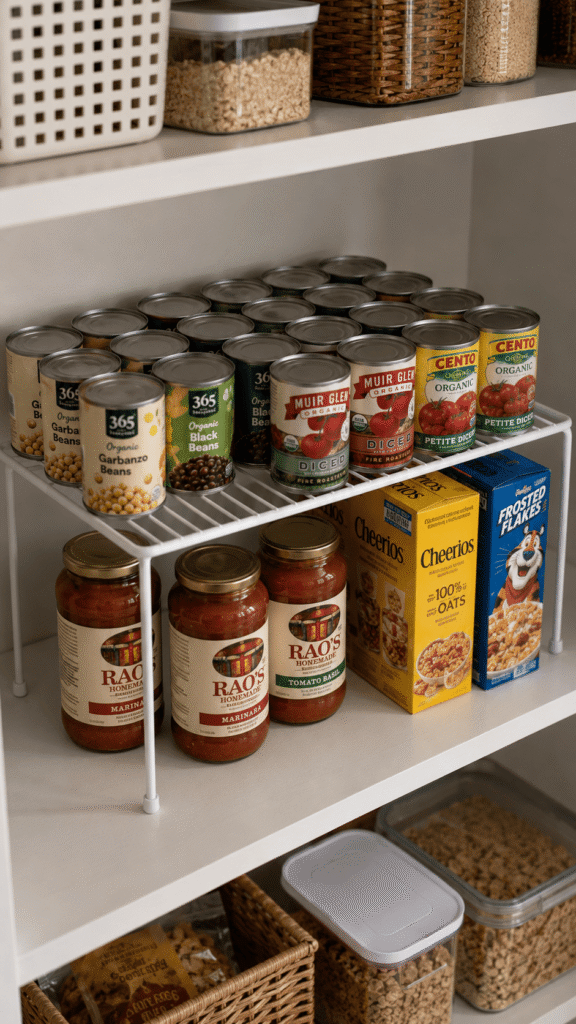
In a small pantry with fixed shelves that are spaced too far apart, a shelf riser is one of the most effective tools you can add. A shelf riser sits directly on top of your existing shelf and creates a second elevated level of storage so you can stack two rows of cans, jars, or containers in the same vertical space that previously only held one row. Use the lower level for taller items and the upper riser level for shorter items. This simple addition can nearly double the number of items you can store on a single shelf without changing anything about the pantry structure itself. Look for risers in white wire or clear acrylic to keep the look light and open in a small space.
3. Use a Turntable or Lazy Susan for Spices Oils and Condiments
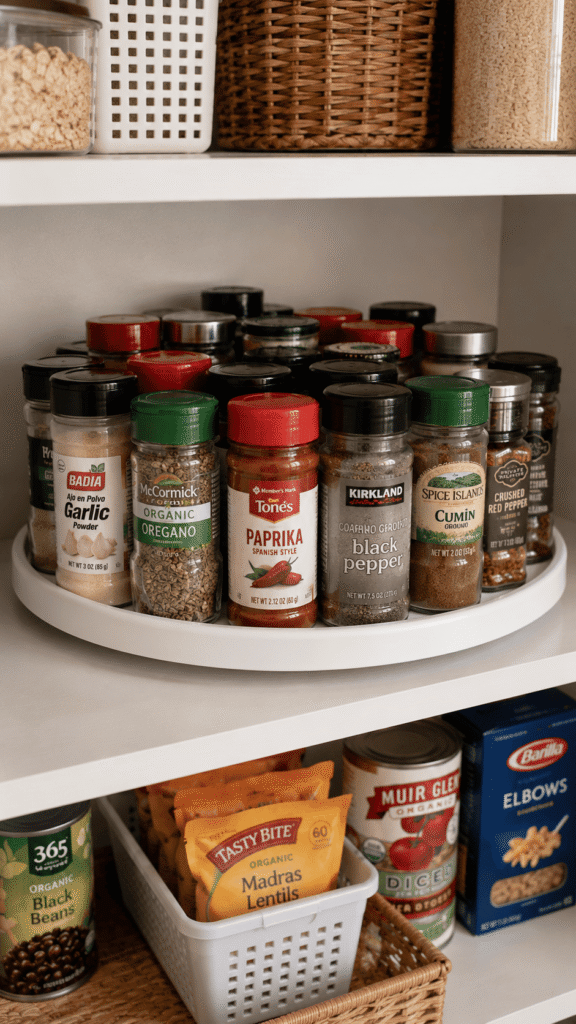
Spice jars, oil bottles, vinegars, and small condiment jars are notorious for getting shoved to the back of a pantry shelf where they become invisible and forgotten. A simple turntable or lazy susan on a pantry shelf solves this completely. Place all your spice jars on the turntable and spin it to access anything from any angle. No more reaching past six other bottles to get to the one you need. No more spice jars falling over every time you try to grab one from the back. A lazy susan with a lip around the edge keeps bottles from sliding off when you spin it. Use a small one for spices and a larger one for oils and vinegars on a different shelf.
4. Install an Over-the-Door Organizer to Add Storage Without Using Any Shelf Space
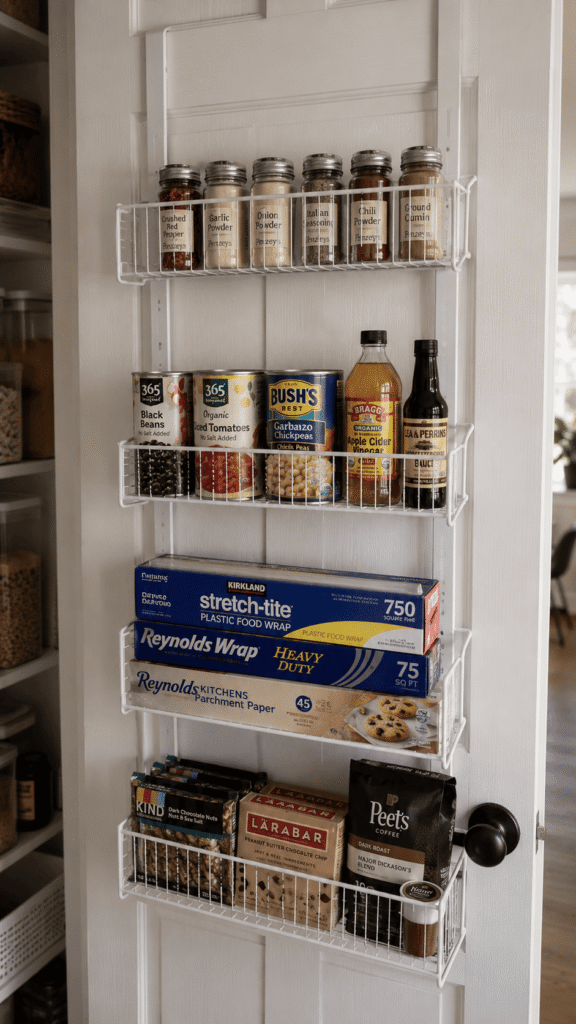
In a small pantry, the back of the pantry door is some of the most valuable and overlooked storage space you have. An over-the-door pantry organizer with multiple tiers or pockets can hold a surprising amount of food and pantry items without using a single inch of shelf space. Use it for canned goods, spice jars, snack packets, foil and plastic wrap boxes, small condiment bottles, or a combination of all of these. Door organizers with wire shelves or adjustable tiers work well for holding a variety of pantry item sizes. Because this storage is on the door, it swings away when not in use and comes right to you when you open the pantry, making everything on it very easy to access.
5. Use Pull-Out Bins or Drawers for Snacks and Loose Items
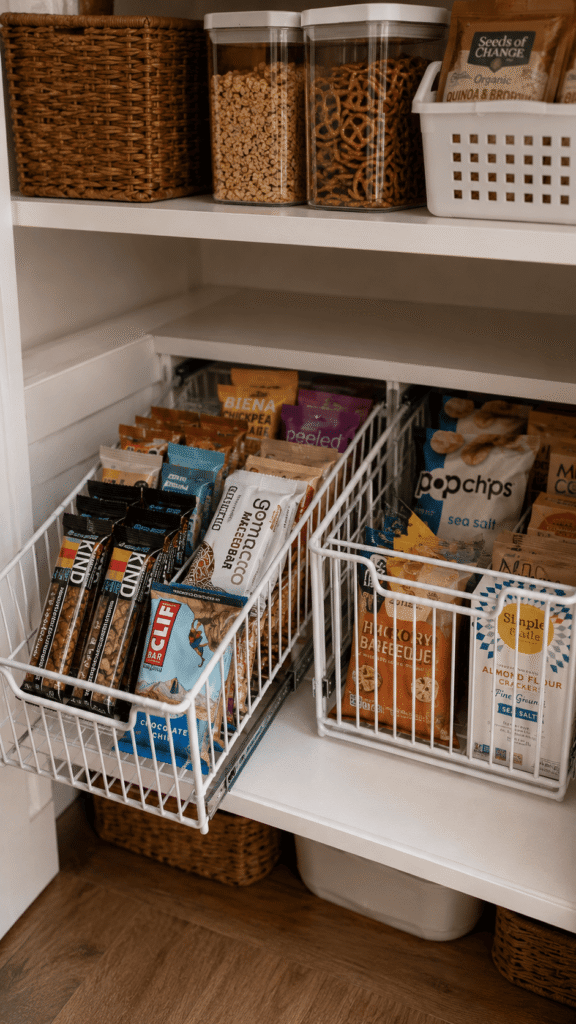
Snacks and loose pantry items like granola bars, chips, crackers, and individual snack pouches are some of the messiest things to store in a small pantry because they come in so many different sizes and shapes and nothing stacks neatly. Pull-out bins or small baskets that you can slide in and out like a drawer are perfect for these items. Place a pull-out bin on a shelf and fill it with all your snack items. When you want a snack, pull the bin out and see everything inside at once instead of reaching into the back of the shelf blind. This keeps the snack area contained, visible, and easy to restock. Use one bin per snack category if you have the shelf space for it.
6. Store Canned Goods with Labels Facing Forward in Neat Rows by Category
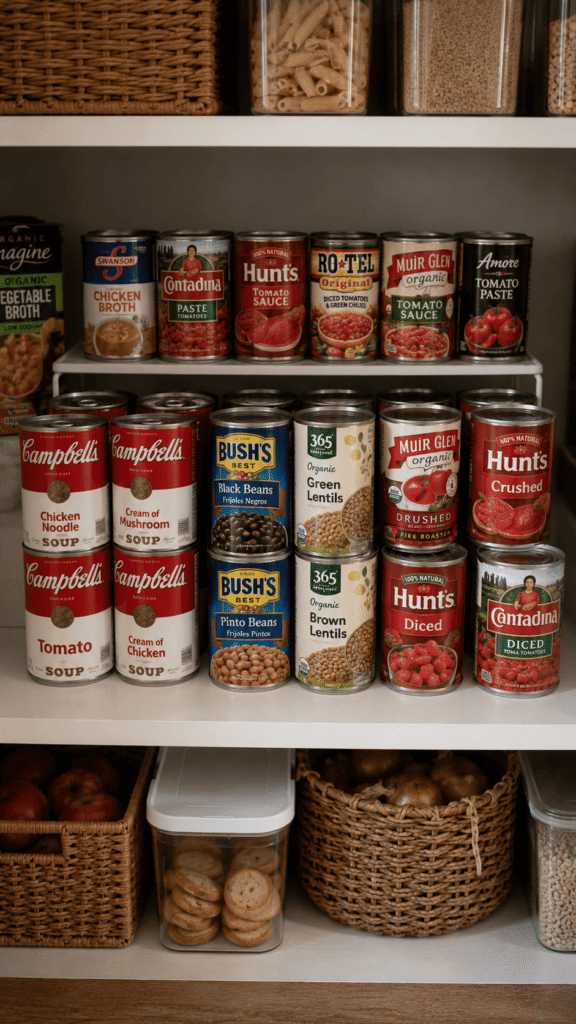
Canned goods are one of the most common sources of pantry chaos because they all look similar from above and they roll around the moment you move one. Organizing canned goods with all labels facing forward in neat rows grouped by category makes finding what you need instantly fast. Group all the soups together. All the beans together. All the tomato products together. All the vegetables together. When cans are organized this way, you can see exactly what you have and how many of each item without moving anything. If your shelf is deep enough for two rows, put the older cans in front and newer ones behind so you always use the oldest stock first.
7. Use Magazine File Holders for Baking Sheets Cutting Boards and Flat Items
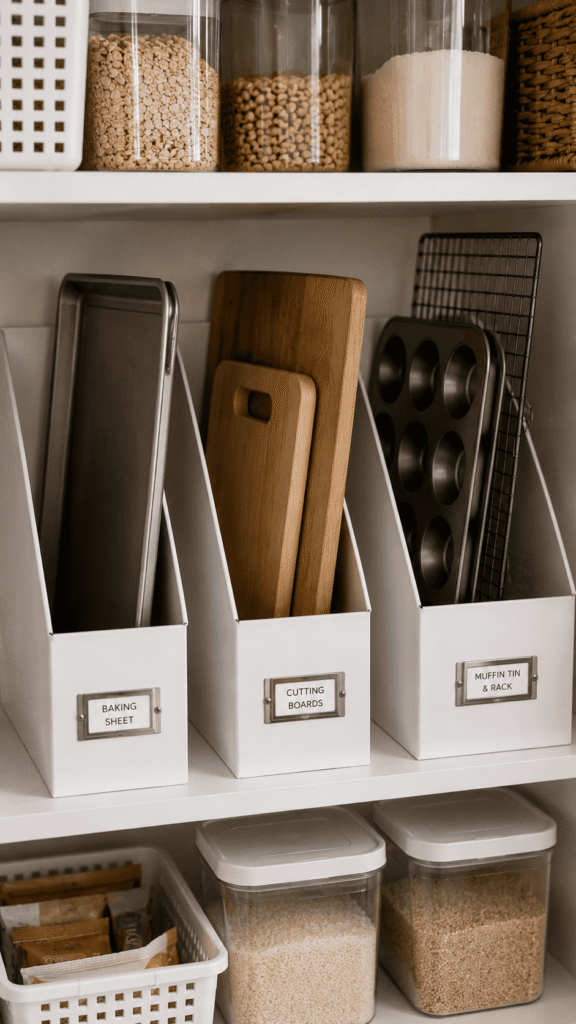
This is one of those pantry organization hacks that surprises people because it works so much better than expected. Plastic or metal magazine file holders mounted on a pantry shelf or placed vertically on a shelf create individual slots for storing flat kitchen items like baking sheets, cutting boards, muffin tins, cooling racks, and pan lids. Instead of stacking these items flat in a pile where the bottom one is always the one you need, each item gets its own vertical slot and can be lifted out individually without disturbing anything else. Use two or three file holders side by side to create a complete flat item storage section that keeps all those awkward baking pieces organized and accessible.
8. Create a Dedicated Kid Snack Zone on a Low Easy-to-Reach Shelf
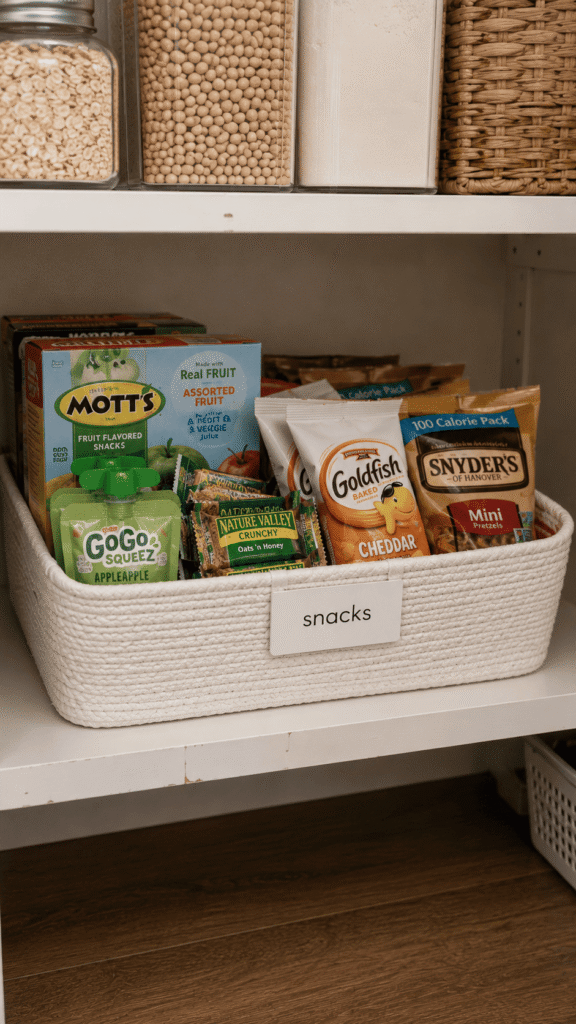
If you have kids, designating one specific low shelf or bin in your small pantry just for kid-friendly snacks is one of the most practical things you can do. When kids have their own clearly defined snack zone, they can get their own snacks independently without pulling everything off the shelf looking for something they like. Stock the zone with approved snack options only and keep everything at a height your child can reach safely on their own. Use a labeled basket or a low pull-out bin to contain everything neatly. When the snack zone needs restocking, it is easy to see exactly what is running low because everything is in one visible spot rather than scattered across multiple shelves.
9. Use Stackable Bins to Organize Baking Supplies in One Zone
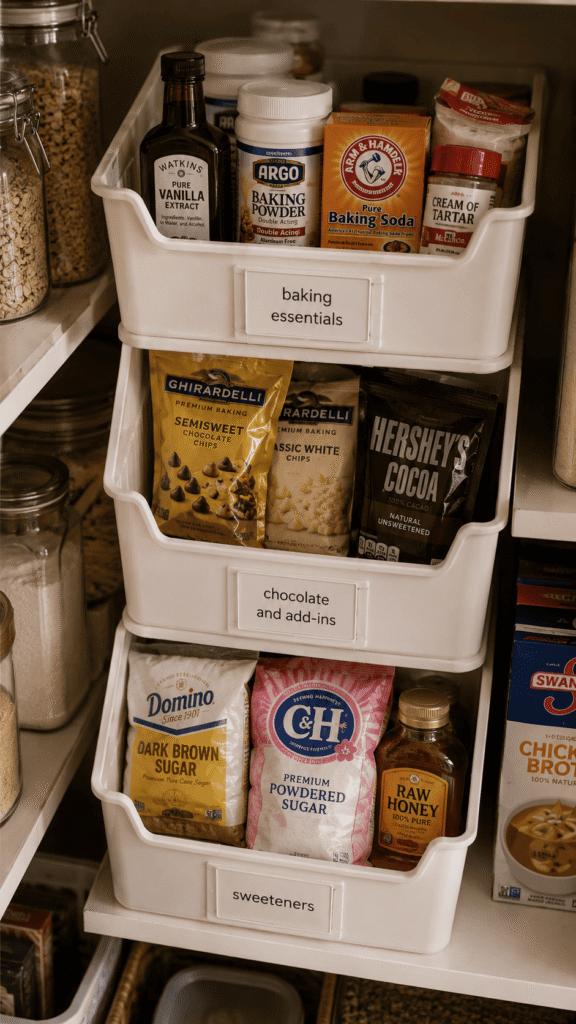
Baking supplies are one of the trickiest pantry categories to organize because they include so many different sizes and types of items from large bags of flour to small bottles of vanilla extract to bags of chocolate chips to boxes of baking soda. Creating a dedicated baking zone in your small pantry keeps all of these items together so you never have to hunt across multiple shelves when you want to bake. Use a set of stackable clear or white bins to group baking items by subcategory. One bin for sugars and sweeteners. One for chocolate chips and baking additions. One for extracts and leaveners. Label each bin clearly and stack them together in one pantry section.
10. Label Every Bin Basket and Container in the Pantry
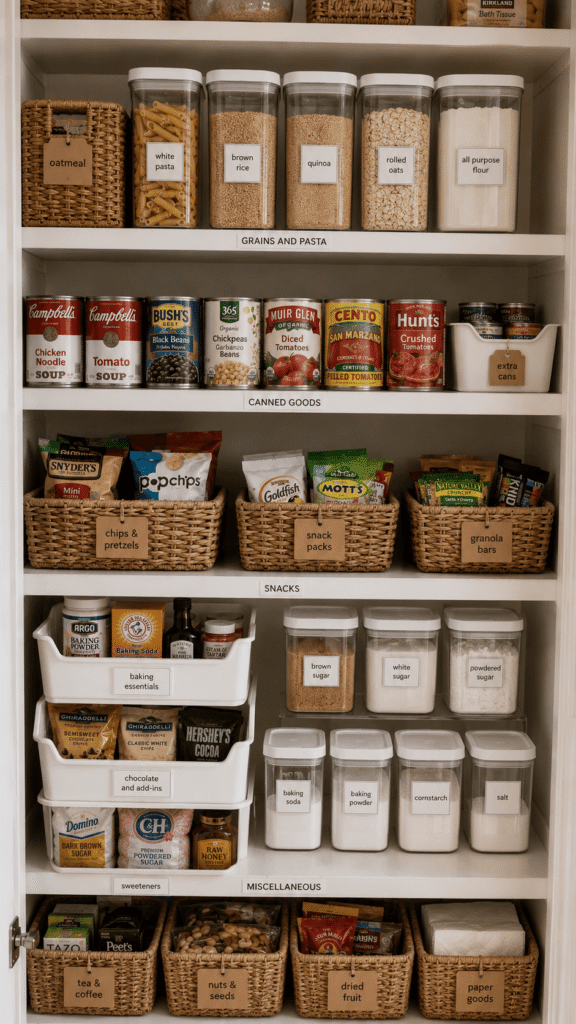
Labeling sounds like a small detail but in a small pantry it makes an enormous difference in how well the organization system holds up over time. When every bin, basket, and container has a clear label, everyone in the household knows exactly where to find things and exactly where to put them back. Without labels, systems slowly fall apart as items get returned to whatever spot is convenient rather than the correct spot. Use a label maker for clean uniform labels or write on kraft paper tags with a black marker for a more natural look. Label not just the containers but also the shelf zones themselves so even the shelves have a clear designated purpose that everyone in the house understands.
11. Use the Floor of the Pantry for Large Bulky Items in Baskets or Bins
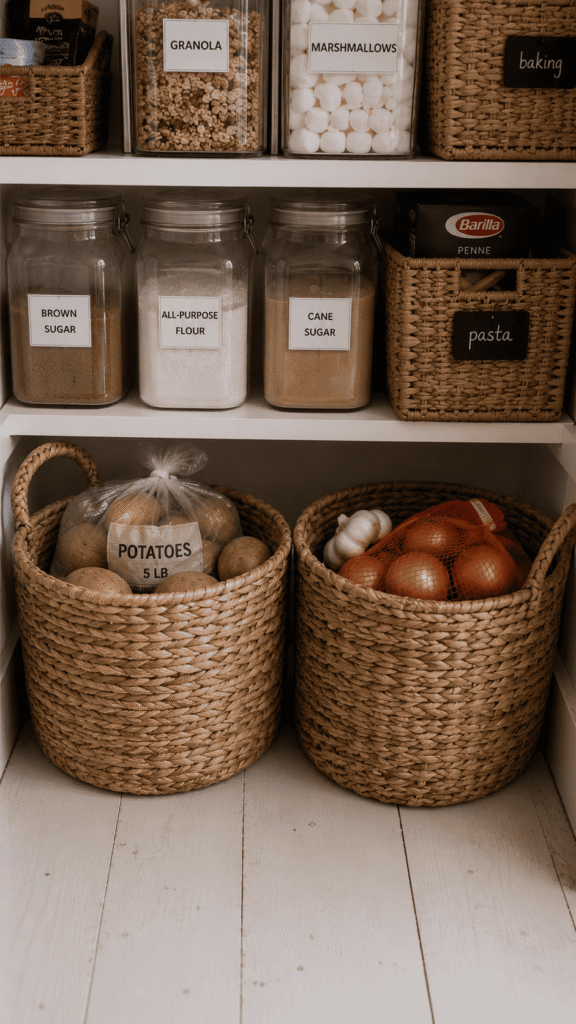
The floor of a small pantry is often wasted as either empty space or a dumping ground for random items that did not have anywhere else to go. Using the floor intentionally for large bulky items that do not fit well on shelves turns this wasted space into functional storage. Place a large woven basket or a sturdy bin on the pantry floor for storing bulk items like a large bag of potatoes, onions, or a bag of pet food. Use a flat rolling bin with handles if you need to be able to slide it out easily. Keeping large items on the floor frees up your precious shelf space for smaller and more stackable pantry items that benefit more from being at eye level.
12. Hang a Small Chalkboard or Whiteboard Inside the Pantry Door to Track What You Need
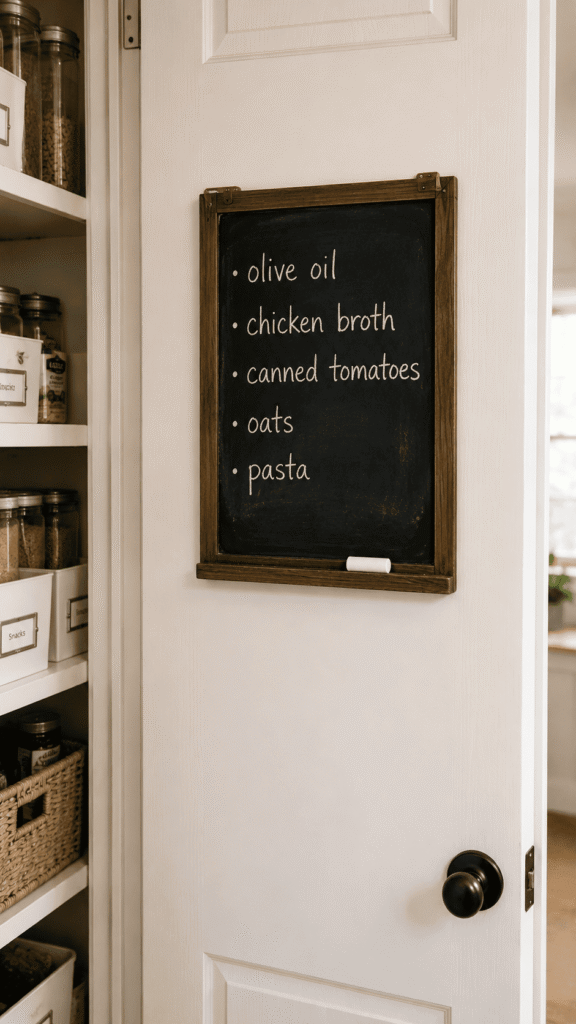
A small chalkboard sign or a magnetic whiteboard hung inside your pantry door is one of those inexpensive additions that makes a big practical difference in a small pantry. Use it as a running grocery list where you write down items as soon as you notice you are running low. When you open the pantry and grab the last can of tomatoes, you write tomatoes on the board immediately. By the time grocery shopping day comes around, your list is already written for you. It keeps low pantry items from falling through the cracks between shopping trips and reduces those frustrating moments mid-recipe when you realize you are out of something you needed.
13. Do a Monthly Pantry Reset to Keep the System Working Long Term
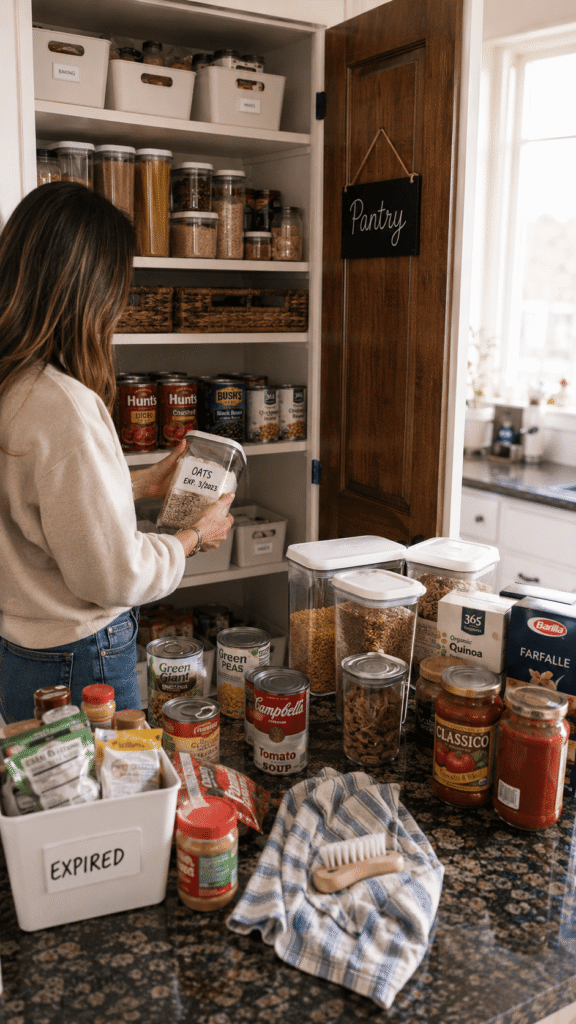
The most important small pantry organization idea of all is not a product or a container. It is a simple monthly habit that keeps your carefully organized pantry from slowly reverting to chaos over time. Once a month, take about twenty minutes to pull everything out of the pantry section by section. Check expiration dates and toss anything past its prime. Move items that are close to expiring to the front where they will be used first. Wipe down any sticky shelf spots. Return everything to its correct labeled zone. Do a quick note of what needs to be restocked. A monthly pantry reset sounds like more work than it is but it genuinely takes less than half an hour and keeps your small pantry organized and functional all year long.
A small kitchen pantry can absolutely work hard for you and stay beautifully organized without requiring a major renovation or a huge budget. The right combination of clear containers, shelf risers, turntables, labeled zones, and a few simple weekly habits can turn even the tiniest pantry into a space that genuinely supports how your family cooks and eats every single day.
You do not have to try all 13 ideas at once. Start with the changes that will make the biggest difference for your specific pantry struggles. If expired items and lost food is your biggest problem, start with clear containers and a use it first system. If your shelves feel too cramped, a shelf riser and a lazy susan will help immediately.
Save this post for when you are ready to give your small pantry the organized reset it deserves. Even a tiny pantry has more potential than you might think, and once you unlock that potential with the right systems, cooking and grocery shopping will feel so much easier every single week.