If you are an elementary school teacher, you already know that keeping a classroom organized is one of the biggest challenges of the job. Little kids need clear systems, easy-to-reach supplies, and visual cues for everything. When a classroom is disorganized, even simple tasks like getting out a pencil or turning in homework can turn into a five-minute interruption that throws off your whole lesson.
Elementary classrooms are busy, colorful, and full of energy, which is wonderful, but it also means clutter builds up fast. Art supplies end up in the wrong bins. Books get shoved back onto shelves in random spots. Papers pile up on your desk until you cannot see the surface anymore. Student belongings spill out of cubbies. Shared supplies disappear into backpacks. It happens in every classroom, no matter how organized the teacher is, and it happens quickly.
The good news is that with the right systems in place, an elementary classroom can stay surprisingly organized even with 20 or 25 kids moving around in it all day. The key is making the organization simple enough that even young students can follow it independently. When kids know exactly where things go and can manage their own spaces without needing to ask, everything runs more smoothly for everyone.
Good classroom organization also makes the learning environment feel calmer and more focused. Research consistently shows that a tidy and well-organized space helps kids concentrate better and feel more comfortable. When students can find what they need easily and know the routine for every part of the day, they feel more confident and less anxious.
These ideas cover everything from supply storage and paper management to reading areas, student cubbies, and teacher desk organization. Whether you are setting up a brand new classroom or refreshing a space that has gotten a little out of control mid-year, there is something here for every elementary teacher.
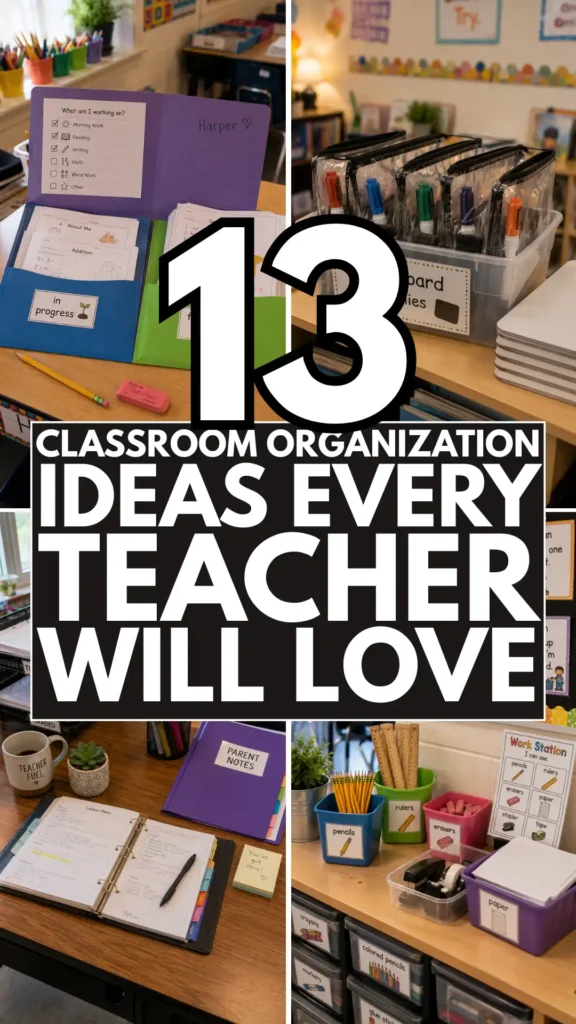
Here are 13 classroom organization ideas for elementary that are practical, kid-friendly, and genuinely work in real classrooms.
1. Set Up a Color-Coded Cubby System for Student Belongings
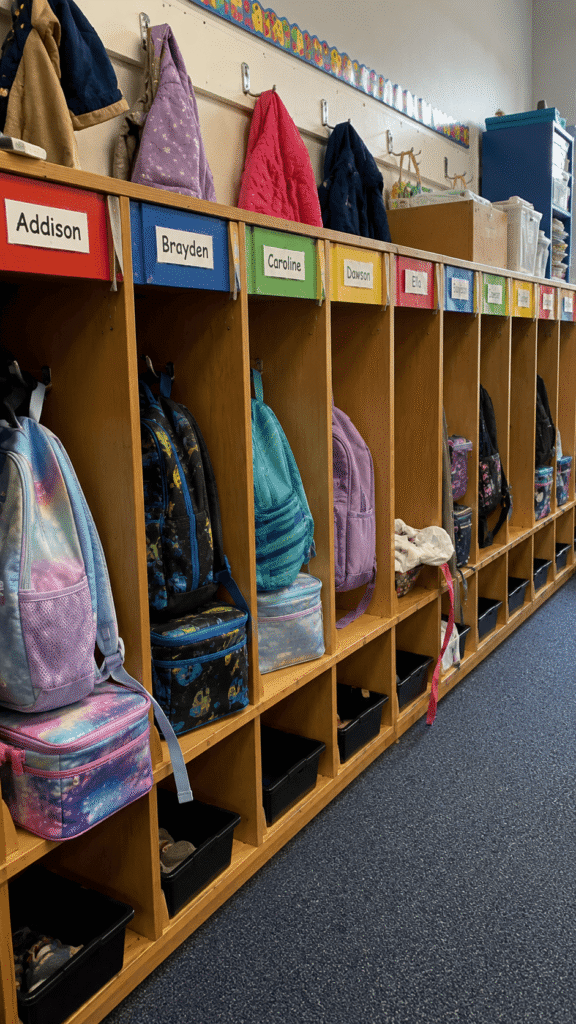
Cubbies are a staple in elementary classrooms but they only work well when there is a clear system attached to them. Assign each student their own cubby and add their name on a label at the front. Take it one step further by color-coding cubbies by table group or reading group. Use colored label tape or printed name tags in each group’s color. This makes it easy for kids to find their own cubby quickly, especially at the start of the year when they are still learning the classroom layout. Add a simple visual reminder above the cubbies showing what belongs inside and what should stay in backpacks.
2. Create a Classroom Library with Labeled Book Bins by Genre
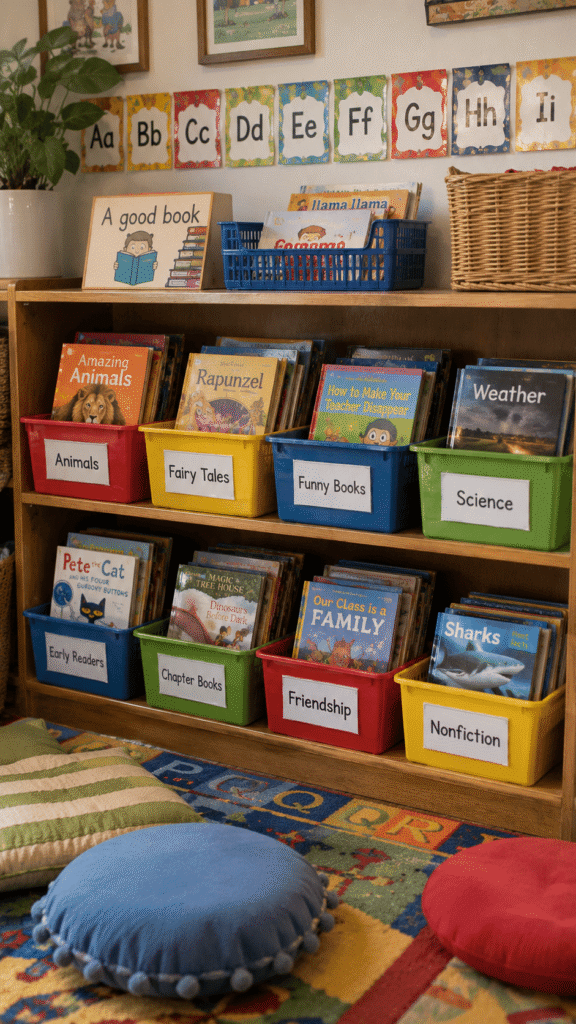
A well-organized classroom library makes independent reading time so much more productive and enjoyable for young students. Instead of lining books spine-out on shelves where kids have to pull out ten books to find one they want, organize books into labeled bins or baskets by genre, topic, or reading series. Use baskets labeled with categories like animals, funny stories, fairy tales, science, and early chapter books. Face the books cover-out in each bin so kids can see the covers and make choices more easily. Place the bins on a low bookshelf that students can reach on their own. Rotate bins occasionally to keep the library feeling fresh and interesting.
3. Use a Morning Meeting Pocket Chart for Daily Schedule and Routines
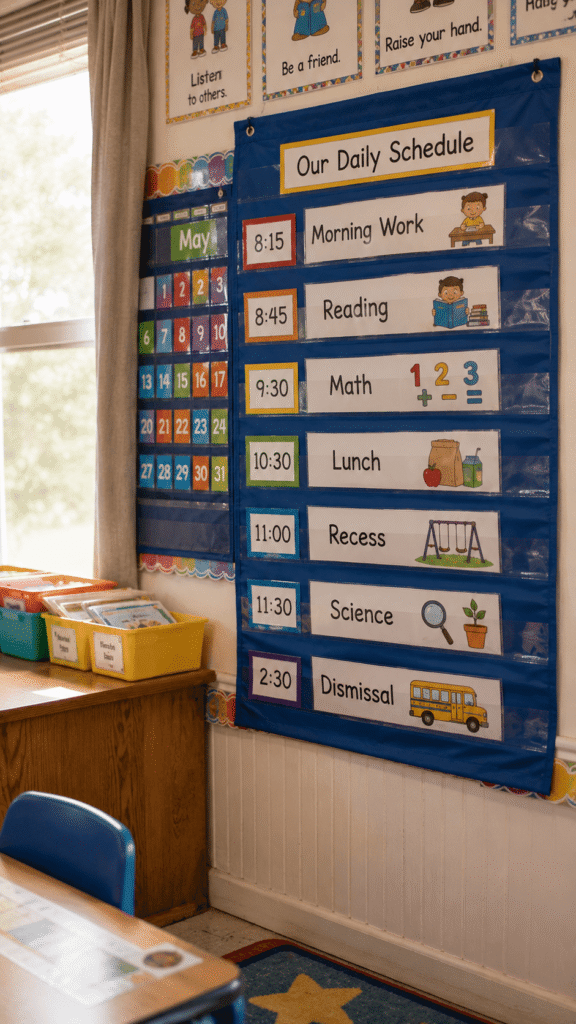
A pocket chart displayed at the front of the classroom is one of the most useful organizational tools for an elementary classroom. Use it to display the daily schedule with picture cards and word cards so students can follow along even if they are still developing their reading skills. Update it each morning with the day’s schedule, any special events, and the date. Having the daily routine visible at all times reduces the number of times students ask what comes next and helps kids who thrive on predictability feel secure and ready to learn. Add a weather chart and a classroom job chart nearby to keep all daily routine information in one easy spot.
4. Set Up a Pencil Management System That Actually Works
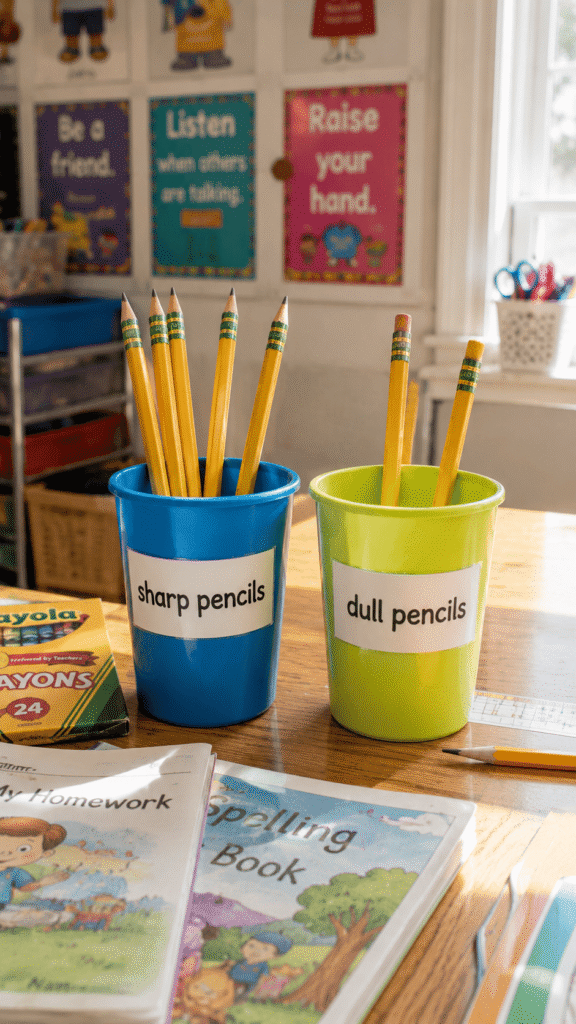
Pencils are one of the biggest classroom management headaches in elementary school. Kids constantly need sharp pencils and if there is no system for it, sharpening pencils becomes a major distraction during lessons. Set up a two-cup pencil system on each table group or at a central supply station. One cup holds sharpened pencils ready to use. The other cup holds dull pencils that need sharpening. Students swap their dull pencil for a sharp one from the ready cup during transitions or free time, and a designated classroom helper sharpens the dull ones during non-instructional time. Label each cup clearly with a simple printed label. This small system saves enormous amounts of disruption throughout the day.
5. Organize Classroom Papers with a Color-Coded Filing System
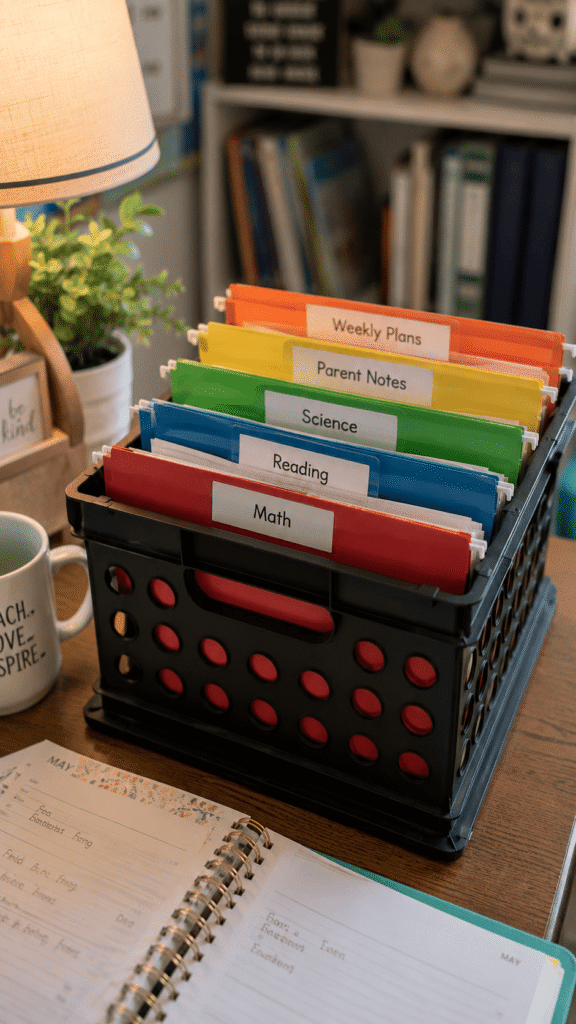
Paper management is one of the top struggles for elementary teachers. Handouts, worksheets, permission slips, morning work, assessments, parent communication, and planning documents can quickly bury a teacher’s desk and make finding anything a real challenge. Set up a color-coded filing system using a portable file crate or a desktop file organizer. Assign a different colored folder to each subject or category. Red for math, blue for reading, green for science, yellow for parent communication, and so on. Label each folder clearly. Once you build the habit of filing papers immediately instead of stacking them, your desk stays clear and finding any document takes seconds instead of minutes.
6. Create a Classroom Jobs Display to Keep Students Responsible
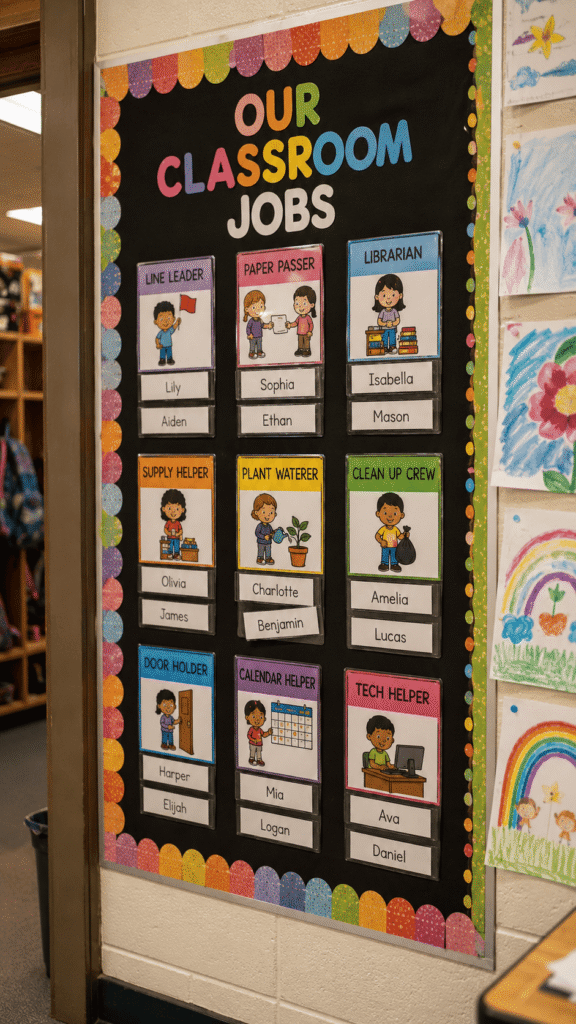
Classroom jobs give elementary students ownership over their classroom and help the whole room run more efficiently. Set up a classroom jobs display board with a job for every student or small group. Common jobs include line leader, door holder, paper passer, librarian, supply manager, whiteboard eraser, and plant waterer. Use a pocket chart, a corkboard with name cards, or a printed jobs wheel that you rotate weekly. When students have a job, they feel important and responsible. It also means you are not the only one managing classroom tasks throughout the day. Decorate the jobs board in your classroom colors and laminate the name cards so they last all year.
7. Use Clear Stackable Bins to Organize All Art and Craft Supplies
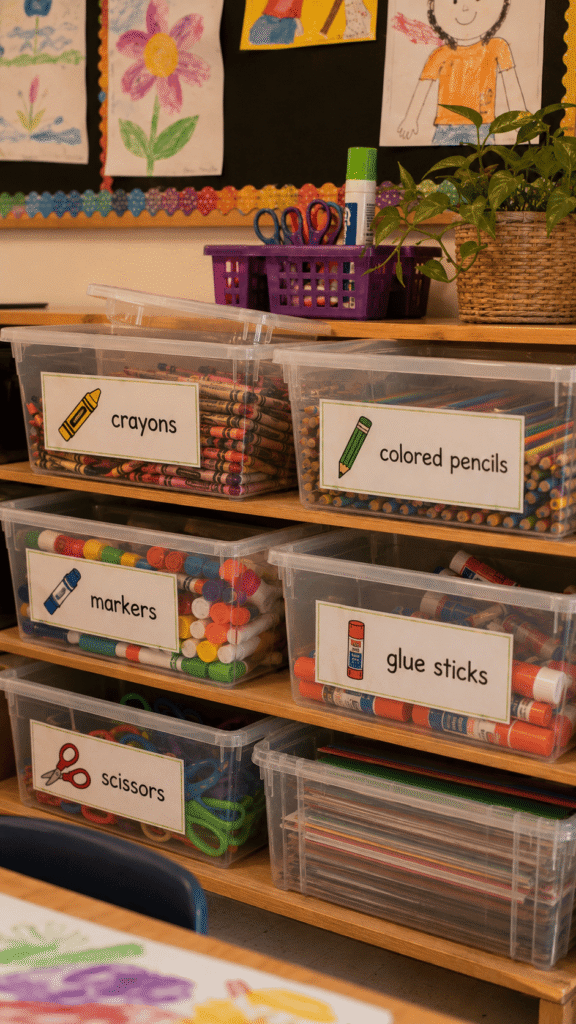
Art supplies in an elementary classroom multiply quickly and without a clear organization system they spread everywhere. A set of clear stackable bins with labeled fronts is one of the best solutions for keeping art and craft materials contained and easy to find. Use separate bins for crayons, colored pencils, markers, glue sticks, scissors, construction paper scraps, and paint supplies. Stack them on a dedicated art supply shelf or cart. Because the bins are clear, students can see exactly what is in each one without opening every single bin. Label the front of each bin with both a word and a small picture so even early readers can identify the right supplies independently.
8. Add a Cozy Reading Corner with Floor Cushions and a Small Bookshelf
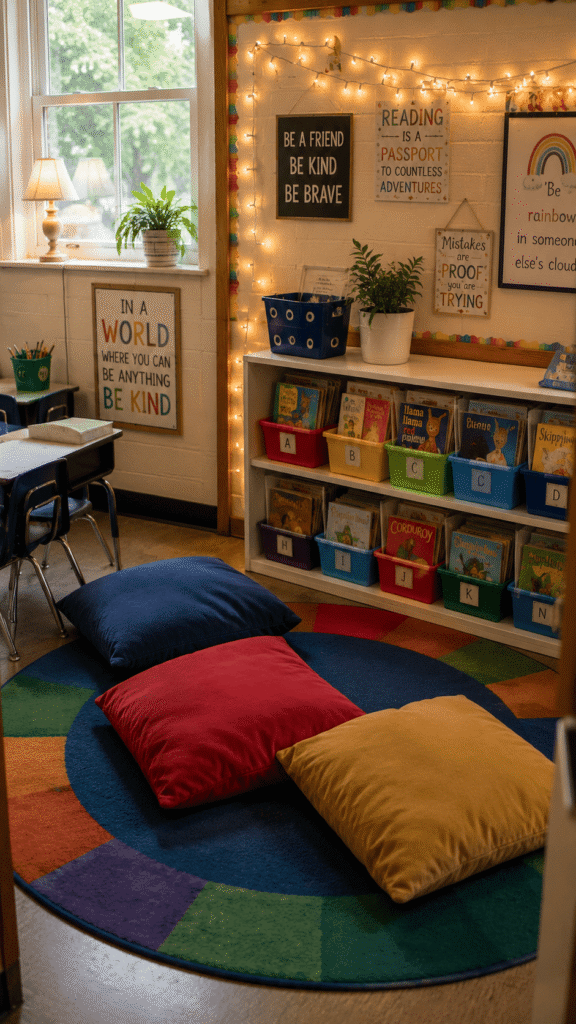
Every elementary classroom benefits from having a dedicated reading corner that feels different from the regular desk area. A cozy reading nook makes independent reading feel special and gives kids a calm space to settle into a book. Define the corner with a small colorful rug on the floor. Add three or four large floor cushions or a small bean bag chair. Put a low bookshelf nearby stocked with books at a range of levels. Hang a string of warm fairy lights along the wall or from a shelf edge to make the corner feel warm and inviting. Keep the corner tidy with a simple rule that books go back in the correct bin before leaving the reading area.
9. Set Up an Independent Work Station with Everything Students Need
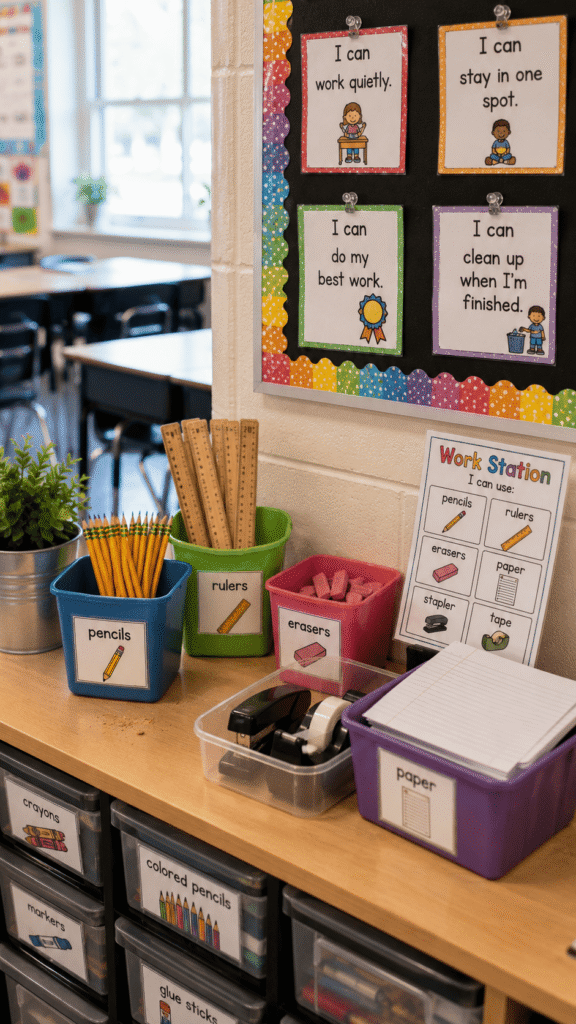
An independent work station is a dedicated spot in the classroom where students can go to work on assignments without needing to come to the teacher for supplies. Stock it with everything a student might need during independent work time. Sharpened pencils, lined paper, graph paper, rulers, erasers, a stapler, tape, and a dictionary or word wall reference card. Keep everything in labeled containers that are easy to access. Post a simple visual list above the station reminding students what is available and how to use the station respectfully. This reduces interruptions during small group instruction time and teaches students to be more self-sufficient during the school day.
10. Use Individual Whiteboards and Marker Bags for Each Student
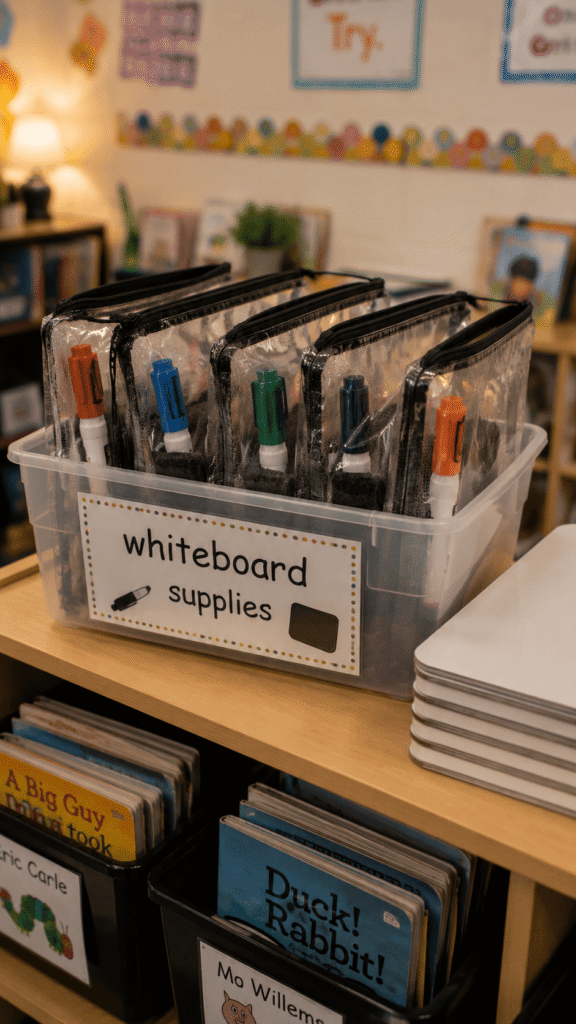
Individual student whiteboards are incredibly useful for formative assessment and whole-class practice, but they come with their own organization challenges. The markers dry out, the erasers disappear, and the boards end up scattered everywhere. Solve all of this by giving each student a small zippered pencil bag that holds their personal whiteboard marker and a small felt eraser or piece of felt fabric. Store all the bags in a labeled bin or basket by table group. Students get out their bag at the start of an activity and put everything back when finished. It keeps whiteboard supplies together, reduces lost markers, and makes the whole activity run much more smoothly.
11. Organize Student Work with a Weekly Work Folder System
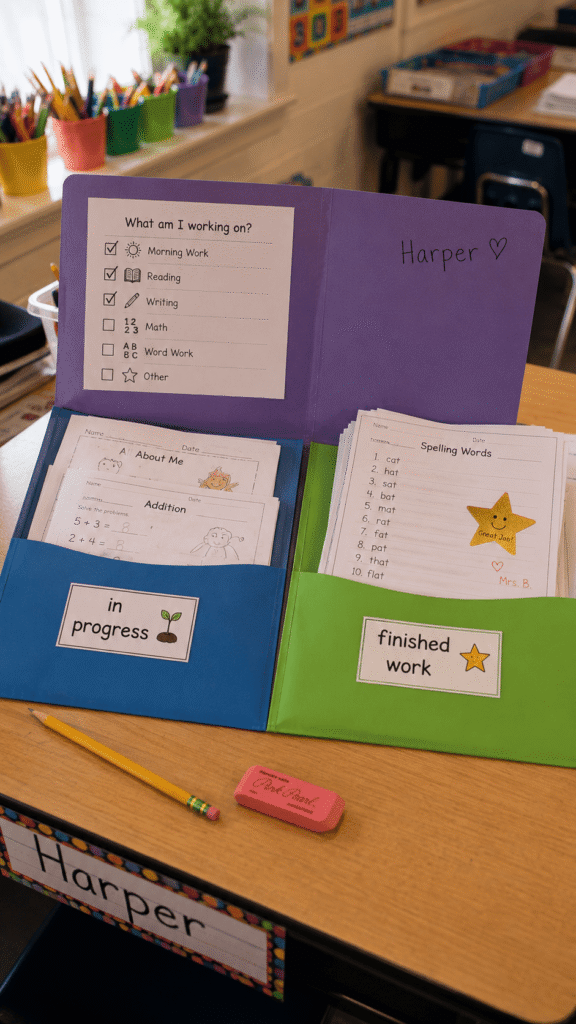
Instead of letting student work pile up in random spots around the classroom, a weekly work folder system keeps everything organized and gives students ownership of their own papers. Give each student a two-pocket folder in a assigned color. The left pocket holds work in progress or work to be completed. The right pocket holds finished work. At the end of each week, finished work gets sent home or moved to a portfolio. The folder stays in the student’s cubby or desk so it is always in the same spot. Add a checklist inside the front cover listing all the week’s assignments so students can track what they have completed and what still needs to be done.
12. Use a Magnetic Classroom Behavior Chart for Clear Visual Management
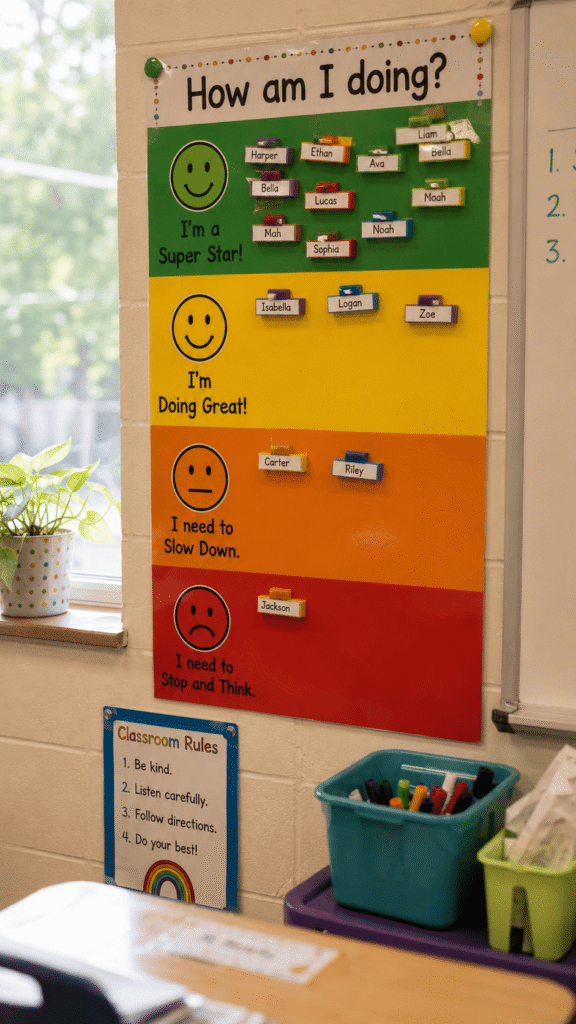
A visual behavior management chart helps young students understand expectations and track their own behavior throughout the day without needing constant verbal reminders. A simple magnetic chart with color zones works really well for elementary ages. Zones might include green for great choices, yellow for a reminder needed, orange for a consequence, and red for a serious concern. Each student has a labeled magnetic clip that starts on green each morning. Students move their own clip when needed which gives them agency and self-awareness. Keep the chart in a visible spot at the front of the classroom. Pair it with positive acknowledgment when students stay on green and celebrate the whole class when everyone is doing well.
13. Keep Your Teacher Desk Organized with Zones for Different Tasks
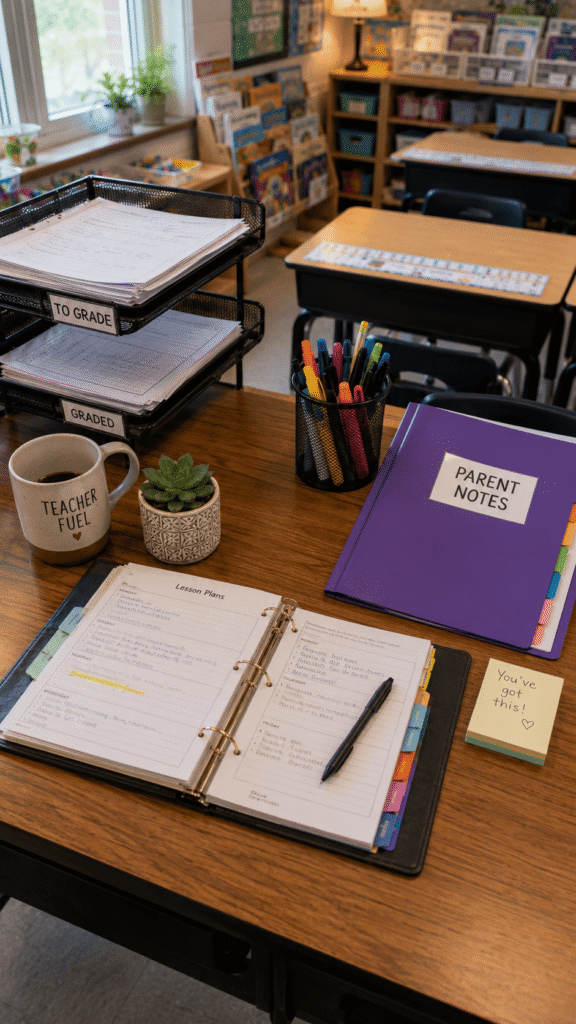
A teacher’s desk can become overwhelmed very quickly when there is no system for it. The best approach is to divide your desk into dedicated zones so every type of item has a specific home. Set up a grading zone with a paper tray for work to grade and a finished pile for graded work ready to return. Create a planning zone with your lesson plan binder and a pen cup. Keep a communication zone with a folder for parent notes and office communications. Add a small personal zone with your coffee mug, a small plant, and any personal items that make your workspace feel comfortable. When everything has a zone, the desk stays manageable even during the busiest weeks of the school year.
An organized elementary classroom does not happen by accident, but it also does not have to be something you spend every weekend maintaining. When you set up the right systems from the start, including clear student supply stations, labeled bins, a classroom jobs board, a cozy reading corner, and a simple paper management routine, the classroom actually starts to take care of itself because students know exactly what to do and where everything belongs.
You do not have to try all 13 of these ideas at once. Pick the two or three that feel most urgent for your specific classroom situation and start there. Even small changes like adding a pencil management system or setting up labeled book bins can make a really noticeable difference in how the day flows.
Save this post for when you are planning for a new school year or looking for a mid-year reset. Your classroom should feel like a calm, organized, and welcoming place for both you and your students, and with the right systems in place, it absolutely can be.