If you are a parent, you already know that toys have a way of taking over every single room in the house. There are building blocks on the living room floor, stuffed animals piled on the bedroom chair, art supplies spread across the kitchen table, tiny action figures hiding in the couch cushions, and somehow a single rogue Lego piece always ends up exactly where you step in the dark. Toy clutter is one of the most persistent and exhausting organization challenges that parents deal with every single day.
The tricky thing about organizing kids toys is that children actually need to be able to access their toys independently and put them away on their own. A toy organization system that only works when a parent sets it up perfectly every time is not a realistic long term solution. The best toy storage systems are simple enough that even young kids can understand the categories, reach the containers, and return things to the right spot without help.
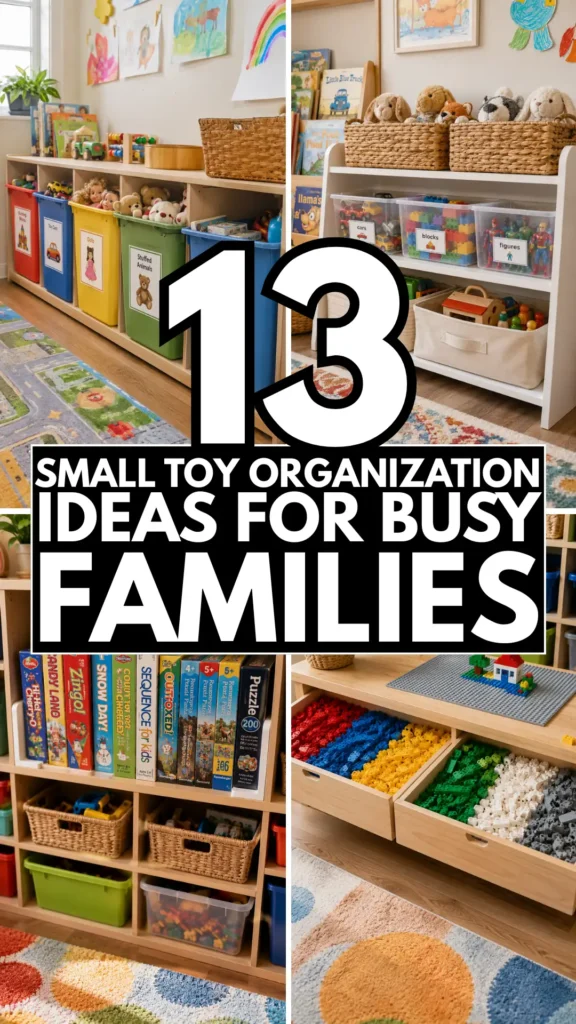
The good news is that kids actually do better with organized toy spaces than with chaotic ones. When toys are sorted into clear categories and stored in accessible bins and baskets, kids play more creatively and for longer stretches because they can find what they want, see all their options, and actually enjoy their space instead of feeling overwhelmed by a pile of random mixed-up items.
Toy organization has been a hugely popular topic on Pinterest among parents because everyone is looking for systems that are both practical and aesthetically pleasing. Nobody wants their living room or playroom to look like a discount toy store exploded. With the right storage solutions, a kids toy space can be organized, functional, and even look really nice at the same time.
Whether you are organizing a dedicated playroom, a shared bedroom, a living room toy corner, or a combination of all three, these ideas will give you realistic and doable solutions that actually hold up in a real home with real kids.
1. Use Large Labeled Bins for Each Toy Category So Kids Know Exactly Where Everything Goes
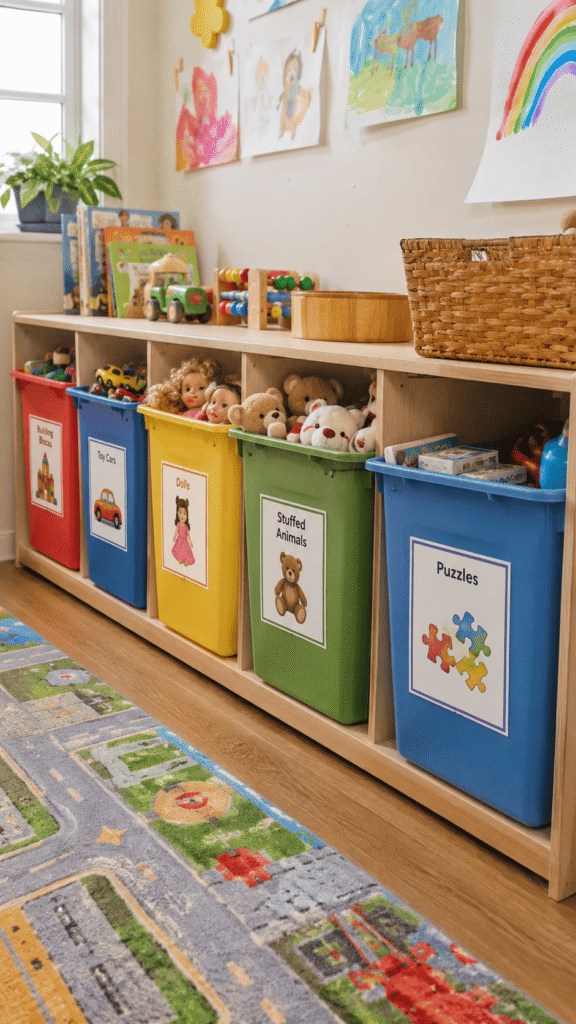
The foundation of any good toy organization system is clear categories stored in clearly labeled bins. Instead of having one giant toy box where everything gets thrown in together, use a set of separate bins each dedicated to one type of toy. One bin for building blocks. One for toy cars and vehicles. One for dolls and accessories. One for stuffed animals. One for puzzles. Label each bin with both a word and a picture of the toy category so that even kids who cannot read yet can match the toy to the right bin. When the cleanup system is clear and visual, kids are so much more likely to actually follow it independently.
2. Set Up a Low Open Shelf Unit That Kids Can Reach and Access Independently
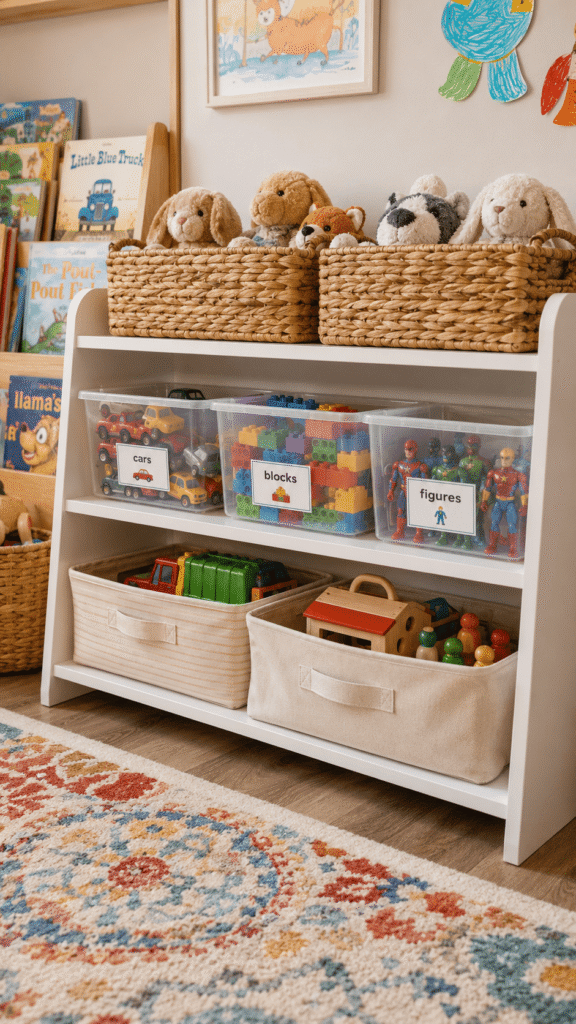
One of the most important things about toy storage for young children is accessibility. If kids cannot reach their toys without asking for help, they will either stop playing with those toys or constantly interrupt you to get things down for them. A low open shelf unit placed against a playroom or bedroom wall at a child-friendly height is one of the best toy storage investments you can make. Each shelf holds a set of bins or baskets that kids can pull out and push back in on their own. The open design means everything is visible without opening doors or drawers. Kids can see all their options, choose what they want to play with, and return it when done completely independently.
3. Use a Hanging Wall Organizer for Art Supplies and Craft Materials
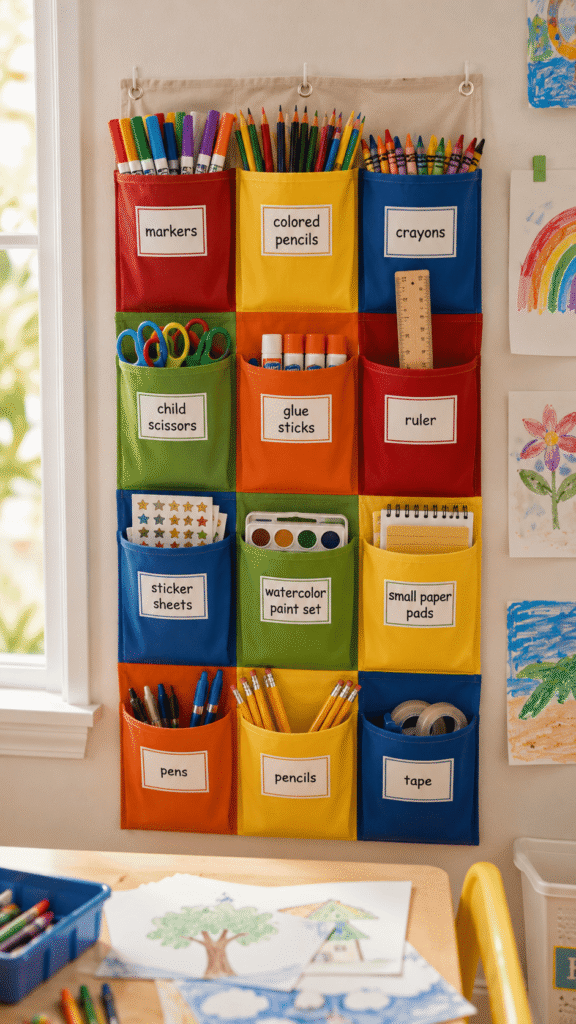
Art supplies and craft materials are some of the hardest toy category items to organize because they include so many small pieces in so many different forms. Markers, crayons, colored pencils, scissors, glue sticks, stickers, and paint supplies all need a home that keeps them visible and accessible without turning into a scattered mess. A hanging wall organizer with multiple pockets or a pegboard with small bins and hooks dedicated to art supplies keeps everything in one visible spot. Mount it at a child-friendly height on a playroom or bedroom wall near the art table. Each supply type gets its own pocket or bin. When art supplies have a clear home on the wall, they stop ending up on the kitchen table and the living room floor.
4. Corral Stuffed Animals in a Hanging Hammock or Corner Net
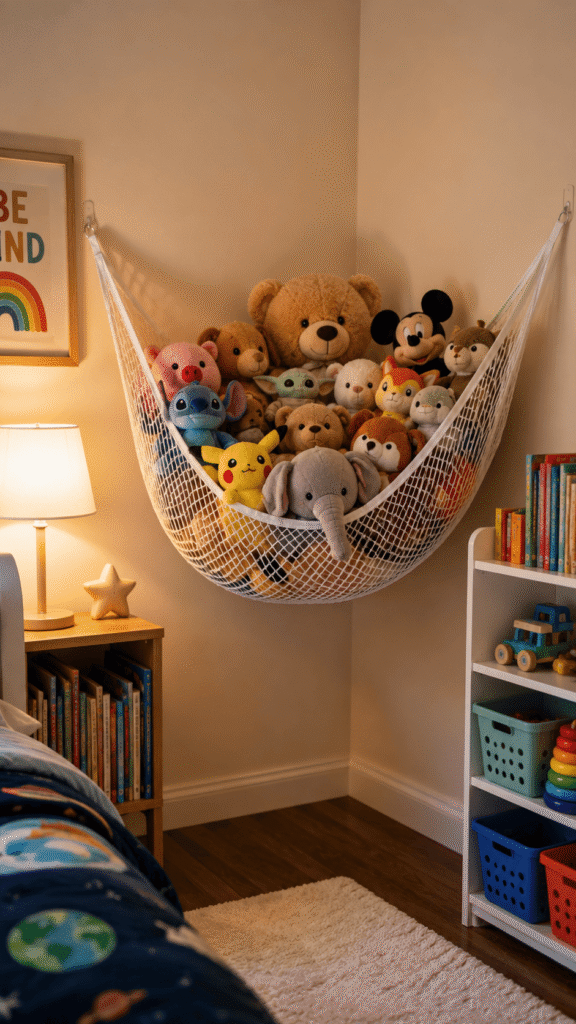
Stuffed animals are adorable but they take up an enormous amount of shelf and floor space and they accumulate faster than almost any other toy category in most homes. A stuffed animal hammock or corner net is one of the most space-efficient and kid-friendly solutions available. These mesh nets hang in a corner of the room from two walls using simple hooks and hold a surprising number of stuffed animals up off the floor and shelves. Kids can see all their stuffed animals from across the room, can reach them by pulling the net down slightly, and stuffed animals can be tossed back in easily. It turns a pile of stuffed animals into a fun corner feature that kids actually love having in their room.
5. Store Legos and Small Building Sets in Flat Shallow Drawers or Divided Bins
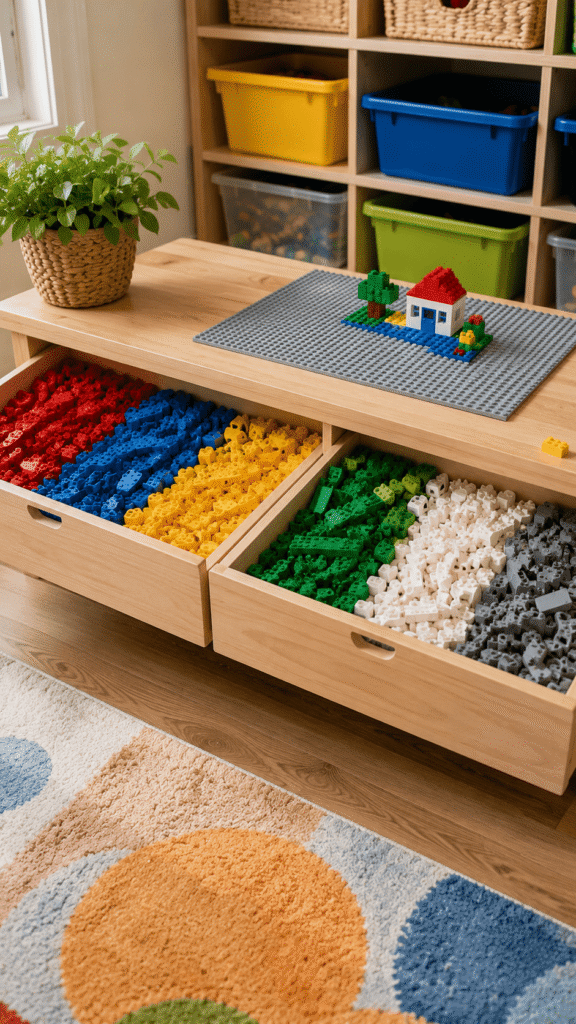
Legos and other small building pieces are the ultimate toy organization challenge. They are tiny, they come in hundreds of different shapes and colors, they multiply constantly, and stepping on one in the dark is a pain that no parent ever forgets. Shallow flat drawers or a set of divided bins work much better for Lego storage than a deep bin where pieces just pile up and nothing is findable. Sort pieces loosely by color or by piece type in different sections of a divided bin. Keep a large flat Lego baseplate or a Lego building mat nearby as the designated play surface so pieces stay contained while being played with instead of spreading across the whole floor.
6. Create a Book Display with Forward-Facing Shelves So Kids Choose Books Independently
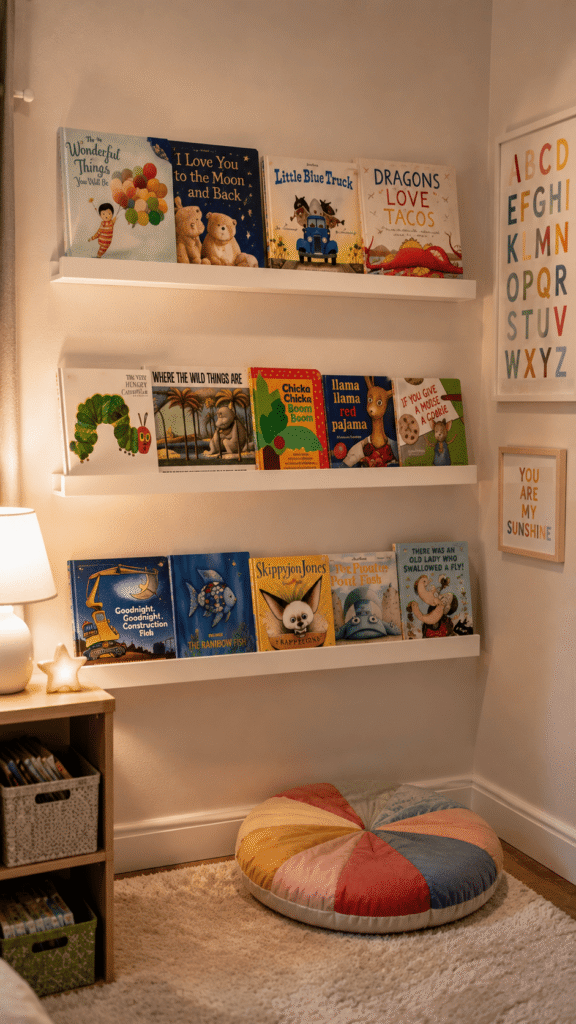
Children are so much more likely to read and look at books when they can see the front covers rather than just the spines. Forward-facing book shelves or simple picture book display ledges mounted on the wall let kids browse their book options visually just like they would in a bookstore or library. Mount two or three simple wooden ledge shelves on the playroom or bedroom wall at child height and lean books cover-forward on each ledge. Rotate the books on display every few weeks to keep the selection feeling fresh and interesting. Pair the display shelves with a cozy reading corner nearby with a bean bag or floor cushion to make reading even more inviting.
7. Use a Rolling Cart for Rotating Toy Sets and Activity Supplies
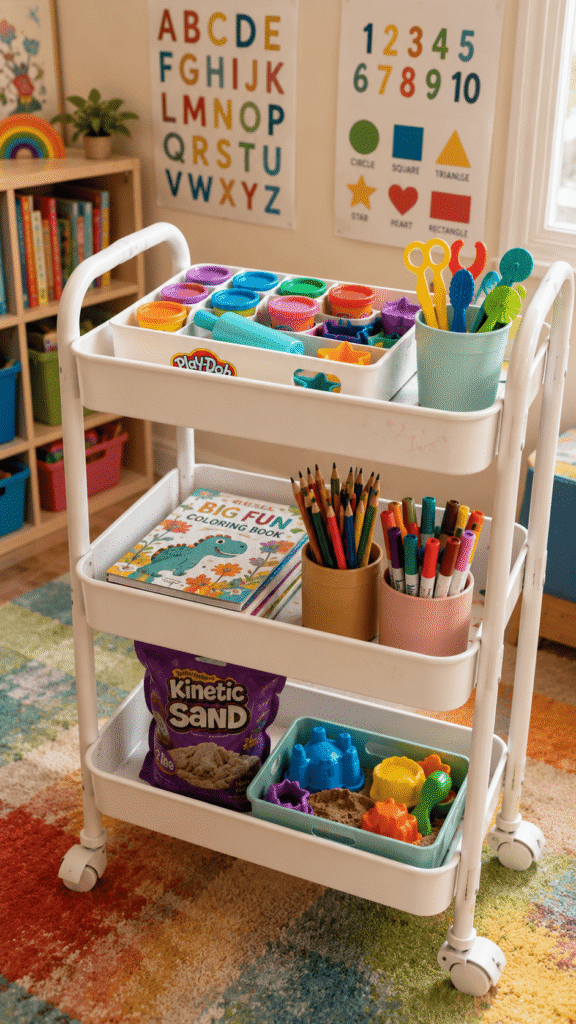
A rolling cart is one of the most versatile toy organization tools a parent can have in a playroom or child’s bedroom. Use a two or three shelf rolling cart to create a portable activity station. The cart can hold one complete toy set or activity on each shelf, like playdough supplies on one shelf, a coloring activity kit on another, and a building set on the third. When a child wants to play with one activity, they pull out that shelf’s supplies and the cart wheels right to wherever they want to play. When activity time is over, everything goes back on the cart and rolls to its storage spot. It is also easy to rotate what is on the cart every week or two to keep things feeling fresh and interesting.
8. Store Board Games and Puzzles Vertically Like Books on a Shelf
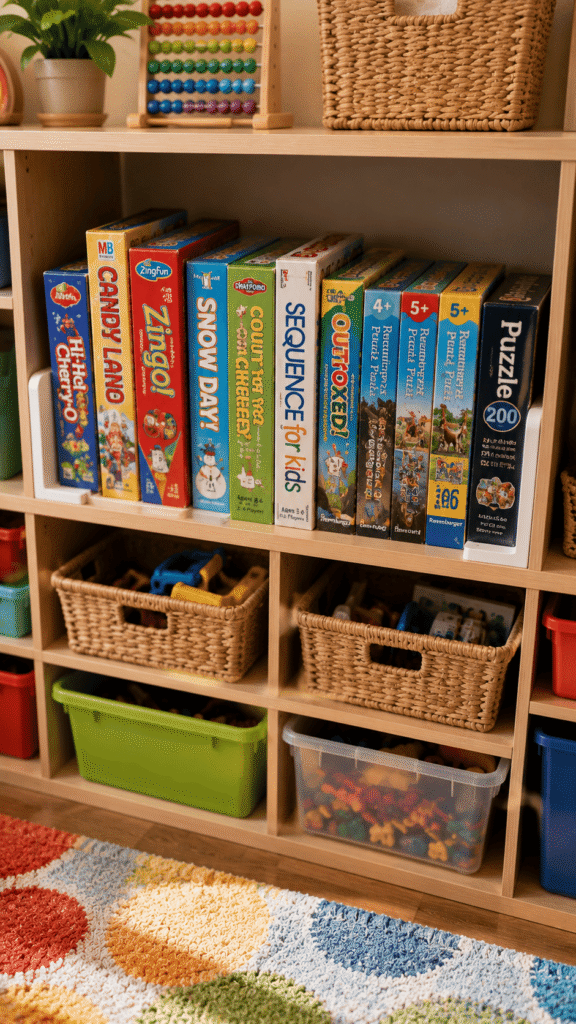
Board games and puzzles are some of the bulkiest toy storage challenges in a home with kids. They come in boxes of all different sizes and stacking them horizontally creates precarious towers where the one you want is always at the bottom. Storing board game and puzzle boxes vertically like books on a shelf is a simple change that makes a big difference. Stand each box upright on the shelf with the box top or label facing out. They are immediately visible and any single game can be pulled out without disturbing the others. Use bookends on each side of the game section to keep them from leaning and falling. Dedicate one or two shelf sections specifically to games and puzzles so they always live in the same spot.
9. Use Clear Drawers or Bins for Small Toy Pieces So Nothing Gets Lost
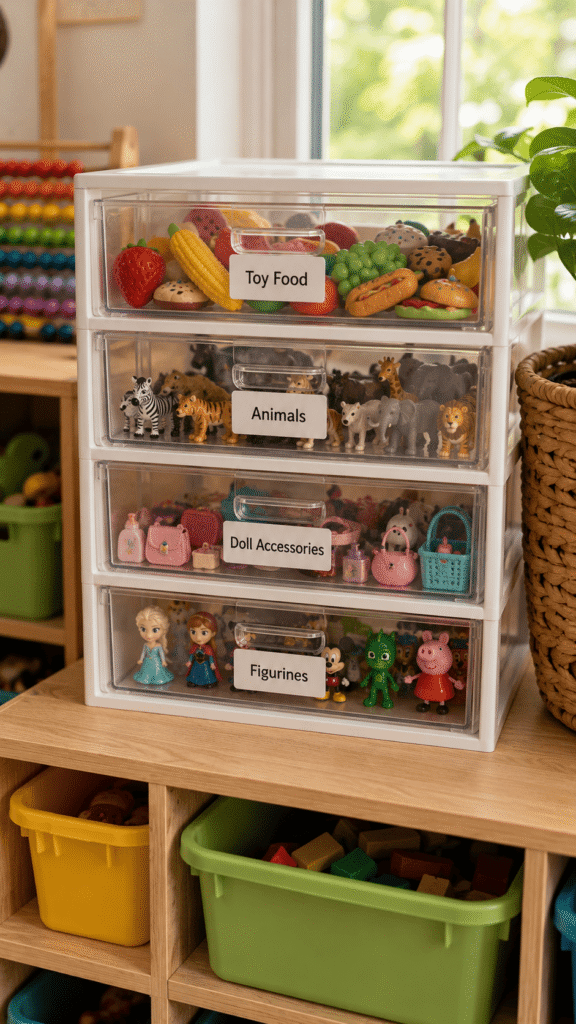
Small toy pieces like action figures, doll accessories, toy food, miniature animals, and character figurines are incredibly easy to lose because they are small enough to disappear into the bottom of a large bin or under furniture. Clear drawers or small clear bins dedicated to these tiny items make them visible and findable at all times. A small clear drawer unit with three or four drawers works perfectly for this category. Each drawer holds one type of small figure or accessory. Toy food in one drawer. Animal figures in another. Doll accessories in a third. Because the drawers are clear, kids can see exactly which drawer to open for the pieces they want without pulling everything out to search.
10. Create a Dress-Up Station with Hooks and a Small Hanging Rod for Costumes
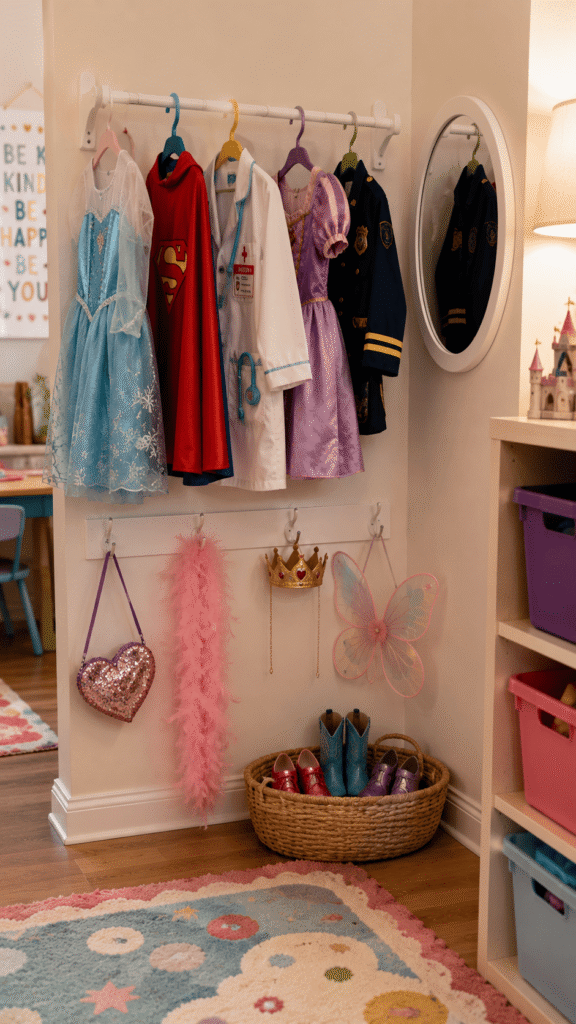
Dress-up clothes and costumes are a toy category that children play with constantly but that are almost impossible to store neatly in a regular bin. Costumes get wrinkled and tangled when thrown in a pile and kids can never find the specific piece they want when everything is jumbled together. A simple dress-up station with a low hanging rod for costumes and a row of hooks below for accessories completely solves this. Hang costumes on small hangers on the rod. Use hooks below for hanging accessories like capes, bags, hats, and wings. Add a small mirror beside the station and a bin on the floor for dress-up shoes. Kids love having their own little costume closet and they are much more likely to put things away when the system is this accessible.
11. Use a Toy Rotation System to Reduce Clutter and Keep Kids Interested
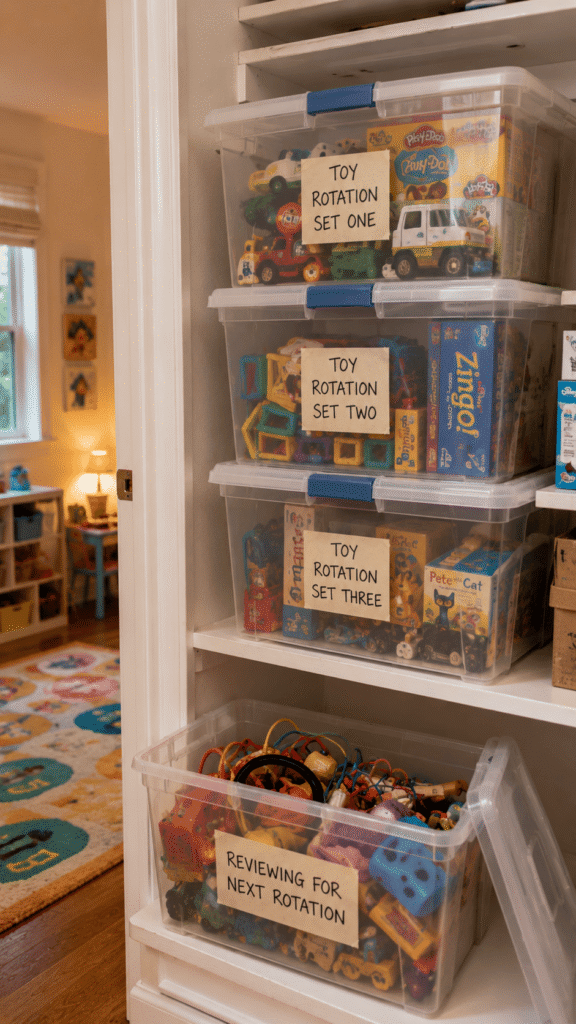
One of the most effective toy organization strategies that child development experts and organized parents both swear by is toy rotation. Instead of having every toy your child owns accessible at the same time, divide the toy collection into three or four groups and store two or three of the groups in bins in a closet or storage area. Only one group is available at a time in the playroom. Every few weeks, swap out the available group for one that has been in storage. Kids are so much more interested in toys they have not seen for a few weeks than they are in toys that are always out. Toy rotation also dramatically reduces the amount of clutter in your living spaces at any given time.
12. Add a Labeled Bin or Basket in Every Room Where Toys Land
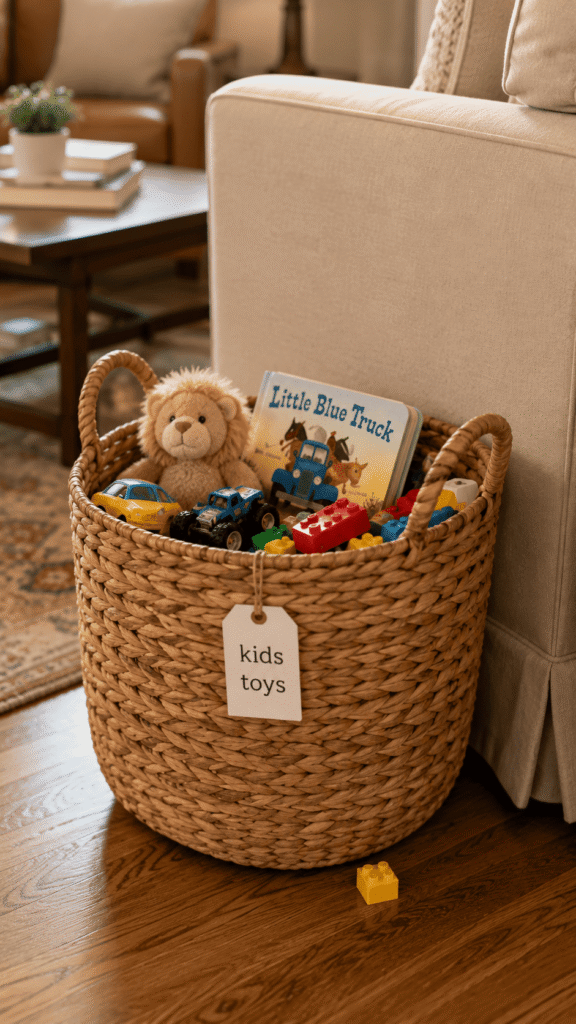
One very practical reality of life with kids is that toys end up in rooms throughout the house, not just in the playroom or bedroom. Instead of fighting this reality, working with it is so much easier. Place a small labeled basket or bin in each room where toys consistently end up. A small basket in the living room for the toys that always migrate there. A small bin in the kitchen play area. A basket by the back door for outdoor toys that come inside. These room baskets are not permanent toy homes but temporary holding spots. At the end of each day or during a quick tidy-up, the room baskets get emptied and toys go back to their real homes in the playroom. It contains the spread without requiring constant supervision.
13. Do a Toy Declutter Every Season to Keep the Collection Manageable
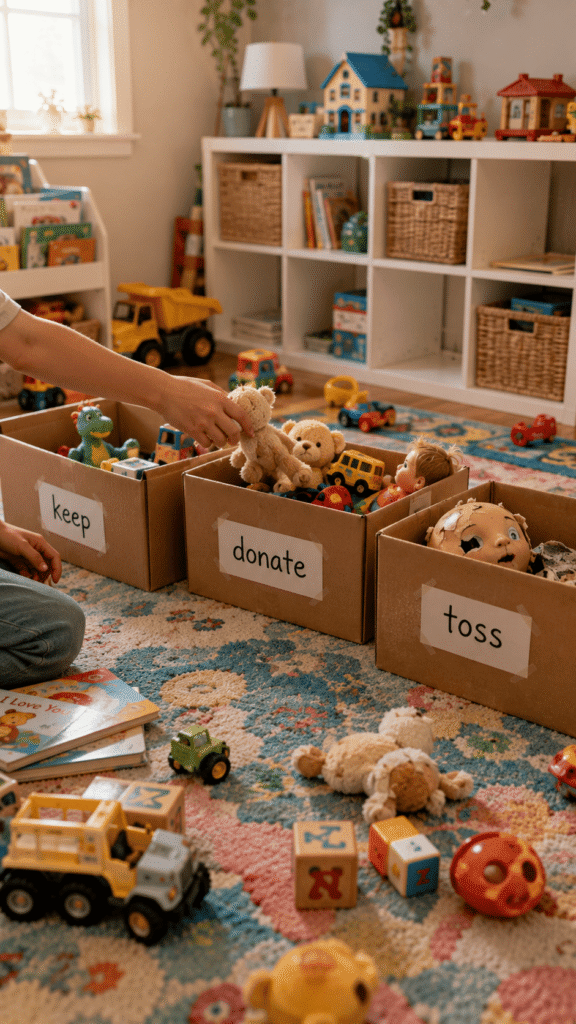
The most important toy organization habit you can build as a parent is a regular seasonal toy declutter. Four times a year, go through the toy collection with your kids and sort everything into three categories. Keep it because it gets played with regularly and is loved. Donate it because it is in good condition but your child has outgrown it or lost interest. Toss it because it is broken, has missing pieces, or is genuinely not usable anymore. Getting kids involved in the process teaches valuable lessons about generosity and letting go of things they no longer need. After each seasonal declutter, the organization systems you have set up work so much better because there are fewer items to manage and everything that remains is something your child actually plays with.
Organizing kids toys is one of those home organization projects that genuinely pays you back in daily quality of life. When toys have clear homes, kids can find what they want to play with, actually enjoy their play space, and participate in cleanup without a major battle every single evening. The systems that work best are simple, visual, and designed for kids to use independently.
You do not have to implement every idea on this list at once. Start with the toy category that causes the most chaos in your home right now and create a simple dedicated system for just that one category. Once it is working, add another. Building a good toy organization system one step at a time is so much more sustainable than trying to overhaul everything in one afternoon.
Save this post for when you are ready to tackle the toy situation in your home. With the right storage tools and a few simple habits, a calm and organized toy space is absolutely achievable even in a busy home with little kids.