If you have ever experienced the chaos of trying to get a child dressed and out the door on a school morning while digging through a closet full of clothes that have no real system, you already understand exactly why kids closet organization matters so much. Tiny shirts tangled with pants that no longer fit. Shoes with no matches anywhere in sight. Outgrown clothes mixed in with current ones taking up space that could be used for things they actually wear. A closet that looks completely overwhelming to a child who is supposed to be getting themselves ready independently.
The thing about organizing a kids closet is that it is genuinely different from organizing an adult closet. Kids closets need to work for the child as much as they work for the parent. The systems need to be simple enough that a young child can understand the categories. Bins need to be low enough that kids can reach them without help. Labels need to be visual enough that even pre-readers can match items to their homes. And the whole setup needs to be sturdy enough to handle the reality that kids are not always gentle with storage systems.
When a kids closet is organized properly, something really wonderful happens. Kids start being able to get themselves ready with much less help. They can find their own clothes, put together their own outfits, and put things away after laundry without a parent needing to supervise every step. That independence is good for kids and genuinely life-changing for parents during busy mornings.
Kids closet organization has been a hugely popular topic on Pinterest among parents because everyone is looking for systems that are both functional and manageable to maintain. The best kids closet setups are simple, visual, and designed with real children in mind, not just for the sake of looking beautiful in a photo.
Whether you are organizing a newborn nursery closet, a toddler’s small reach-in, a school-age child’s shared closet, or a bigger kid’s walk-in space, these ideas will give you practical and realistic solutions that work in real homes with real children.
1. Install a Lowered Closet Rod So Kids Can Hang Their Own Clothes
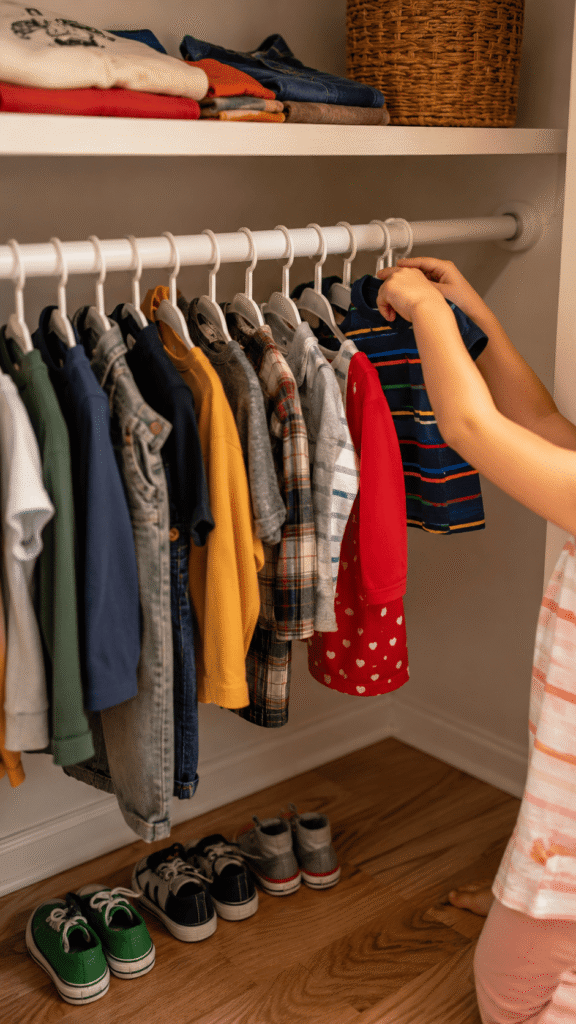
One of the most important things you can do in a kids closet is make it genuinely accessible for the child. A standard closet rod is installed at adult height which means most young children cannot reach their hanging clothes at all without a step stool. Lowering the main closet rod to a child-appropriate height, or adding a secondary lower rod below the existing one, makes it possible for kids to hang and retrieve their own clothes completely independently. As children grow, the rod can be adjusted upward. This one change alone makes a significant difference in how much independence a child can have in managing their own clothing and getting themselves dressed each morning.
2. Use Size Dividers on the Rod to Separate Current Clothes from Next Size Up
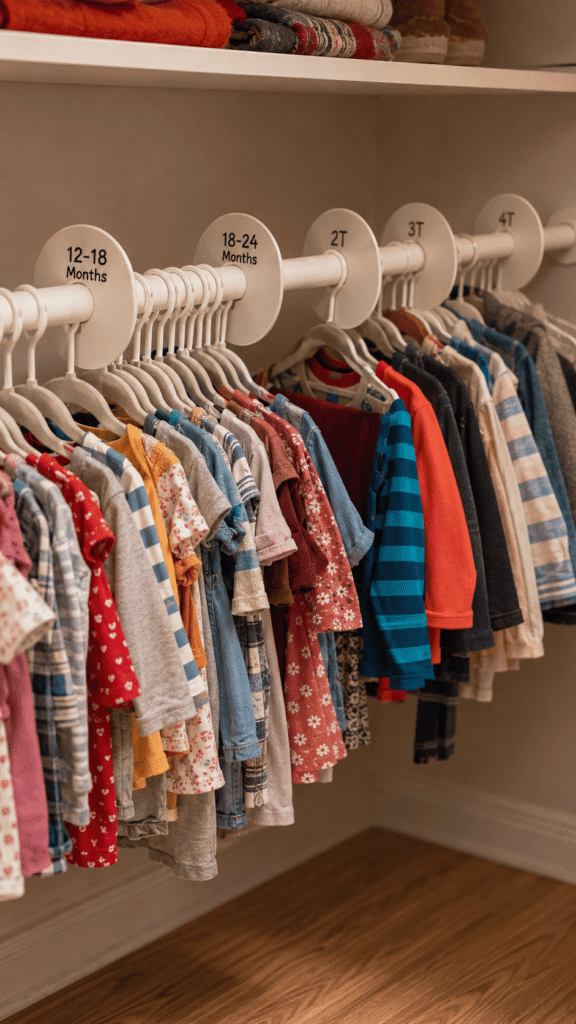
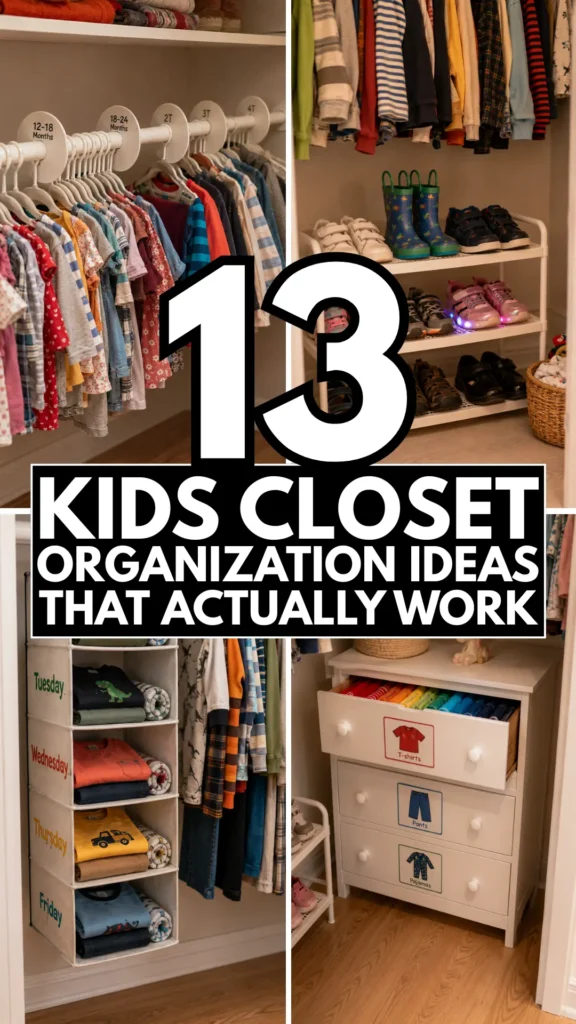
Kids grow so fast that managing multiple clothing sizes at once is a constant challenge in a child’s closet. Size dividers that clip onto the closet rod create clearly labeled sections for each clothing size so current clothes and upcoming sizes never get jumbled together. Label one section with the current size your child is wearing and another section for the next size up that is washed and ready to rotate in when the time comes. When your child has a growth spurt, transitioning to the new size takes minutes because everything is already sorted and waiting. It also makes it immediately clear when the current size section is getting outgrown and it is time to move things up.
3. Add Large Labeled Picture Bins for Each Clothing Category
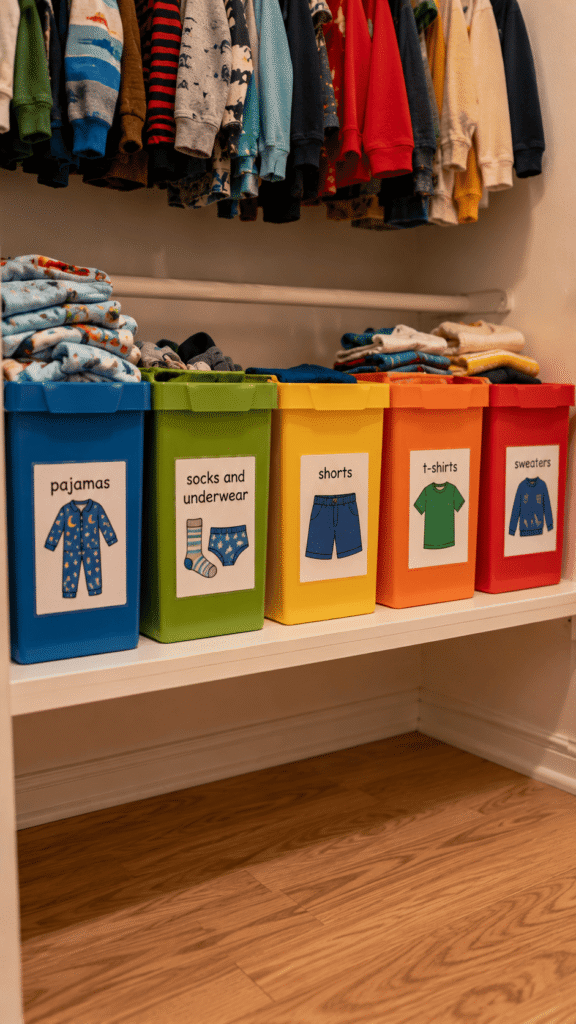
Clear visual labels are absolutely essential in a kids closet because children need to be able to identify where things belong without relying entirely on reading ability. Use a set of large labeled bins on shelves with picture labels that show the clothing category alongside the word. A bin with a picture of pajamas and the word pajamas written below it. A bin with a picture of socks and underwear. A bin for shorts. A bin for sweaters. When both pictures and words are on the labels, even young toddlers can match clothing to the right bin after laundry is done. This visual system gives kids the independence to put their own clothes away correctly without needing a parent to direct every step.
4. Create a Weekly Outfit Station to Make School Mornings Stress Free
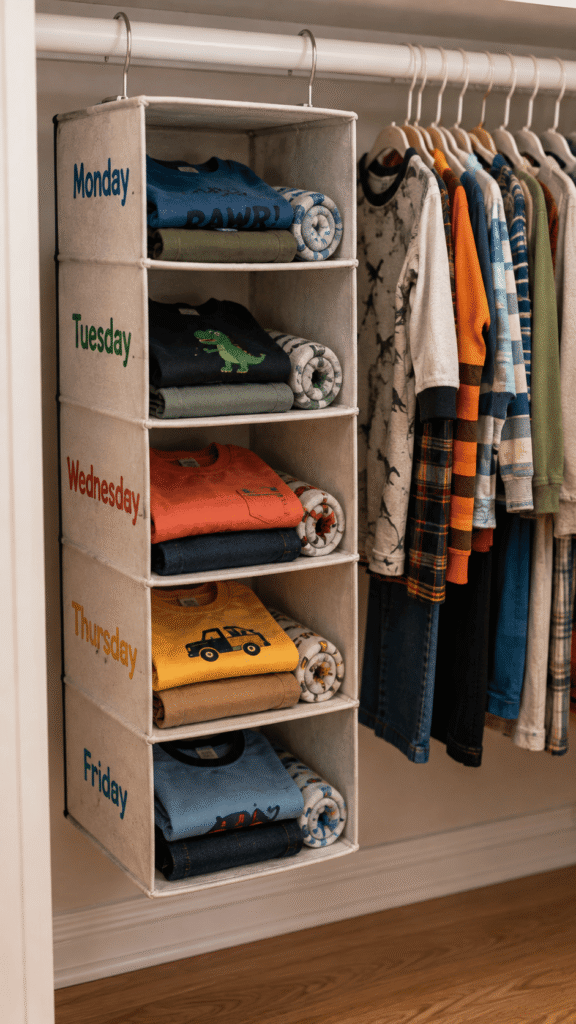
One of the most popular and genuinely useful kids closet ideas on Pinterest right now is a weekly outfit station. This is a dedicated section of the closet or a hanging organizer with five compartments labeled with the days of the school week, Monday through Friday. On Sunday evening, you and your child pick out and hang or fold a complete outfit including shirt, pants, and underwear for each day of the week and place it in the corresponding daily compartment. On school mornings, your child simply grabs Monday’s outfit and gets dressed without any decision making or searching. No more morning arguments about what to wear. No more last-minute outfit hunting. Just a simple system that makes the whole morning run so much more smoothly.
5. Use a Shoe Rack or Cubby System to Keep Kids Shoes Organized
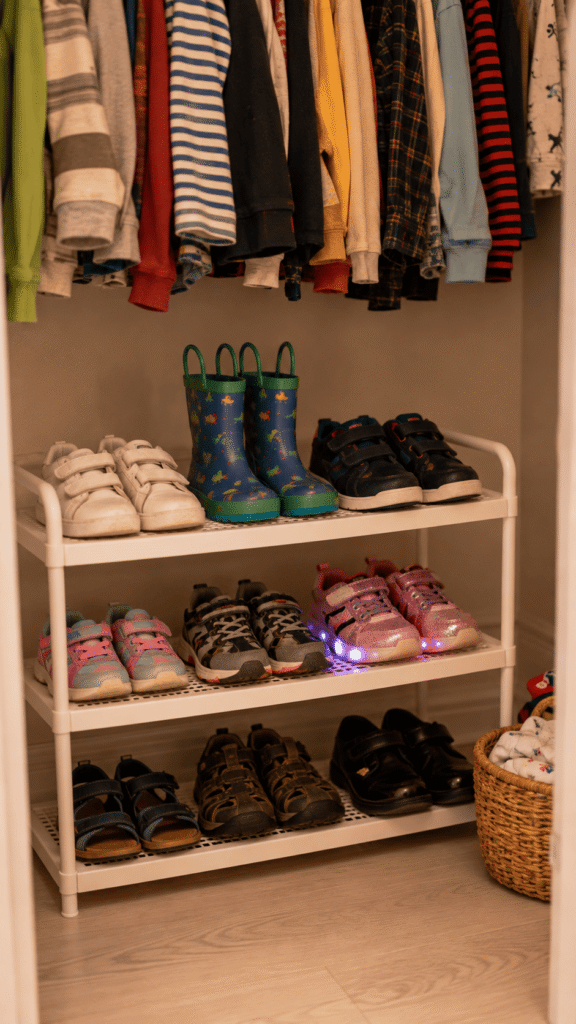
Kids shoes are one of the most persistent sources of closet floor chaos. They come off in random spots, get separated from their pairs, and multiply faster than any other category in a child’s wardrobe. A dedicated shoe rack or small shoe cubby system in the bottom of the kids closet gives every pair a specific home. A simple two or three tier shoe rack holds a surprising number of kids shoes in a very small footprint. An open cubby system where each cubby holds exactly one pair makes it easy for even young children to put their shoes away in the right spot. Place it at the bottom of the closet directly on the floor so kids can manage their own shoes independently.
6. Add a Small Dresser Inside the Closet for Folded Everyday Items
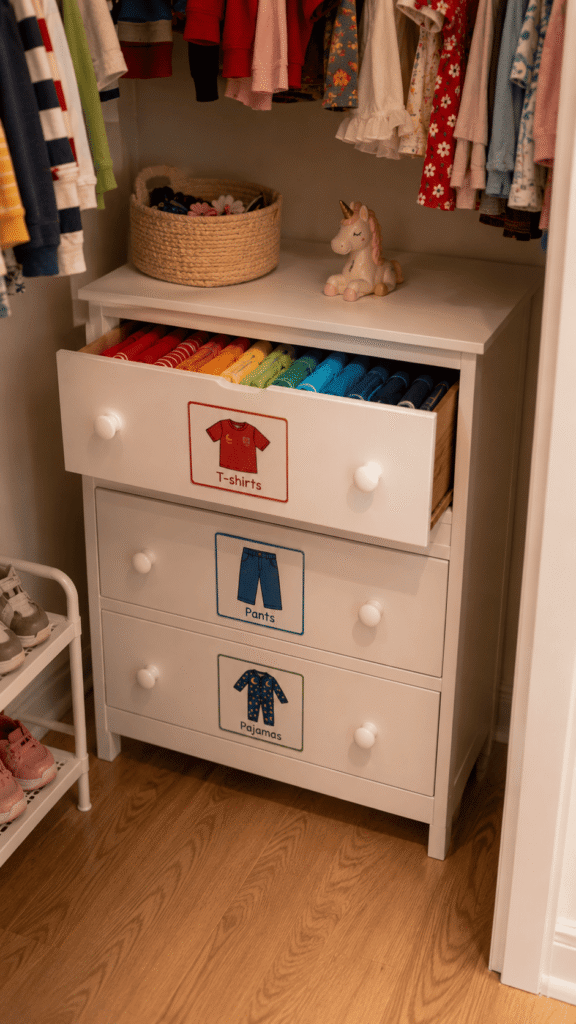
If your child’s closet has enough floor space, placing a small narrow dresser inside the closet itself is one of the most functional additions you can make. It moves all the folded clothing off the shelves and into organized drawers where items are sorted by category and easy to find. Use each drawer for a specific clothing type. One drawer for t-shirts folded and standing vertically. One for pants. One for pajamas. One for underwear and socks. Labeling each drawer with both a word and a picture makes the system clear and usable even for young children. The top surface of the dresser becomes additional storage space for small baskets or folded accessories.
7. Store Outgrown Clothes in Clearly Labeled Memory Bins
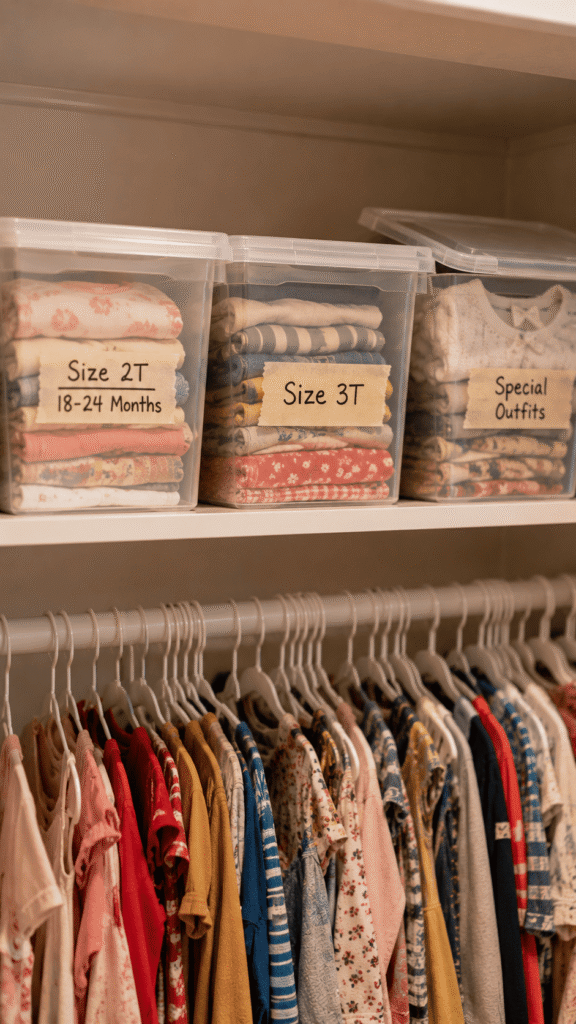
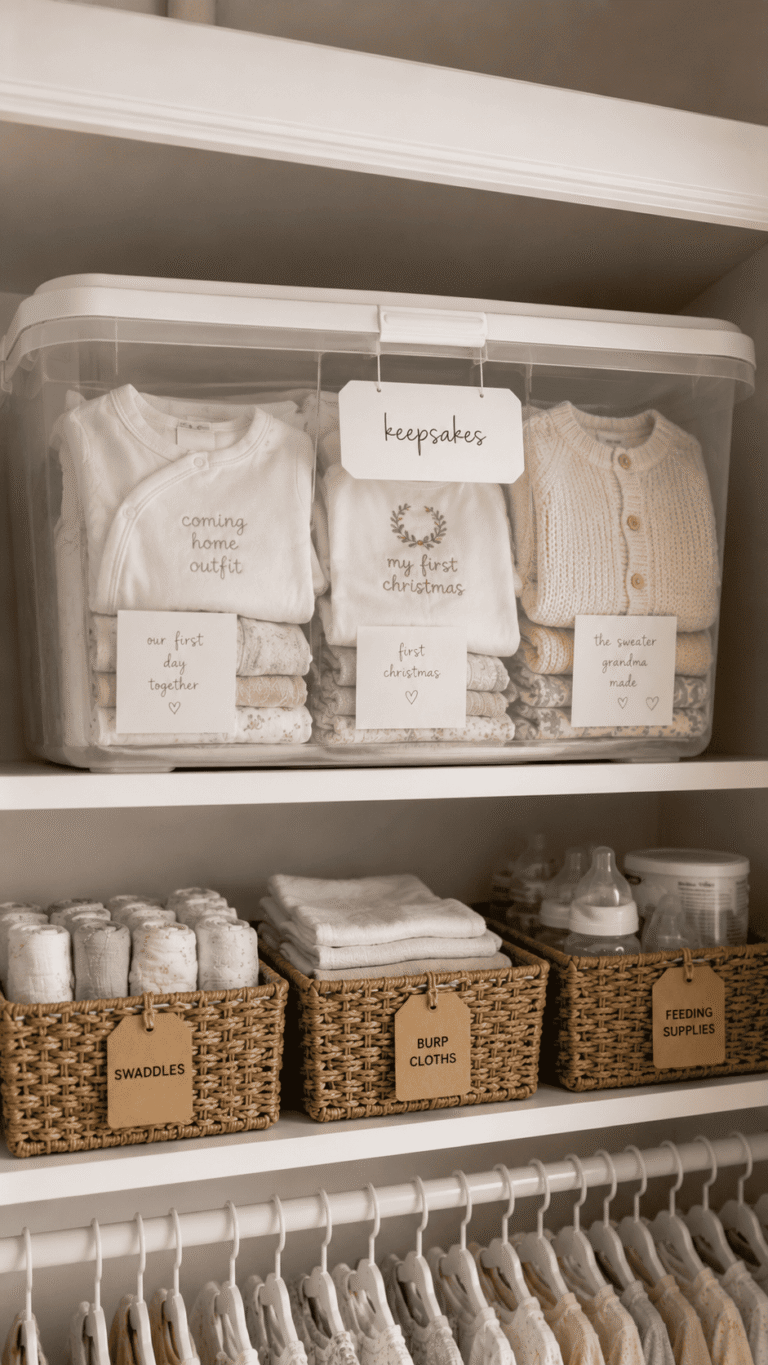
Children outgrow clothing so quickly that without a good system for handling outgrown items, they tend to pile up in random bags and boxes that get shoved wherever there is space. A set of clearly labeled memory bins or storage boxes in the kids closet gives outgrown items a proper home while also protecting special pieces you want to keep for sentimental reasons. Use one clear bin per size range and label the outside clearly with the size and your child’s age at the time. As clothing is outgrown, items go directly into the correct bin rather than into a random pile. Bins that are fully finished with an outgrown size can be sealed, dated, and moved to a higher shelf or long-term storage.
8. Use a Hanging Closet Organizer with Multiple Shelves for Folded Items
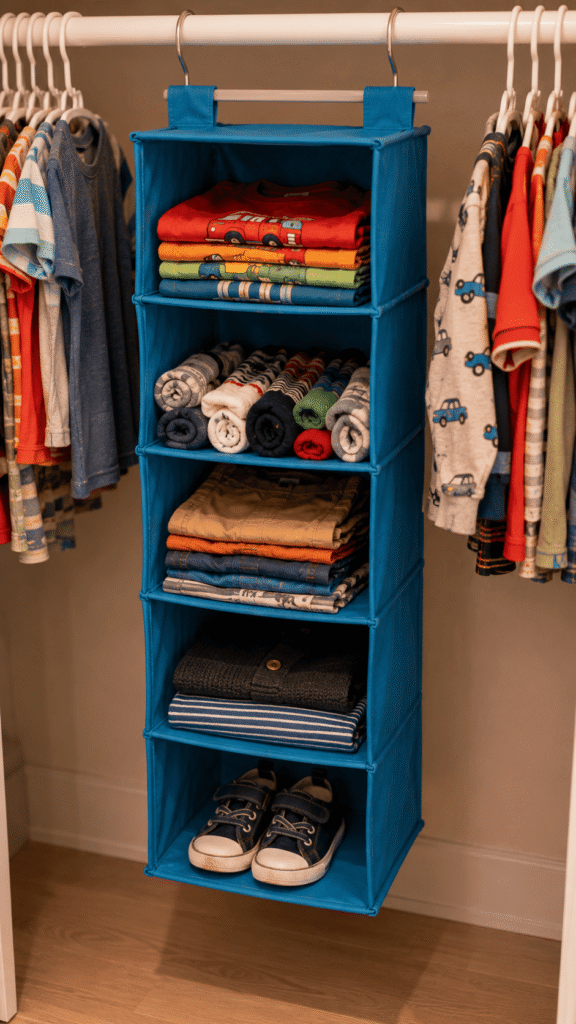
A hanging fabric closet organizer that drops down from the closet rod is a very budget-friendly way to add multiple shelves of folded storage inside a kids closet without adding any furniture or permanent fixtures. These organizers have five or six individual canvas shelves stacked vertically and hang directly from the existing closet rod. Each shelf can hold one category of folded clothing. Pajamas on one shelf. Shorts on the next. Sweaters below that. Small shoes or accessories on the bottom shelf. Because the organizer hangs from the rod, it fits into even a narrow section of a kids closet without taking up floor space. Choose one in a bright color or a fun pattern that appeals to your child to make the closet feel fun and personalized.
9. Mount Hooks at Kid Height on the Closet Wall for Bags and Backpacks
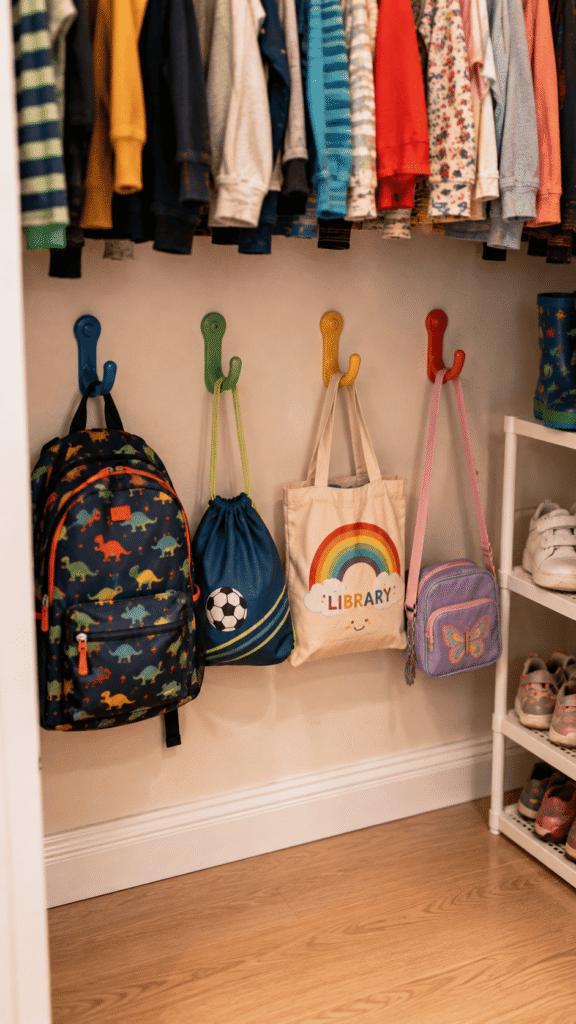
Backpacks, school bags, sports bags, and everyday tote bags are a constant source of clutter in a child’s bedroom when they do not have a dedicated spot to live. Mounting a row of hooks directly on the inside closet wall at child height gives every bag a home that is easy to reach and easy to return to. Use three or four sturdy hooks in a row and assign each one a purpose. One hook for the school backpack. One for the sports bag. One for a library bag or extra tote. When kids know exactly where each bag goes and can hang it up themselves without any effort, bags stop ending up on the bedroom floor, draped over the desk chair, or dropped right inside the front door every afternoon.
10. Use a Clear Pocket Organizer on the Door for Small Accessories
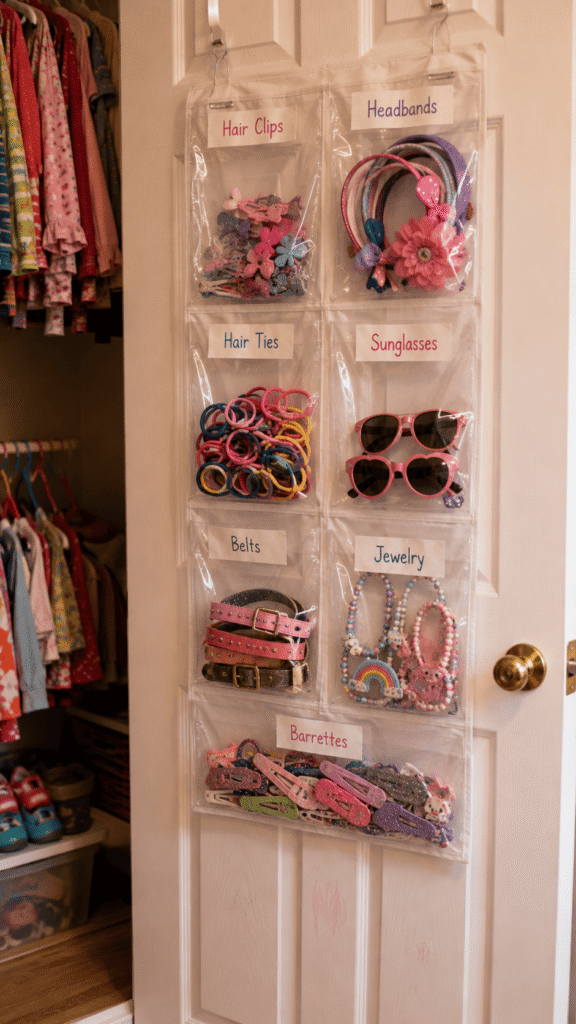
The back of a kids closet door is perfect for storing all those tiny accessories that tend to disappear constantly in a child’s room. Hair clips, headbands, hair ties, small belts, sunglasses, costume jewelry, and other small accessories all have a way of getting lost in drawers and on shelves. A clear pocket over-the-door organizer gives each type of small accessory its own visible pocket so nothing gets lost. Because the pockets are clear, your child can see exactly where each item lives and return things to the right pocket independently. Mount it at a height your child can comfortably reach so the system is genuinely accessible and usable for them on a daily basis without needing adult help.
11. Set Up a Laundry Hamper Inside the Closet to Contain Dirty Clothes
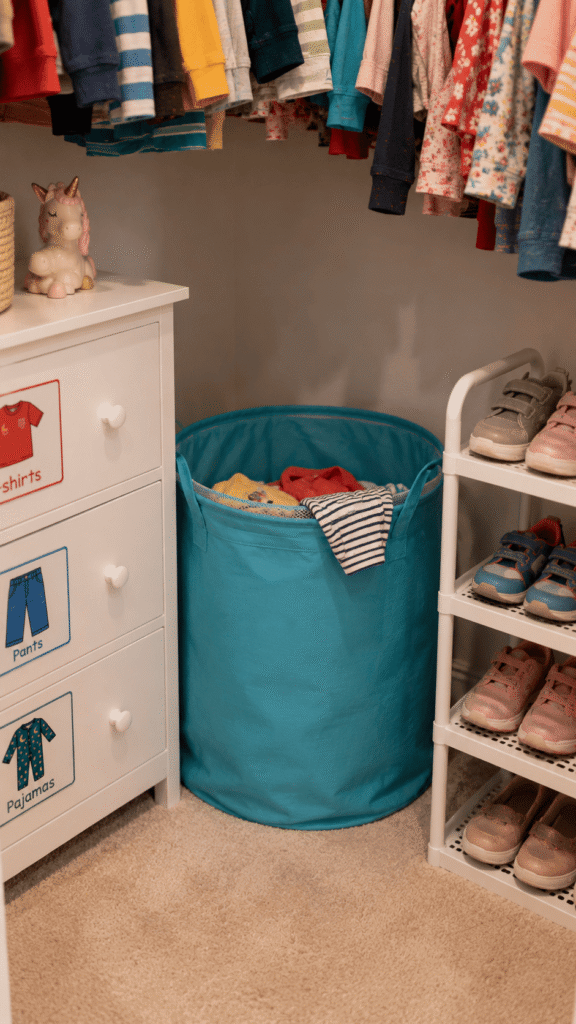
One of the most common kids bedroom organization problems is dirty clothes ending up on the floor instead of in a hamper. Part of the reason this happens is that the hamper is not in the right spot or is not accessible enough for kids to use consistently. Placing a small laundry hamper directly inside the kids closet, right near the spot where they get dressed each morning, makes putting dirty clothes away the obvious and natural choice. Use a hamper with an open top that does not require any effort to open, making it as easy as possible for young children to toss things in. Choose a fun color or a hamper with a cute design that appeals to your child and makes them more likely to use it.
12. Create a Seasonal Clothing Rotation to Keep the Closet from Overflowing
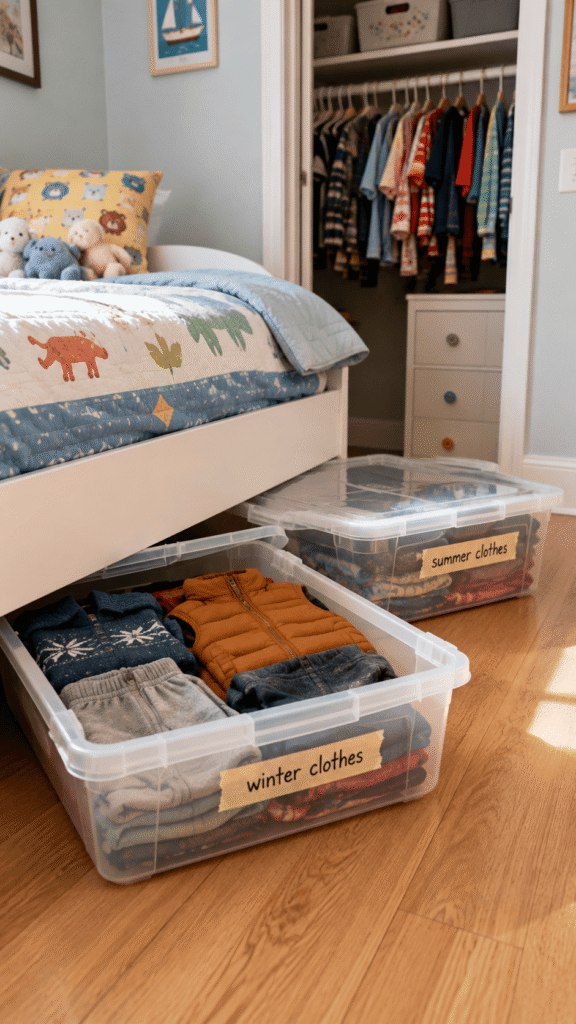
A kids closet is almost always smaller than an adult closet but it needs to hold just as many items proportionally, especially when you factor in school clothes, play clothes, sports uniforms, and seasonal items all competing for the same limited space. A seasonal clothing rotation solves the overcrowding problem by keeping only the current season’s clothes in the active closet and storing off-season items in clearly labeled bins elsewhere. At the beginning of spring and summer, winter coats, heavy sweaters, and warm-weather gear get packed into labeled bins stored under the bed or on a high closet shelf. Current season items take over the accessible space. The closet suddenly has breathing room and everything in it is actually relevant and wearable right now.
13. Do a Kids Closet Audit Every Season With Your Child to Keep Things Manageable
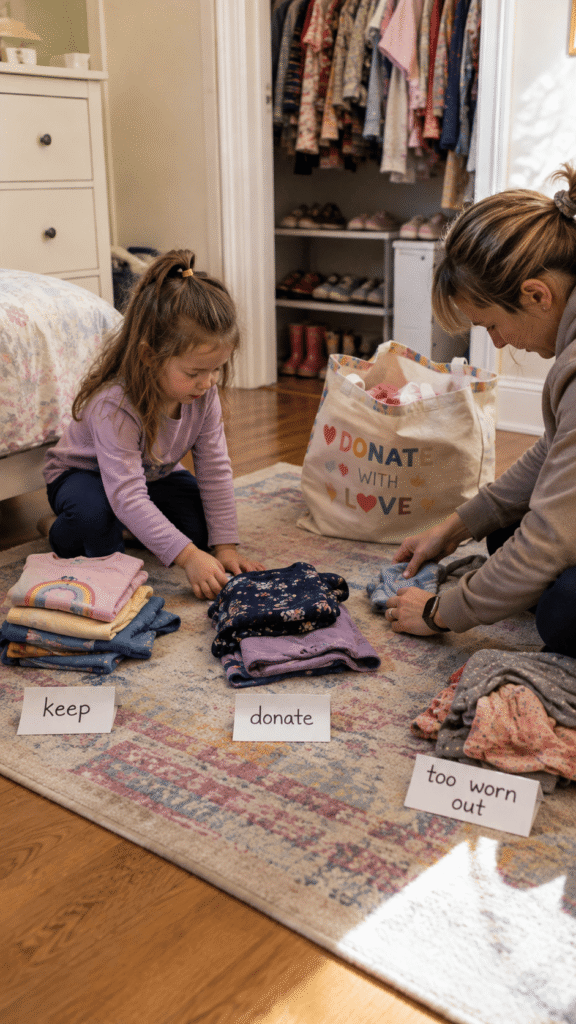
The most important long-term habit for maintaining an organized kids closet is a seasonal audit done together with your child. Four times a year at the season change, go through everything in the closet together and sort items into three categories. Things that still fit and get worn regularly stay. Things that are outgrown or no longer worn go into a donate bag. Things that are worn out or broken go in the trash. Getting kids involved in this process from a young age teaches them valuable lessons about managing their belongings and only keeping what is truly useful and loved. After each seasonal audit, the closet systems work so much better because everything that remains is the right size, the right season, and something your child actually wears and enjoys.
An organized kids closet is one of those home improvements that genuinely pays off every single morning. When clothes are sorted by size, shoes have a dedicated rack, bags hang on accessible hooks, and every bin has a clear picture label, kids can participate in their own morning routine with so much more independence and so much less stress for everyone involved.
You do not have to implement every single idea on this list at once. Start with the changes that will have the most immediate impact on your morning routine. Lowering the closet rod, adding a weekly outfit organizer, or setting up labeled bins are all fast and inexpensive changes that make a noticeable difference from day one.
Save this post for when you are ready to give your child’s closet the organized and functional setup it deserves. A well-organized kids closet is a gift to your child’s independence and a gift to your own sanity on every busy school morning.